✦ AI-generated review
The Summit of Sorrow
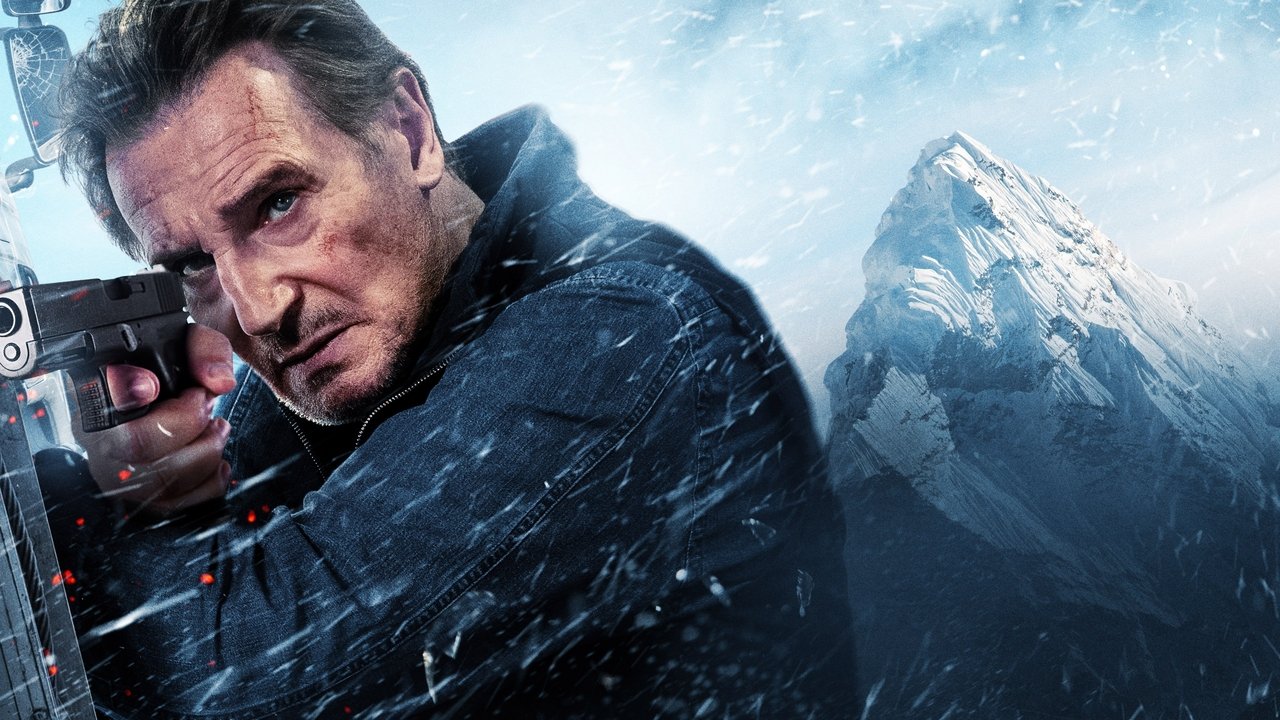
There is a specific geography to Liam Neeson’s face in the twilight of his career—a rugged, weathering map of regret that has become as iconic as the locations he is often sent to conquer. In *Ice Road: Vengeance* (2025), director Jonathan Hensleigh attempts to transport this landscape from the horizontal frozen lakes of Manitoba to the vertical, dizzying perils of Nepal. The result is a film that, much like its protagonist, labors heavily under the weight of its own past, striving for spiritual elevation but often slipping on the loose gravel of B-movie convention.
To view this film merely as "content" or a "sequel" is to miss the curious authorial signature of Hensleigh. As the writer of *Die Hard with a Vengeance*, Hensleigh has always been fascinated by the "competence of the working man"—the idea that blue-collar ingenuity is a superpower superior to any gadget. In the first film, it was the mechanics of big rigs on ice; here, the challenge is transposed to the "Road to the Sky," a treacherous Himalayan pass. The shift from ice to altitude is not just a change of scenery; it is a metaphorical ascent. Mike McCann (Neeson) is not here for money, but for a pilgrimage: to scatter the ashes of his brother, Gurty, whose ghost haunts the narrative with a persistence that outweighs any of the living antagonists.
Visually, the film exists in a strange, liminal space between the tactile and the artificial. Hensleigh creates a claustrophobic tension inside the tour bus, which becomes the film’s primary stage—a moving fortress under siege. However, the film struggles to reconcile its practical stunt work with digital environments that occasionally dissolve into the uncanny. There are moments where the green screen backdrop of the Himalayas feels less like a majestic range and more like a painted theatre flat, inadvertently giving McCann’s journey a dreamlike, almost purgatorial quality. Yet, when the film grounds itself in mechanics—such as the standout sequence where the passengers must cannibalize parts to repair their battered bus—it sings. This is where Hensleigh and Neeson are most comfortable: in the tactile world of wrenches, grease, and survival physics.
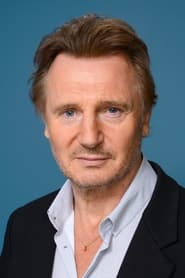
At the heart of the chaos is Neeson’s Mike McCann, a character who has evolved from the "man with a particular set of skills" into a man with a particular set of burdens. The script surrounds him with stock villains and a thinly veiled commentary on indigenous land rights—represented by the local guide Dhani (Fan Bingbing) and the protection of her village—but the true conflict is internal. Neeson plays McCann not as an action hero, but as a grieving brother who happens to know how to throw a punch. His violence is weary, a reflex rather than a desire. The flashbacks to his brother Gurty are deployed not just as exposition, but as emotional anchors, reminding us that every blow McCann strikes is an act of mourning.
Ultimately, *Ice Road: Vengeance* is an artifact of a dying breed of cinema—the mid-budget, star-driven vehicle that values grit over gloss. It is imperfect, often visibly straining against its budgetary leashes, and the narrative logic frequently requires a suspension of disbelief that borders on the acrobatic. Yet, in an era of sanitized, weightless blockbusters, there is something strangely comforting about its analog soul. It suggests that even at the top of the world, amidst gunfire and bad CGI, the most dangerous terrain remains the human heart.