✦ AI-generated review
The Gilded Echo of a Hero
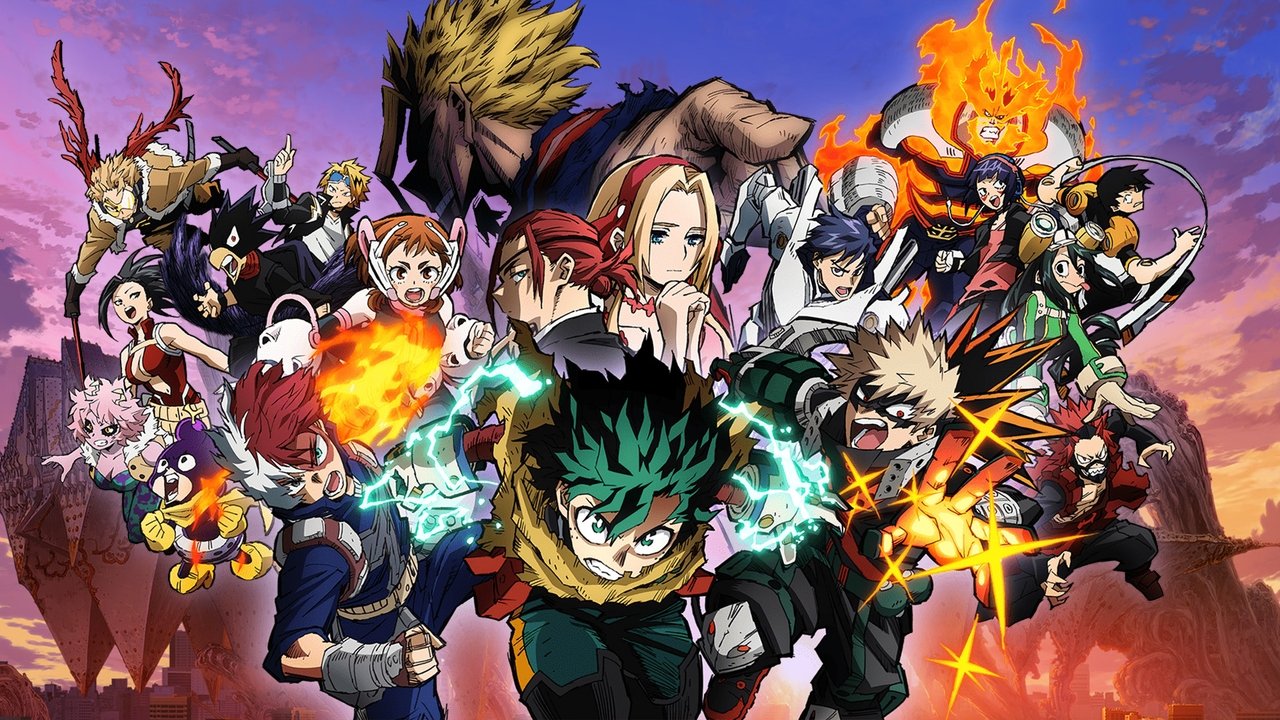
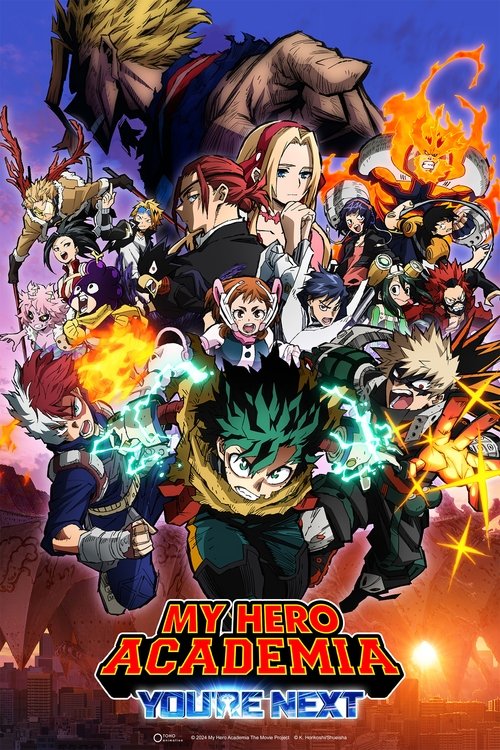
There is a distinct melancholy in the silencing of an idol. When Toshinori Yagi—better known to the world as All Might—pointed a gaunt finger at a camera and whispered, "You're next," he intended to pass a burden of responsibility to a specific successor. But broadcast to a desperate world, that message became a Rorschach test. In *My Hero Academia: You're Next*, director Tensai Okamura explores the dangerous volatility of interpretation. This is not merely a story about a hero punching a villain; it is a study on the idolatry of power and how easily a symbol of peace can be repurposed into a monument of tyranny.
Stepping into the director’s chair previously occupied by Kenji Nagasaki, Okamura (known for the noir-inflected *Darker than Black*) brings a sharper, perhaps more cynical edge to the franchise’s visual language. Under his guidance, Studio Bones constructs a visual landscape that feels oppressive even in its brightness. The antagonist, Dark Might, does not hide in shadows; he is blindingly, sickeningly radiant. The film’s central set piece—a colossal, moving fortress that consumes entire cities—is a masterful visual metaphor for an ego that has grown too large for the world to contain. Okamura utilizes the studio's celebrated kineticism not just for thrill, but to emphasize the sheer, terrifying weight of the "Alchemy" quirk, turning the screen into a chaotic swirl of gold and transmutation that feels like a twisted homage to Bones’ own *Fullmetal Alchemist* legacy.
At the heart of this spectacle lies a conflict that is surprisingly intimate. Dark Might, revealed to be the criminal Voldo Gallini, is not a villain born of hatred, but of toxic adoration. He is the ultimate "fan" who missed the point. He mimics All Might’s grin, his catchphrases, and his costume, but he lacks the sacrificial spirit that animated the original. The film treats this distinction with necessary gravity. When Izuku Midoriya confronts this imposter, the battle is less about physical dominance and more about an ideological exorcism. Midoriya, who carries the true, crushing weight of All Might’s legacy, fights to reclaim the definition of heroism from a man who treats it as a performance.
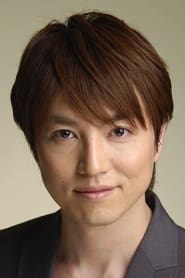
The narrative is anchored emotionally by the original characters Anna Scervino and her butler, Giulio Gandini. While their "damsel and protector" dynamic could easily have dissolved into cliché, the film affords them a surprising amount of dignity. Giulio, in particular, voiced with stoic intensity by Mamoru Miyano, serves as a grounded counterpoint to the operatic soaring of the heroes. His struggle is human-sized, focused on the salvation of one person rather than the abstract concept of "peace," reminding the audience that before you can save the world, you must often save the person standing right in front of you.
*You're Next* operates in the breathless interregnum between the anime’s sixth and seventh seasons, a moment where society is already fracturing. It does not reinvent the wheel of the shonen genre, but it spins it with a desperate, frantic energy that mirrors the anxiety of its characters. It is a film about the difficulty of succession—how hard it is to fill the shoes of a giant without losing your own soul in the process. While the third act inevitably succumbs to a cacophony of explosions, the film’s resonance remains. It asserts that a symbol is only as good as the heart beating beneath the costume, and that true peace is not a declaration from a golden throne, but a promise kept in the quiet moments between the fights.