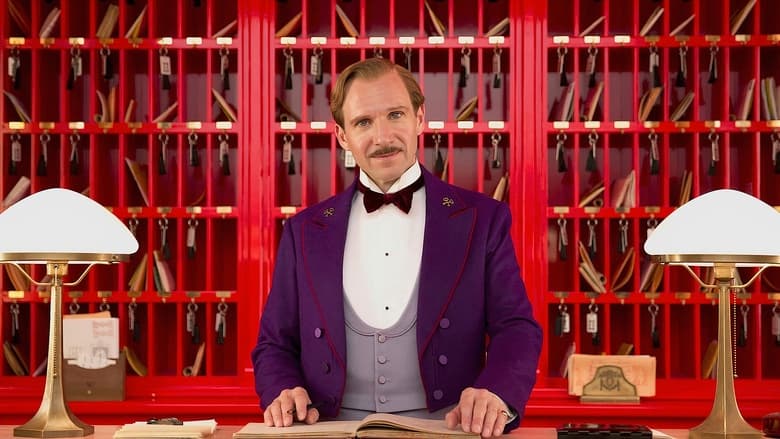
The Grand Budapest Hotel backdrop
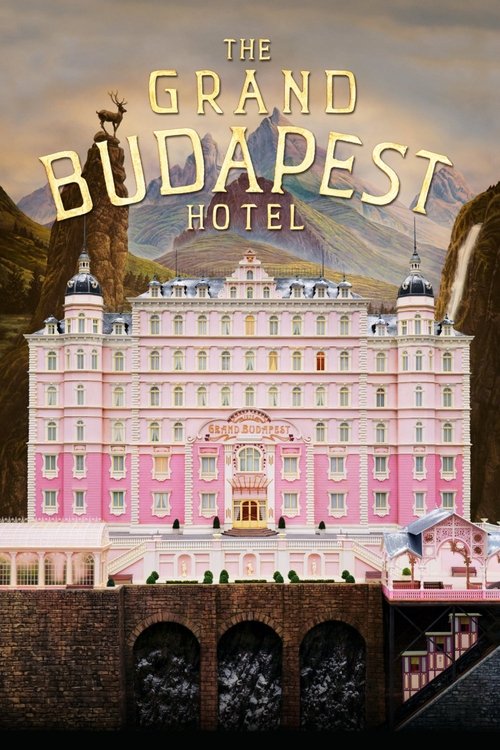
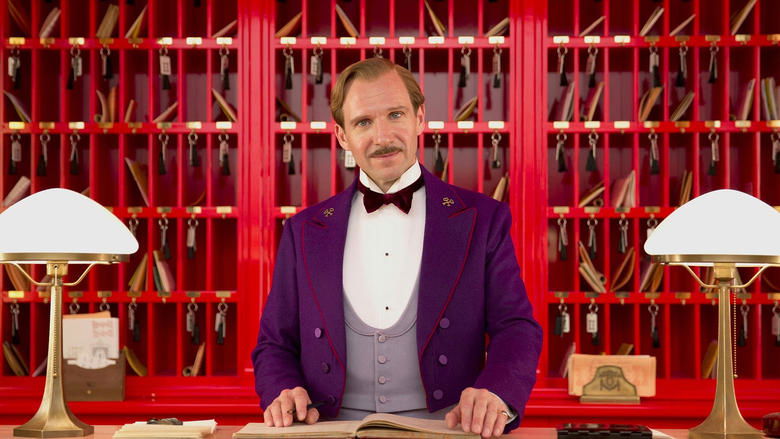
The Grand Budapest Hotel poster

The Grand Budapest Hotel

“A murder case of Madam D. with enormous wealth and the most outrageous events surrounding her sudden death!”

8.0
2014
1h 40m
ComedyDrama
Director: Wes Anderson

Overview

The Grand Budapest Hotel tells of a legendary concierge at a famous European hotel between the wars and his friendship with a young employee who becomes his trusted protégé. The story involves the theft and recovery of a priceless Renaissance painting, the battle for an enormous family fortune and the slow and then sudden upheavals that transformed Europe during the first half of the 20th century.

Trailer

Official Red Band Trailer Official

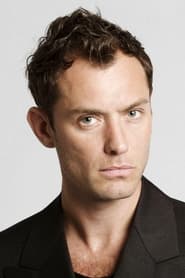
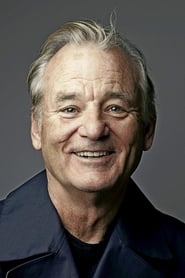
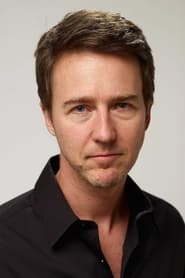
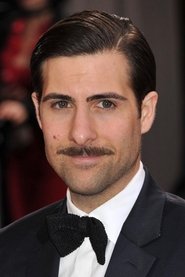
Cast

Reviews

AI-generated review
The Last Glimmer of Civilization

There is a moment in *The Grand Budapest Hotel* when Monsieur Gustave H., the concierge of the titular establishment, engages in a violent brawl with fascist soldiers on a train, only to straighten his tie and demand a glass of champagne moments later. It is a funny scene, executed with the precision of a Swiss watch, but it is also the thesis of the entire film. Wes Anderson, a director often accused of valuing style over substance, here argues that style *is* substance. In a world descending into the barbarism of war and authoritarianism, the maintenance of manners, beauty, and ritual is not just a quirk—it is a moral act of resistance.

Anderson’s visual language has always been distinct, but here it serves a historiographical purpose. He divides the film into three timelines, each with its own aspect ratio, guiding us through the "nesting doll" structure of the narrative. We begin in the present (1.85:1), move to the drab 1960s (2.35:1 widescreen), and finally arrive at the film’s candy-colored heart in the 1930s (the boxy 1.37:1 Academy ratio). This visual constraint forces us to look at the past not as it was, but as it is remembered—vibrant, symmetrical, and staged.

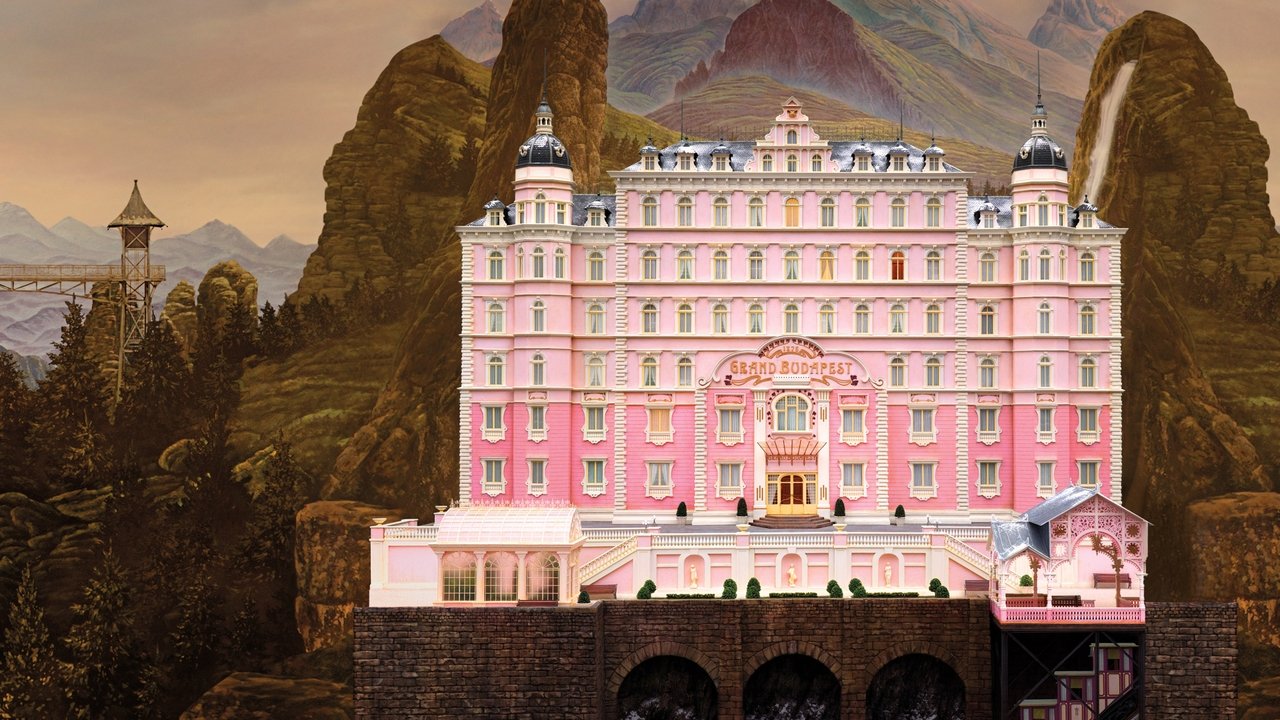
The vibrant, symmetrical Grand Budapest Hotel exterior

The hotel itself is a confection of pink pastry and velvet, a fortress of Old World charm standing against the snowy, grey encroachment of the 20th century. Inside, Ralph Fiennes gives a career-best performance as Gustave H. He is a man out of time, clinging to the etiquette of the 19th century even as the tanks of the "Zig-Zag" division (a thinly veiled Nazi surrogate) roll across the border. Fiennes plays Gustave not as a caricature, but as a man frantically patching the cracks in a crumbling dam. His relationship with Zero Moustafa, the refugee lobby boy, anchors the film emotionally. To Gustave, Zero is not a migrant to be feared, but a soul to be cultivated—a testament to the cosmopolitan humanism that fascism seeks to destroy.

The visual delight of the film—the miniatures, the funiculars, the stop-motion ski chases—creates a sense of fragility. We are watching a dollhouse, and we know that dollhouses are easily crushed. The comedy is rapid-fire and physical, reminiscent of Buster Keaton or Jacques Tati, but it is laced with a profound sadness. When the violence finally intrudes, it is shocking because it violates the aesthetic rules Anderson has established. The whimsy does not hide the tragedy; it makes the loss of that whimsy feel like a death.

Lobby Boy Zero Moustafa and Monsieur Gustave H. in the hotel elevator

Ultimately, *The Grand Budapest Hotel* is a film about the stories we tell to survive. It is deeply influenced by the writings of Stefan Zweig, who saw the culture of Vienna commit suicide in the 1930s. The film suggests that while we cannot stop the tanks or the death squads, we can preserve the memory of what they destroyed.

In the end, the hotel—like the civilization it represents—decays. The carpets fade, the paint peels, and the aspect ratio widens to the impersonal scope of the 1960s. But the story remains. As the older Zero tells the narrator, Gustave’s world "had vanished long before he ever entered it." He sustained the illusion with a marvelous grace. Anderson does the same, constructing a film of meticulous artifice to mourn a very real, and very human, loss.

Clips (9)

"We Must Go To Her"

"He's a Conceirge!"

"Don't You Know"

"I'm Not Leaving"

"A Plan For Your Survival"

"Good Morning, Pinky"

"They Only Had the Half-Ounce"

"The Police Are Here"

Interview with Zero

Featurettes (15)

Alexandre Desplat | Best Original Score for 'The Grand Budapest Hotel' | Behind the Oscars Speech

Alexandre Desplat winning Best Original Score for "The Grand Budapest Hotel"

"The Grand Budapest Hotel" wins Production Design

"The Grand Budapest Hotel" wins Makeup and Hairstyling

The Grand Budapest Hotel Wins Costume Design: 2015 Oscars

Classic Hollywood

The Grand Budapest Hotel | BAFTA Original Music Winner 2015 | Backstage Interview

The Grand Budapest Hotel | BAFTA Make Up & Hair Winners 2015 | Backstage Interview

The Grand Budapest Hotel | BAFTA Production Design Winner 2015 | Backstage Interview

LEGO Style

The Society of the Crossed Keys

How To Make a Courtesan au Chocolat

Academy Conversations: The Grand Budapest Hotel

The Story

Meet the Cast of Characters

Behind the Scenes (6)

How They Pulled Off Wes Anderson's Hardest Shot!

Creating A World

Crafting a Masterpiece

Creating a Hotel

Görlitz

The Cast

LN
Latest Netflix

Discover the latest movies and series available on Netflix. Updated daily with trending content.

About

  • AI Policy
  • This is a fan-made discovery platform.
  • Netflix is a registered trademark of Netflix, Inc.

© 2026 Latest Netflix. All rights reserved.