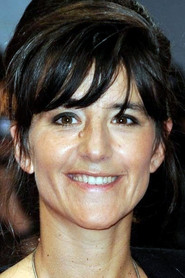
The Architecture of AbsenceThere is a specific kind of ghost that haunts the cinema of Romane Bohringer: not the spectral figures of horror, but the living, breathing void left by those who walked away. In her debut, *L’Amour flou*, she examined the quirky mechanics of a breakup where no one actually leaves. Now, in *Tell Her That I Love Her* (*Dites-lui que je l’aime*), she reverses the polarity. Here, the leaving is absolute, the silence is deafening, and the camera becomes a tool not just for storytelling, but for resurrection. It is a film that begins as an adaptation and ends as an exorcism.
Bohringer’s sophomore effort is a work of fragile, trembling bravery. Ostensibly, she sets out to adapt the memoir of French politician Clémentine Autain, whose mother, the actress Dominique Laffin, died young after a life marked by addiction and instability. But as Bohringer delves into Autain’s grief, the mirror cracks. The director realizes she is not just telling Autain’s story, but her own—confronting the memory of her mother, Maggy, who abandoned her as an infant and died before she could be truly known. The result is a genre-defying hybrid of documentary, fiction, and meta-commentary that feels less like a movie and more like a late-night confession whispered in the dark.

Visually, Bohringer and cinematographer Bertrand Mouly create a tapestry of textures that reflects the fragmentation of memory. The film oscillates between the crisp, clinical reality of the editing room—where Bohringer and Autain dissect the past—and the hazy, warm-hued reconstructions of their childhoods. These reenactments are not polished period pieces; they have the soft, unreliable quality of a dream. In one particularly striking sequence, the audition process for the actress to play Autain blurs into reality, until Bohringer realizes that only Autain can play herself. It is a moment of cinematic collapse, where the artifice of filmmaking gives way to the raw necessity of witnessing.
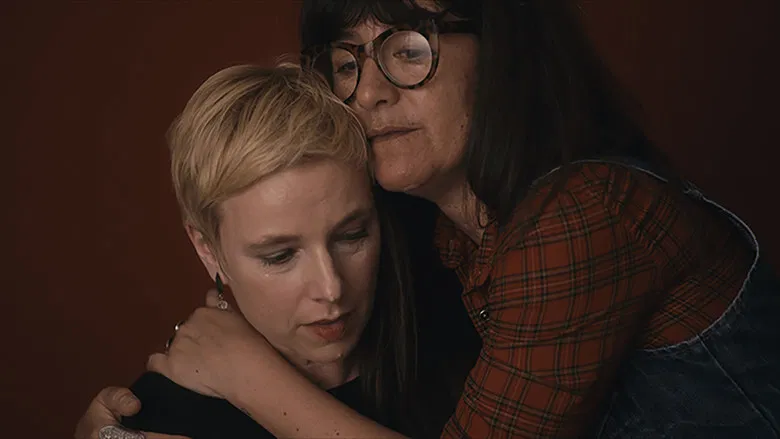
The emotional core of the film lies in this duality. It is a conversation between two daughters standing in the wreckage of their mothers’ lives. Autain, composed and articulate, processes her trauma through words; Bohringer, frantic and raw, processes hers through image and action. There is a palpable tension in how they approach the "bad mother" archetype. The film refuses to vilify these women for their abandonment or their addictions. Instead, it interrogates the impossible weight placed on women to be anchors when they are barely keeping themselves afloat. The scene where Bohringer confronts her father (Richard Bohringer) about Maggy is devastating not for its shouting, but for its quiet admission of helplessness.
However, the film is not without its stumbling blocks. At times, the meta-narrative threatens to capsize under its own ambition. The inclusion of Bohringer’s son feels like a reach for a generational resolution that hasn't quite been earned, a slightly too-neat bow on a package that remains jagged. Yet, these imperfections feel appropriate. Grief is messy, nonlinear, and often self-indulgent. To polish this film into a sleek drama would be to lie about the nature of the pain it depicts.
*Tell Her That I Love Her* is a testament to the idea that we are all, in some way, the editors of our own histories. We cut, we splice, we overlay music to make the unbearable moments make sense. Bohringer has created a film that doesn't just ask us to look at her pain, but to look through it, finding a universal resonance in the specific ache of a child waiting for a parent who will never come home. It is a difficult, beautiful watch—a cinematic letter sent to an address that no longer exists.