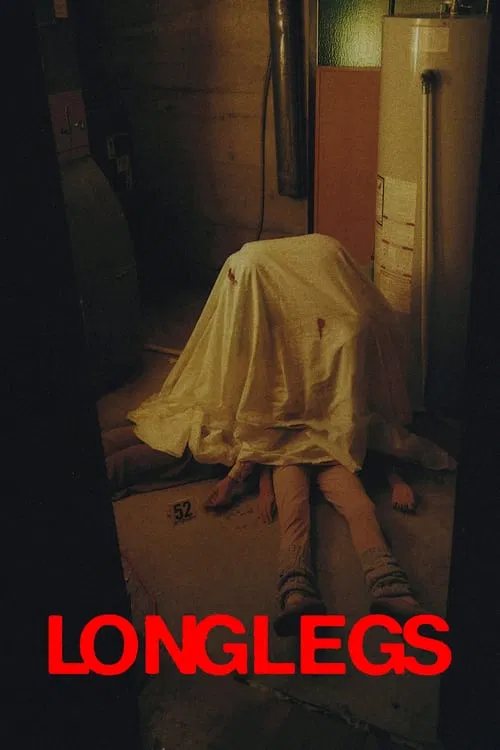
The Devil in the Aspect RatioTo watch Osgood Perkins’ *Longlegs* is to be slowly suffocated by negative space. In an era where horror often operates like a theme park ride—efficient, loud, and startling—Perkins has crafted something far more insidious: a film that feels less like a story and more like a curse captured on celluloid. It is a work of oppressive atmosphere that doesn't just depict evil; it seems to invite it into the room.
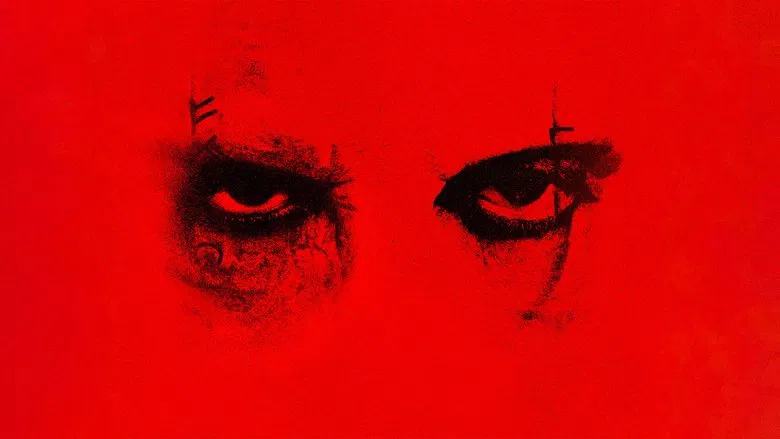
The film’s visual language is its primary weapon. Cinematographer Andrés Arochi shoots the world of 1990s Oregon not as a nostalgic playground, but as a purgatory of beige walls and gray skies. The camera lingers on open doorways and empty corners, training the audience to search for threats that aren’t there—or perhaps, threats that are everywhere. Perkins utilizes a shifting aspect ratio that is more than a gimmick; the boxy, claustrophobic 4:3 frame of the flashbacks feels like a trapped memory, while the wider lens of the "present" offers no escape, only more horizontal space for the dread to inhabit. The silence in *Longlegs* is heavy, a physical weight that presses down on the characters, interrupted only by a sound design that hums with subterranean malice.
At the center of this vacuum is Maika Monroe as FBI Agent Lee Harker. Monroe, who has become the patron saint of modern anxiety in cinema, delivers a performance of painful interiority. She is a woman seemingly hollowed out by a trauma she cannot name, moving through the procedural beats of the investigation with the stiffness of a sleepwalker. She is the perfect foil to Nicolas Cage’s titular killer. Cage, buried under prosthetics that make him look like a botched glam-rock surgery victim, delivers a performance that defies the laws of acting. He is high-pitched, grotesque, and pathetic—a "nouveau shamanic" nightmare who sings T. Rex lyrics while condemning families to slaughter. It is a performance that risks ridicule to achieve something genuinely unholy.

However, beneath the Satanic panic aesthetic and the *Silence of the Lambs* procedural shell lies a deeply personal wound. Perkins, the son of *Psycho* icon Anthony Perkins, weaves a narrative thread about the lies parents tell to protect their children—and how those lies can curdle into complicity. The film suggests that evil is not just a supernatural force, but a domestic one, something allowed into the home and ignored until it is too late. The revelation of the mother’s role is not just a plot twist; it is a tragic commentary on the destructive nature of maternal sacrifice.

*Longlegs* may frustrate those looking for a neat puzzle box. Its logic is dream-logic; its cause-and-effect is severed by the irrationality of the occult. But to critique it for plot holes is to miss the point entirely. This is a film about the feeling of being watched by something you cannot see, a sensation that lingers long after the credits roll. It is a reminder that in the architecture of modern horror, Osgood Perkins is building the basement.