The Horror of HappinessIn an era of algorithmic sterility, where "adult animation" often devolves into cynical family sitcom clones or shouty political soapboxes, *Smiling Friends* arrives like a fever dream we didn’t know we needed. Created by internet animation veterans Zach Hadel and Michael Cusack, the series rejects the polished veneer of modern television for something far more visceral, grotesque, and oddly tender. It is not merely a show about a company dedicated to making people smile; it is a surrealist inquiry into why, in a world this broken, anyone would smile at all.

The visual language of *Smiling Friends* is its most immediate and disarming weapon. Hadel and Cusack have weaponized the chaotic aesthetic of the early internet—Newgrounds flash animations, MS Paint scribbles, and jarringly hyper-realistic close-ups. The show is a mixed-media collage where a 2D blob-like protagonist might converse with a rotoscoped human, a stop-motion claymation creature, or a 3D-rendered entity that looks like it escaped a PlayStation 2 horror game.
This aesthetic friction isn't just a gimmick; it creates a suffocating sense of reality. When the camera zooms in on a character’s face to reveal detailed pores, bloodshot eyes, and pulsating veins, the show shatters the safety of the cartoon medium. It forces the viewer to confront the physical ugliness of its world, making the characters' attempts at optimism feel that much more fragile and heroic.

At the narrative’s center are Pim and Charlie, a duo that transcends the typical "odd couple" trope. Pim, the pink, eternal optimist, isn't just happy; he is desperately grasping for meaning in a void. Charlie, the yellow, cynical realist, isn't just grumpy; he is exhausted by the weight of existence. Their dynamic was perfected in the pilot, "Desmond’s Big Day Out," where they are tasked with cheering up a man actively holding a gun to his head.
Most shows would use suicide for shock value, but *Smiling Friends* uses it to dismantle toxic positivity. Pim’s manic attempts to show Desmond the "beauty of life" fail spectacularly because they are shallow. It is only through the chaotic, violent absurdity of the day—ending in a moment of shared, dark catharsis—that Desmond finds a reason to keep going. The show argues that happiness isn't found in platitudes or forced smiles, but in the bizarre, unscripted connections we make while navigating a nightmare.
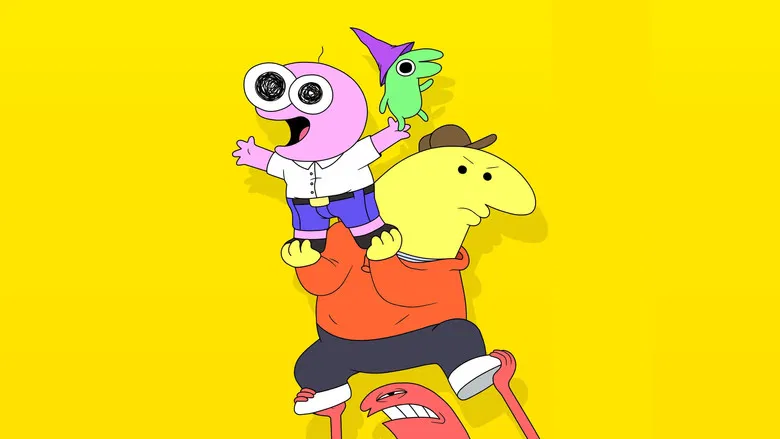
Ultimately, *Smiling Friends* is a Rorschach test for the digital age. It captures the specific brain-rot of being extremely online—the rapid-fire shifts in tone, the blend of irony and sincerity, and the feeling that reality is constantly glitching. By Season 3, the show has only deepened its lore and broadened its experimental canvas, proving that its initial viral success wasn't a fluke. It suggests that while the world may be populated by demons, cryptids, and psychopaths, the act of trying to make someone smile is the only rebellion worth committing.