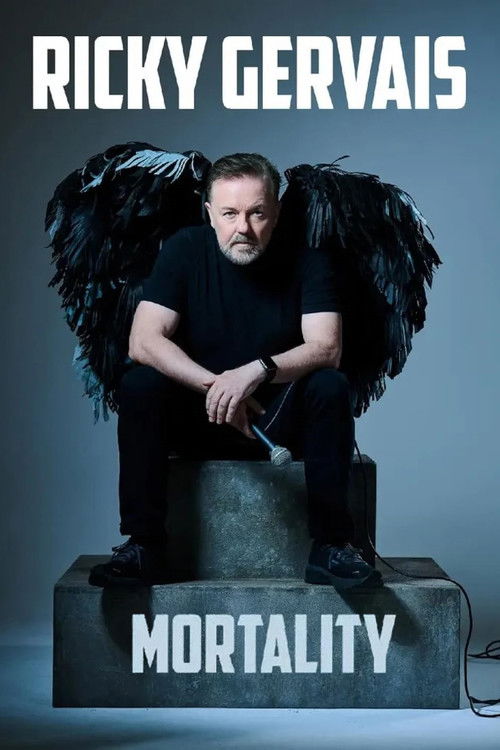
The Jester’s TwilightThere is a distinct, melancholy paradox that haunts the late career of the provocateur. When a comedian builds an empire on transgressing boundaries, what happens when the boundaries shift, or worse, when the public simply stops gasping? In *Ricky Gervais: Mortality*, the latest stand-up special from the British comedy titan, we witness an artist wrestling not just with the titular concept of death, but with the creeping obsolescence of his own outrage. Filmed at the London Palladium under the direction of John L. Spencer, the special is less a meditation on the finiteness of life and more a defiant, often repetitive assertion of the comedian's right to speak in an era he claims is trying to silence him.
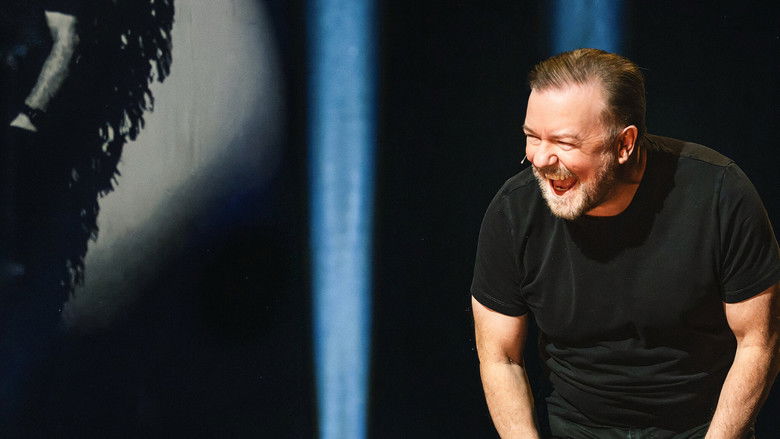
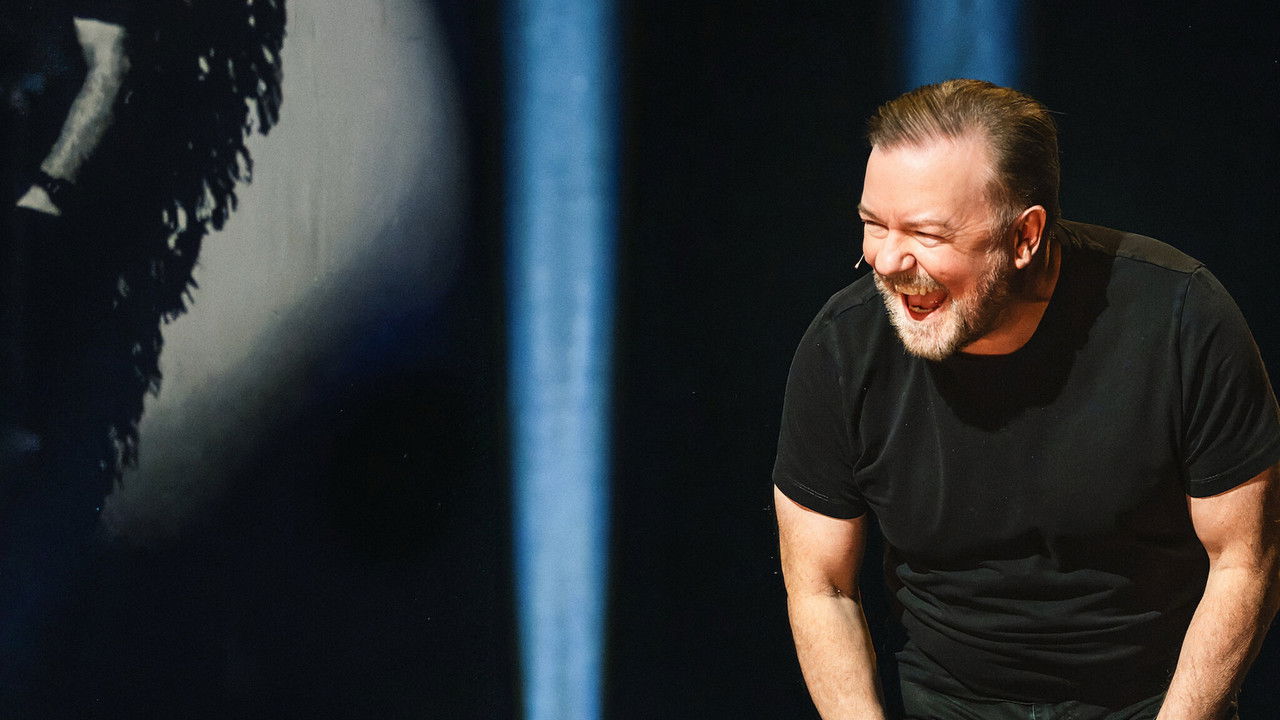
Visually, the film adheres to the Gervais aesthetic: stripped back, industrial, and aggressively casual. Clad in his signature black t-shirt and clutching a can of beer, Gervais prowls the stage with the energy of a man holding court in a pub rather than performing in a theater. The visual language is designed to signal "authenticity"—a rejection of showbiz gloss in favor of raw truth-telling. However, this aesthetic now feels like a uniform of its own. The stark lighting and the prowling camera work serve to isolate him, reinforcing the "me against the world" narrative that has become the spine of his recent output. He is the lone warrior in the spotlight, fighting imaginary dragons of censorship.
The "conversation" surrounding *Mortality* inevitably circles back to the culture wars, a well Gervais has returned to so frequently it is beginning to run dry. He opens by addressing the backlash to his previous specials, *SuperNature* and *Armageddon*, creating a feedback loop where the reaction to the art becomes the art itself. There is a palpable defensive crouch beneath the swagger. When he deconstructs the semantic difference between "saying" a slur and "using" one—specifically referencing a controversy involving comedian Rosie Jones—we see a flash of the brilliant linguist who co-wrote *The Office*. It is a moment of sharp, technical precision where he dissects intent versus impact. Yet, these moments are fleeting, often swallowed by broader, less nuanced complaints about "virtue signaling" and the fragility of modern audiences.
Despite the title, the special’s engagement with actual mortality feels oddly distant. Gervais touches on aging—the physical indignities, the health scares—but often uses them merely as setup for punchlines about how he can't be canceled because he'll be dead soon anyway. It lacks the vulnerability one might expect from a show named after the human condition’s ultimate fragility. Instead of a deep dive into the fear of non-existence, we get hypotheticals about slavery (musing on whether he would have been a "good" slave owner in the 1700s) and nostalgic rehashes of his Golden Globes hosting gigs. These segments feel less like stand-up and more like an after-dinner speech from a man convinced his past glories are more interesting than his present observations.

Ultimately, *Mortality* reveals a comedian who is technically flawless but thematically stationary. Gervais remains a master of rhythm and delivery; he knows exactly how to make an audience laugh, even when they are groaning. But the emotional core is calcified. The special operates in a closed loop of logic where any criticism proves his point, and any laughter validates his genius. It is a performance of rebellion by a man who has long since become the establishment. As the credits roll, one is left with the impression not of a philosopher confronting the abyss, but of a wealthy jester shouting into an echo chamber, demanding we acknowledge how brave he is for the noise he makes.