✦ AI-generated review
The Architecture of Artificial Joy
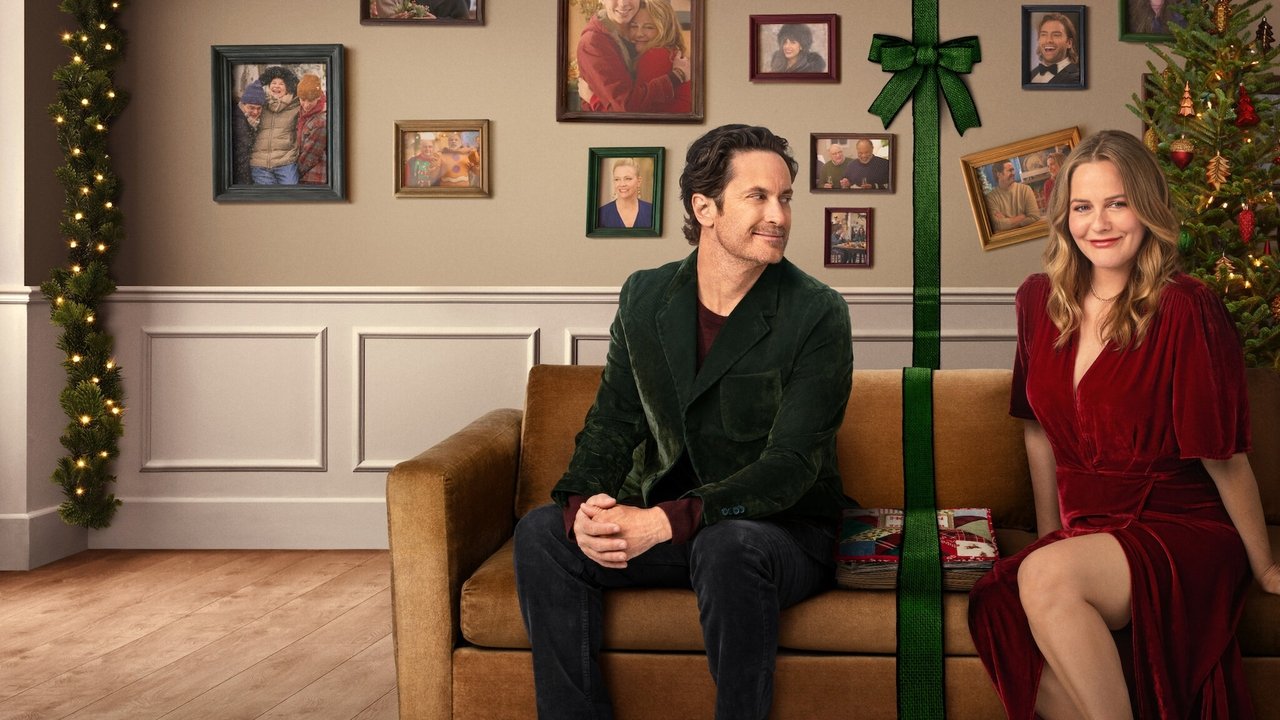
There is a specific, peculiar melancholy that radiates from the modern holiday rom-com—a genre that has ceased to be about human connection and has instead become a ritual of visual anesthesia. In *A Merry Little Ex-Mas*, director Steve Carr, a veteran of broad, loud commercial comedies like *Paul Blart: Mall Cop*, attempts to orchestrate a symphony of "conscious uncoupling" within the snow-globe confines of a town called Winterlight. The result is a film that functions less as a story and more as a brightly lit mood board for a life nobody actually lives, populated by actors who seem to be silently apologizing for being there.
The premise is a fascinating artifact of our therapeutic age: Kate (Alicia Silverstone) and Everett (Oliver Hudson) are a handsome, upper-middle-class couple navigating a divorce that is so amicable it feels medicated. They decide on one last "family Christmas" to ease the transition for their adult children. Naturally, the plan is disrupted by the arrival of Everett’s new partner, Tess (Jameela Jamil), and Kate’s retaliatory flirtation with a much younger man. On paper, this is the stuff of screwball farce—a genre that thrives on messiness, cruelty, and manic energy. But Carr directs with a flat, terrifying competence. The lighting is uniformly high-key, banishing shadows (and subtext) from every corner of the frame. Winterlight is not a place; it is a set dressed in the aggressive reds and greens of a department store display, a visual landscape that creates a suffocating sense of reality where nothing bad can ever truly happen.
This visual sterility betrays the film’s few attempts at genuine emotion. We begin with a surprisingly spirited animated sequence detailing Kate’s backstory—a woman who abandoned her architectural ambitions to support her husband’s medical practice. It is a brief, vibrant promise of a film interested in Kate’s internal landscape. Yet, as soon as the animation dissolves into live-action, that interiority vanishes. Silverstone, an actress of immense, quirky charm who once defined a generation’s teen angst in *Clueless*, is left to do the heavy lifting of a script that treats her regret as a plot device rather than a wound. She vibrates with a nervous, manic energy, trying to find the pulse of a woman who realizes she has edited herself out of her own life. There is a tragedy in watching Silverstone try to locate emotional truth in a scene where she falls off a sled, a moment designed for slapstick that she plays with a disarmingly human fragility.
The film attempts to inoculate itself against criticism through the character of Tess, played by Jamil with a self-aware wink. Tess frequently comments on the absurdity of the situation, noting the tropes of the genre as they happen. But pointing out the bars of the cage does not help the characters escape it. When the inevitable reconciliation arrives, borne not of earned character growth but of genre necessity, it feels like a surrender. The narrative collapses under the weight of its own obligation to be "nice."
Ultimately, *A Merry Little Ex-Mas* is a testament to the safety we demand from our holiday entertainment. We do not watch these films to be challenged by the brutal reality of divorce or the stinging regret of lost potential; we watch them to see the chaotic elements of life rearranged into a symmetrical pattern. Kate’s architectural dreams are revived, the family unit is restored, and the lights in Winterlight stay on. It is a warm, sugary, and entirely hollow experience—a gingerbread house with no one inside.