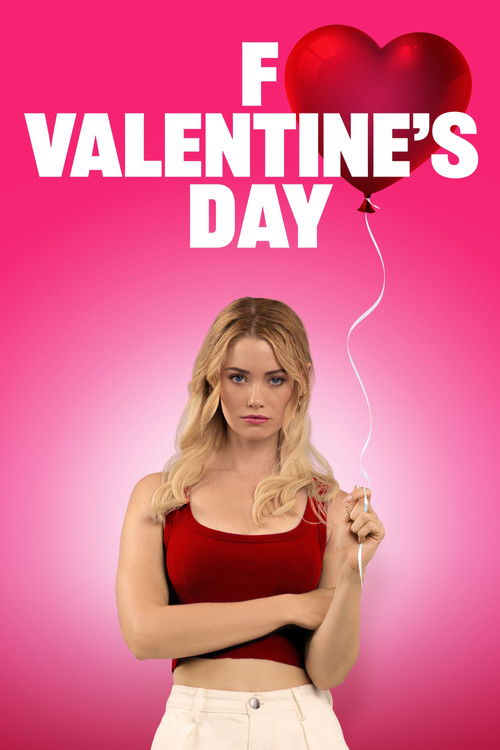
The Weight of ExpectationIn the modern lexicon of romance, silence is rarely an option. We are inundated with the noise of affection—the performative gestures, the curated social media posts, the commercialized milestones that demand we adhere to a specific timeline of happiness. Mark Gantt’s *F Valentine’s Day* (2026) initially masquerades as a brash rejection of this noise, a cinematic middle finger to the Hallmark industrial complex. Yet, beneath its irreverent title and sun-bleached Grecian setting, the film reveals itself to be a surprisingly tender meditation on the terror of being known, and the paralysis that comes when the script of your life is being written by everyone but you.
The premise is deceptively high-concept: Gina (Virginia Gardner), cursed with a birthday on February 14th, has spent a lifetime having her personal identity swallowed by the world's most aggressive holiday. When she discovers her boyfriend Andrew (Skylar Astin) plans to propose during a trip to Greece, she doesn't swoon; she panics. She flies out early, enlisting two chaotic strangers (Jake Cannavale and Sabrina Bartlett) to sabotage her own engagement. It is here that Gantt distinguishes the film from the rote mechanics of the genre. Instead of playing the sabotage purely for slapstick, he frames it as a desperate act of autonomy. Gina isn’t running from love; she is running from the *expectation* of it.

Visually, Gantt and his cinematographer create a striking dissonance between the setting and the story. The film is bathed in the golden, over-saturated light of the Mediterranean—the kind of aesthetic usually reserved for uncritical romantic fantasies. However, the camera often lingers on Gina in moments of isolation within this paradise, framing her small against the vast, ancient architecture. The beauty of Greece becomes suffocating, a visual metaphor for the pressure Andrew’s perfect proposal represents. The "paradise" is a cage of expectations, gilded by the very romance she is trying to dismantle.
The film's emotional anchor lies in the interplay between Gardner and Marisa Tomei, who plays her mother, Wendy. Tomei, a veteran of the genre who can find depth in the shallowest of pools, grounds the film's frantic energy. There is a specific scene, a quiet conversation on a balcony overlooking the Aegean, where the comedy evaporates. Wendy suggests that Gina’s hatred of Valentine’s Day isn’t about the holiday at all, but about a fear that her own desires will always be secondary to the occasion. It is a moment of piercing clarity that recontextualizes the entire narrative. We realize that Gina's sabotage is not an act of malice toward Andrew, but a frantic attempt to create a boundary in a life that feels porous.
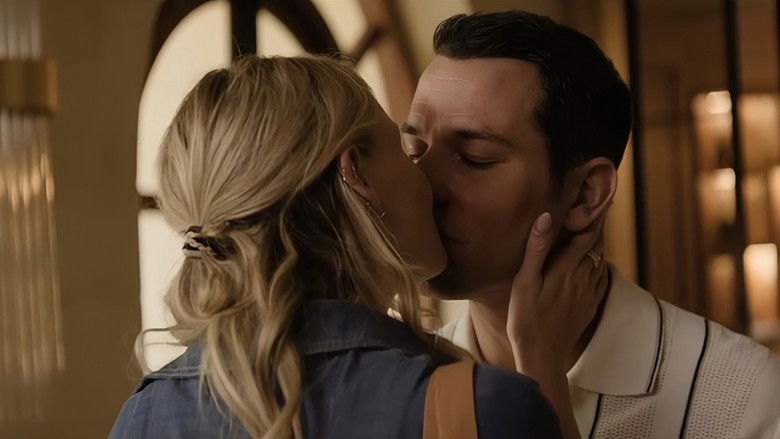
This is where *F Valentine’s Day* transcends its "anti-rom-com" marketing. It suggests that the true antagonist is not the boyfriend (Astin plays Andrew with a sweet, oblivious earnestness that makes him impossible to hate), but the cultural script that equates hesitation with failure. By pairing Gina with Johnny (Cannavale), a character who operates with zero societal pressure, the film explores the relief found in relationships that have no roadmap. Their chemistry is built not on sparks, but on the shared exhale of two people who have stopped performing.
Ultimately, Gantt delivers a film that questions the validity of the "happy ending" as a metric for success. In a genre that typically races toward the altar, *F Valentine’s Day* dares to hit the brakes. It argues that love is not about the grand gesture or the perfect date, but about the courage to disrupt the narrative—even if it means breaking your own heart to find your own voice. It is a messy, vibrant, and essential entry into the canon of modern romance, proving that sometimes, the most romantic thing you can do is say "no."