The Beard, The Void, and The Working PoorThere is a moment early in Mike Rohl’s *My Secret Santa* where Taylor (Alexandra Breckenridge), a financially destitute single mother, stares into a mirror while applying a theatrical prosthetic beard. It is a quiet, almost clinical scene. For a brief second, the film sheds its candy-cane-colored skin and reveals something desperate and profoundly human. We are not merely watching a woman put on a costume; we are watching a mother erase herself to survive. In a genre defined by magical thinking and effortless abundance, Rohl—a veteran of the *Princess Switch* trilogy—has crafted a holiday film that accidentally, or perhaps subversively, feels like a treatise on the economic invisibility of the working class.

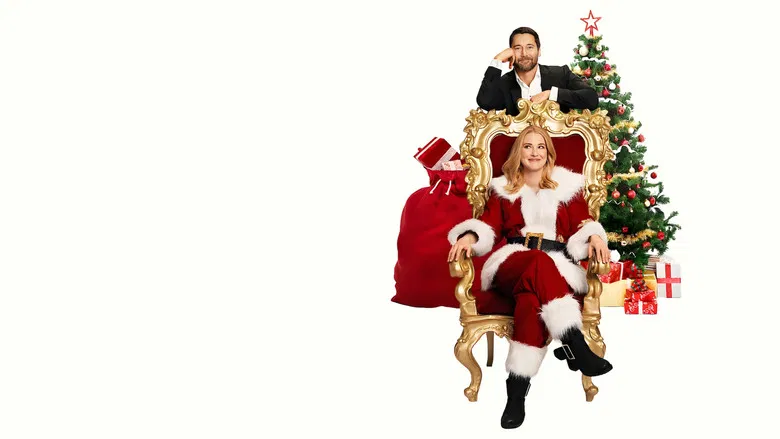
The premise is undeniably absurd, a high-concept cocktail of *Mrs. Doubtfire* and *Twelfth Night* shaken with eggnog. Taylor, fired from her job and facing eviction, needs to fund her daughter’s snowboarding dreams. The local luxury resort is only hiring a Santa Claus. Through a loophole of gender bias and desperation, Taylor invents "Hugh Mann," an elderly gentleman who secures the gig. But where a lesser director would play the drag purely for slapstick—fat suits knocking over Christmas trees—Rohl shoots the resort with a sterile, almost imposing grandeur. The wide shots of the snow-swept lodge emphasize the isolation of the characters. The "magic" here isn't elves or flying reindeer; it is the crushing weight of capitalism that demands a woman become a man, become a myth, just to pay the rent.
Visually, the film operates in two distinct registers. The scenes involving Matthew (Ryan Eggold), the resort owner's aimless son, are bathed in the warm, amber glow typical of Netflix holiday fare. These are scenes of privilege, where problems are theoretical and "finding oneself" is a hobby. Contrast this with Taylor’s reality: the harsh, cool tones of her van, the cluttered anxiety of her living space, and the claustrophobic makeup chair where she transforms into Hugh. The camera lingers on Breckenridge’s eyes beneath the latex and yak hair. They are tired eyes. The comedy of the gender-swap is undercut by the physical labor of the deception. The audience is invited to laugh, but the film quietly asks: *Is it really this hard to just exist?*

The romantic tension between Taylor (as herself) and Matthew is the narrative engine, but the emotional core lies in her interactions as Santa. When "Hugh" speaks to the resort guests, he strips away the artifice of the season. He doesn't promise toys; he offers listening. Breckenridge delivers a surprisingly tender performance here, using the anonymity of the beard to speak truths she cannot voice as a marginalized single mom. It is a performance of duality—she is most seen when she is completely hidden. The irony is sharp: in a world that ignores middle-aged struggling mothers, she must become an imaginary old man to be treated with dignity.
Ultimately, *My Secret Santa* collapses under the weight of its own genre requirements. The third act rushes toward a neat resolution that betrays the gritty setup, dissolving economic anxiety into a puddle of romantic fulfillment. Yet, for all its silliness, the film remains a fascinating artifact of 2025. It captures a specific cultural exhaustion, a yearning for relief so deep that we are willing to believe that a woman in a fake beard is the only one who can save Christmas. It is a film not about magic, but about work—the work of parenting, the work of deception, and the work of keeping the lights on when the world wants you to disappear.
 Verdict:
 A surprisingly melancholy meditation on labor wrapped in tinsel. It manages to be touching even as it careens toward the ridiculous.