✦ AI-generated review
The Afterlife of Vengeance
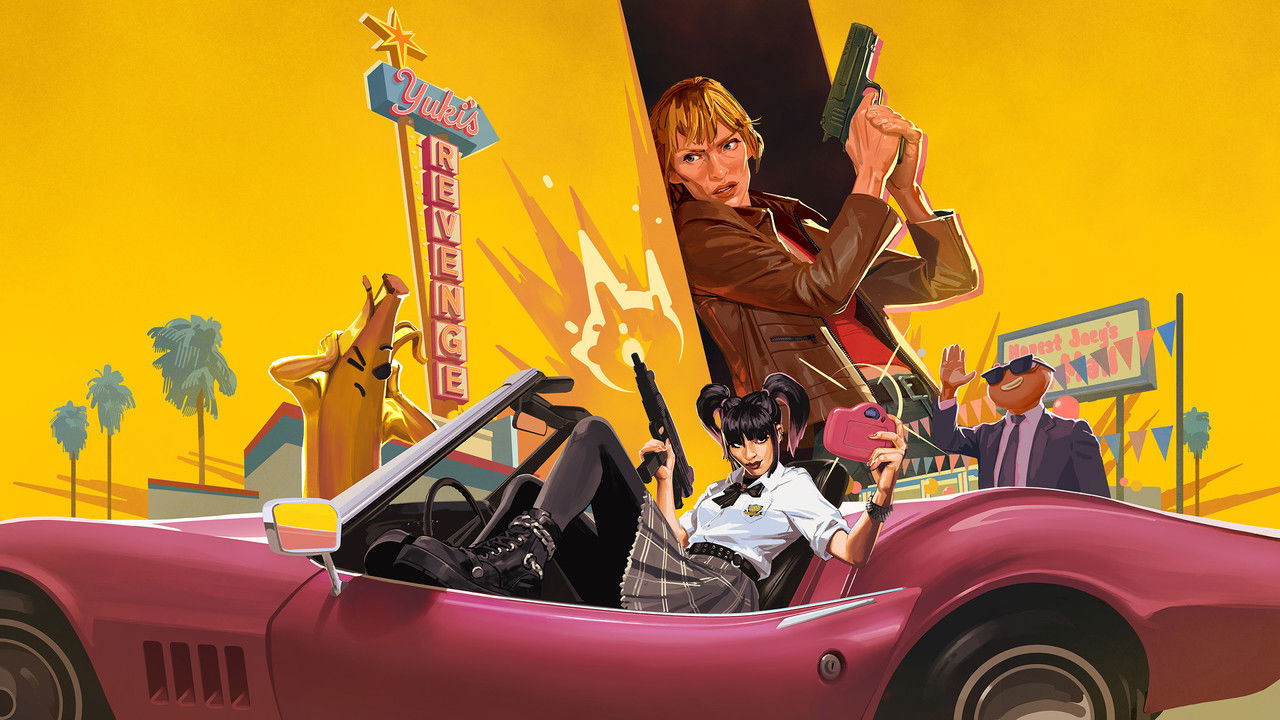
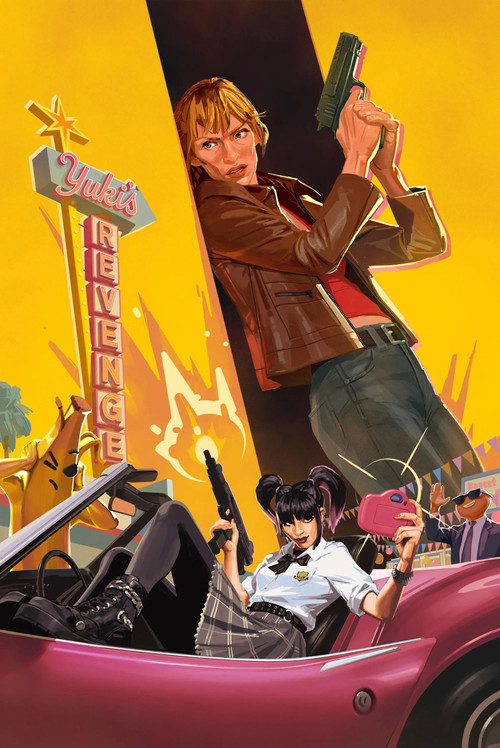
Cinema has traditionally been a medium of permanence—once the celluloid is cut, the story is sealed. But in our increasingly fluid digital age, the ghosts of unmade films are finding strange new vessels for resurrection. Quentin Tarantino’s *The Lost Chapter: Yuki’s Revenge* is perhaps the most bizarre and fascinating example of this shift. For two decades, this sequence—a violent interlude from the original *Kill Bill* script involving Gogo Yubari’s vengeful twin sister—existed only as a "what if" in the minds of obsessive cinephiles. Its sudden materialization, not on 35mm film but within the chaotic, candy-colored engine of *Fortnite*, forces us to reconsider the boundaries between high art and the digital playground.
What makes *Yuki’s Revenge* compelling is not merely its existence, but the tension in its visual language. Tarantino, a director defined by tactile fetishism—the grain of film, the splash of practical squibs, the weight of a samurai sword—has transposed his vision into a world defined by weightlessness. Using Epic’s Unreal Engine, the film adopts the "Fortnite aesthetic": smooth textures, exaggerated physics, and a sanitized absence of gore. Yet, the directorial hand remains unmistakable. The framing of the showdown at the neon-lit motel carries the geometric precision of a Spaghetti Western, creating a dissonance that is surprisingly effective. We are watching a violent tragedy enacted by digital avatars who cannot bleed, a stylistic choice that inadvertently turns the violence into a kind of energetic ballet, stripping away the grotesque to reveal the pure kinetic rhythm of the fight.
At the center of this digital resurrection is the character of Yuki Yubari (voiced with manic energy by Miyu Ishidate Roberts). In the original *Kill Bill* saga, the Yubari sisters represent a terrifying corruption of youth—schoolgirls turned into instruments of death. Here, Yuki operates as a narrative echo, a ghost chasing a ghost. Her confrontation with The Bride (a motion-captured Uma Thurman, weary even in polygon form) feels less like a plot point and more like a meditation on the cycle of revenge itself. Just as The Bride cannot escape her past, Tarantino cannot seemingly escape the allure of this world he created twenty years ago. The tragedy of Yuki is not just that she seeks revenge, but that she is a character born too late, fighting a battle that was effectively decided two decades ago in a different medium.
Critics might be tempted to dismiss this project as a novelty, a mere promotional stunt for the theatrical release of *The Whole Bloody Affair*. However, to view it solely through a commercial lens is to miss its peculiar melancholy. *Yuki’s Revenge* suggests that our stories are no longer finite. A director can reach back into the archives, pull out a discarded page, and animate it into existence for an audience that wasn't even born when the original film premiered.
Ultimately, *The Lost Chapter* is a spectral footprint in the sand. It is a reminder that the *Kill Bill* universe is a mythology so dense that it can spill over from the cinema screen into the server room. It may lack the visceral, gritty punch of the live-action films, but it succeeds as a piece of pop-art performance—a digital dream of a movie that never was, finally allowed to wake up.