The Geometry of VirtueIn the sprawling landscape of modern *donghua* (Chinese animation), there exists a tension between the ethereal abstraction of traditional cultivation stories and the grounded, plate-mail heaviness of Western high fantasy. *Throne of Seal* (Shen Yin Wang Zuo), adapted from the web novel by Tang Jia San Shao, attempts to bridge this divide. It is a series that operates with the mechanical precision of a video game but breathes with the earnest, unironic lungs of a classical epic. To view it simply as another "level-up" progression fantasy is to miss its central aesthetic experiment: can the rigid geometry of absolute virtue still compel an audience in a deconstructed world?
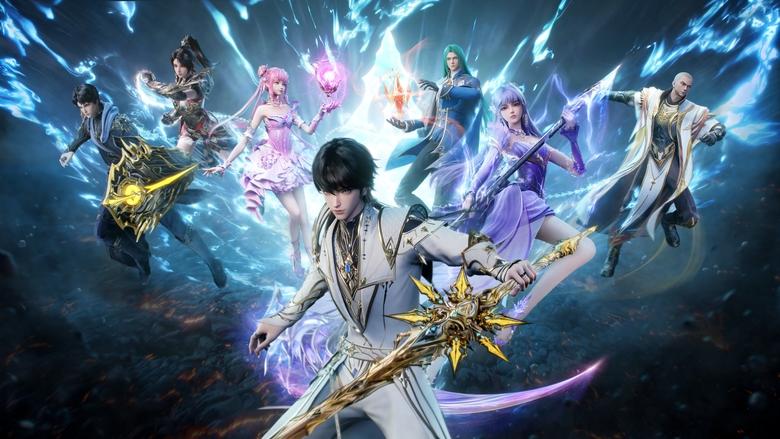
Visually, the series is a triumph of texture over restraint. Produced by Shenman Entertainment, the studio behind similar titan *Soul Land*, the animation style leans into a hyper-polished 3D aesthetic that borders on the porcelain. The world of the Six Temples, built to defend humanity against a millennia-old demon invasion, is rendered with a saturation that rejects grimdark trends. When Long Haochen, our prodigious protagonist, dons his armor or summons the titular Divine Throne, the screen dissolves into a kaleidoscope of golds and cyans. The visual language here is not subtle; it is oppressive in its beauty, designed to simulate the overwhelming pressure of divine power. The fight choreography deserves particular praise—it possesses a weight and impact that grounds the magical pyrotechnics, turning abstract energy blasts into physical struggles for survival.
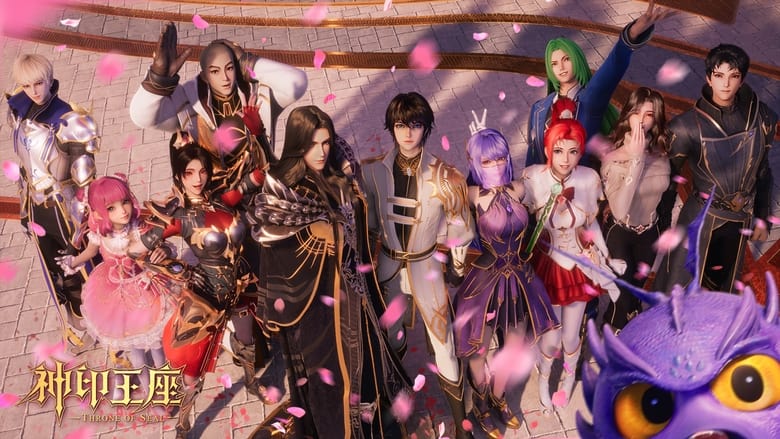
However, the show’s glossy exterior protects a narrative core that struggles with the burden of perfection. Long Haochen is a protagonist molded from the clay of Arthurian legend rather than the conflicted anti-heroes of modern prestige TV. He is the Knight of Knights—kind, self-sacrificing, and preternaturally talented. In a cynical era, such unblemished goodness can feel flat, even alienating. The narrative risks collapsing under the weight of his inevitability; we rarely fear for his soul, only for his hit points. Yet, the series finds its emotional resonance not in Haochen’s solitary perfection, but in the interdependence of his team. The "Demon Hunter Squad" dynamic shifts the focus from an individual savior to a collective unit, allowing the supporting cast—particularly the enigmatic and tragic assassin Cai’er—to inject necessary friction and darkness into Haochen’s blinding light.

The series is not without its structural faults. As with many long-running web novel adaptations, *Throne of Seal* suffers from distinct pacing issues. The transition from the tight, tournament-arc tension of the early episodes to the sprawling, open-world warfare of the mid-hundreds can feel disjointed. Recent discourse surrounding the adaptation has highlighted a friction between fidelity and flow, with the showrunners occasionally struggling to translate the internal monologues of the text into visual action without resorting to heavy-handed exposition.
Ultimately, *Throne of Seal* stands as a fascinating artifacts of cross-cultural fantasy. It uses the visual vernacular of World of Warcraft to tell a story that is deeply rooted in Confucian ideals of duty, hierarchy, and benevolence. It may not deconstruct the hero’s journey, but it polishes the archetype until it gleams with a blinding, if occasionally artificial, brilliance. For those willing to embrace its earnestness, it offers a spectacle of hope that is rare in the landscape of apocalyptic fiction.