The Laugh Track as Time MachineThere is a distinct, almost jarring temporal dissonance at the heart of *Georgie & Mandy’s First Marriage*. We are watching a sequel to a prequel, a show that exists in the narrative future of *Young Sheldon* but feels, structurally, like a retreat into the television past. Chuck Lorre, the architect of this ever-expanding *Big Bang Theory* universe, has made a bold, arguably regressive choice: he has taken characters born in the single-camera, cinematic warmth of *Young Sheldon* and transplanted them into the bright, flat lighting of a multi-camera sitcom stage.

The result is a show that feels less like a continuation of a story and more like a reformatting of a memory. *Young Sheldon* thrived on its quiet moments—the silence of a dinner table, the unspoken anxieties of a boy genius. *Georgie & Mandy* obliterates that silence with the roar of a studio audience. The pilot acknowledges this shift with a meta-textual wink that borders on an apology: Georgie, watching *Frasier* on TV, comments on how he loves "laughing shows" because they tell you when to be happy. It is a clever line, but it also exposes the show’s insecurity. It knows it has abandoned the emotional texture of its predecessor for the rhythmic comfort food of "setup, punchline, pause."
Visually, the show suffers from this transition. The intimate, dust-mote aesthetic of the Cooper home is replaced by the staginess of the McAllister household. The sets feel like sets; the lighting is designed for visibility rather than mood. However, within this artificial space, Montana Jordan (Georgie) and Emily Osment (Mandy) work frantically to keep the human spark alive. Jordan, whose thick Texan drawl was the secret weapon of *Young Sheldon*, brings a surprising depth to Georgie. He plays the character not as a buffoon, but as a young man terrified of failing his family, hiding his anxiety behind a mask of simple-minded optimism.
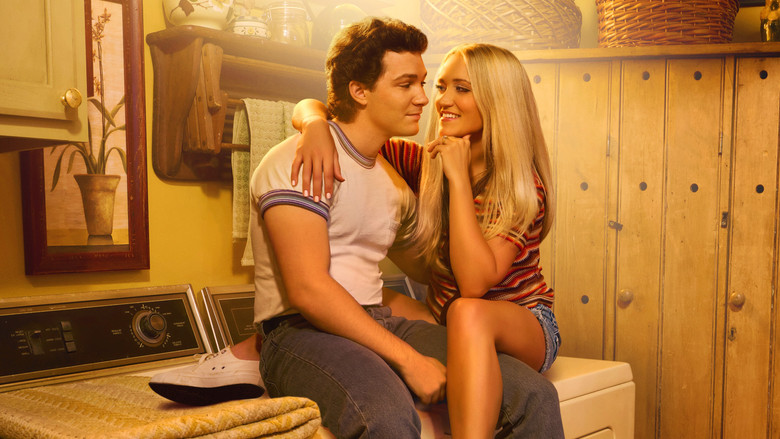
The friction of the series lies in the domestic claustrophobia. Living with Mandy’s parents—the domineering Audrey (Rachel Bay Jones) and the pushover Jim (Will Sasso)—creates a pressure cooker environment that the multi-cam format actually serves well. The "in-laws from hell" trope is ancient, but the cast elevates it. The conflict isn't just about sitcom misunderstandings; it’s about class and competence. Georgie is a high school dropout surrounded by people who expect him to fail. When the laughter dies down, there is a genuine melancholy in his struggle to prove he is more than just a "sperm donor" or a mistake Mandy made.
Ultimately, *Georgie & Mandy’s First Marriage* is a fascinating experiment in format nostalgia. It attempts to bridge the gap between the heartfelt dramedy of the 2010s and the broad sitcom style of the 1990s. While it often stumbles—sacrificing nuance for volume—it succeeds when it focuses on the terror of young parenthood. It is a show about people trying to build a future while trapped in the architecture of the past.