The Clockwork Heart of Human VulnerabilityIn the vast, often sterile assembly line of modern romantic comedies, *Mechanical Marie* (2025) arrives as a curious anomaly—a series that wears the cold, metallic plating of high-concept farce but beats with a surprisingly tender, albeit erratic, human pulse. Directed by veteran Junji Nishimura, whose résumé includes the delicate emotional landscapes of *True Tears*, this adaptation of Aki Akimoto’s manga initially presents itself as a slapstick exercise in deception. Yet, beneath the gears and gags of its "robot maid" premise lies a surprisingly sharp critique of emotional isolation in an era where genuine connection feels increasingly perilous.
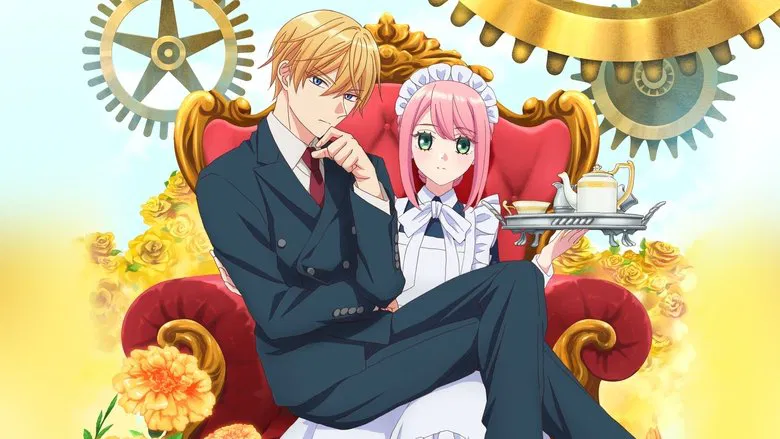
The narrative framework is deceptively simple, almost retro in its absurdity. Marie (voiced with impeccable deadpan precision by Nao Toyama) is a former martial arts prodigy whose naturally stoic expression makes her the perfect candidate for a bizarre job: posing as a "mechanical maid" for Arthur, a wealthy heir whose trauma-induced misanthropy has led him to despise all humanity. He demands a robot because he cannot trust a soul; he gets Marie, a woman performing emptiness to survive. This dynamic could have easily devolved into cheap "fan service" or repetitive misunderstandings. Instead, Nishimura uses the visual language of the series to explore the safety of masks. The animation, a collaborative effort between studios Zero-G and Liber, often juxtaposes the suffocating opulence of Arthur's mansion with the frantic, sweat-drop energy of Marie’s internal monologue, creating a visual dissonance that mirrors their relationship: a collision of rigid control and chaotic reality.
The series finds its emotional truth not in the "will they/won't they" tension, but in the tragedy of Arthur's affection. He falls for Marie precisely because he believes she is an object—safe, programmable, and incapable of betrayal. This is the show’s dark, beating heart. When Arthur dotes on his "robot," confiding his deepest fears to a machine, he is actually exposing his vulnerability to the one thing he hates most: a human woman. The irony is tragic, not just comic. Scene by scene, we watch Marie struggle not just with the physical comedy of mimicking hydraulic movements, but with the moral weight of receiving love intended for a hollow shell. The show asks a potent question: If we must become objects to be loved safely, what does that say about the fragility of modern trust?
While the series has faced some critical headwinds—specifically regarding the controversy of "still frame" techniques that some viewers found jarringly static—these moments strangely serve the narrative. The stillness of the animation during key emotional beats forces the audience to scrutinize Marie’s face, searching for the micro-expressions that Arthur misses. It transforms budget constraints into a stylistic choice that emphasizes the "uncanny valley" of their relationship. However, the show is not without its mechanical failures; the pacing in the latter half feels rushed, compressing the manga’s six-volume run into a sprint that occasionally sacrifices character depth for plot resolution.
Ultimately, *Mechanical Marie* is a story about the devastating effort it takes to let one's guard down. It suggests that in a world demanding perfection, the most robotic thing we can do is hide our messiness, and the most human thing we can do is accept the glitches in others. It is a charming, imperfect, and surprisingly poignant fable that reminds us that even the most steel-hardened hearts are looking for a soft place to land.