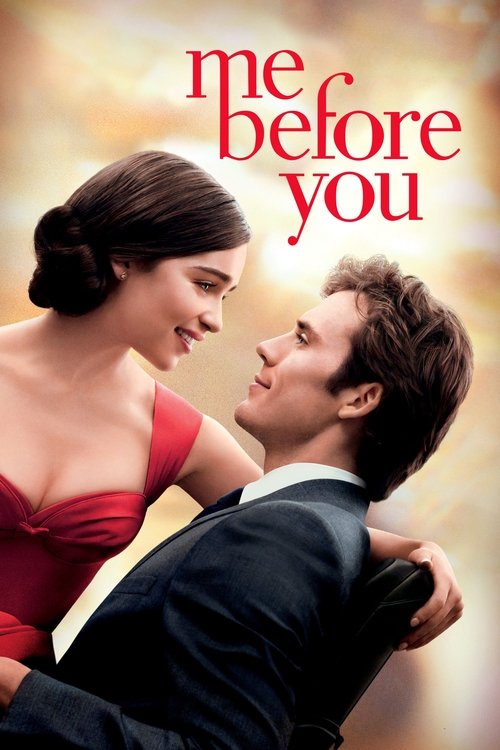
The Gloss of TragedyThe romantic drama is a genre that usually trades in the currency of healing. We expect the broken protagonist to be mended by the sheer force of affection, the "love conquers all" ethos that has powered Hollywood since its inception. *Me Before You* (2016), directed by Thea Sharrock, presents itself in this familiar, confectionery wrapping—complete with Ed Sheeran needle drops and sun-dappled English countrysides—yet it smuggles a far sharper, colder pill inside its sweetness. It is a film that asks us to swoon over a romance that is fundamentally built on an expiration date, creating a dissonance that is as compelling as it is deeply, often uncomfortably, controversial.

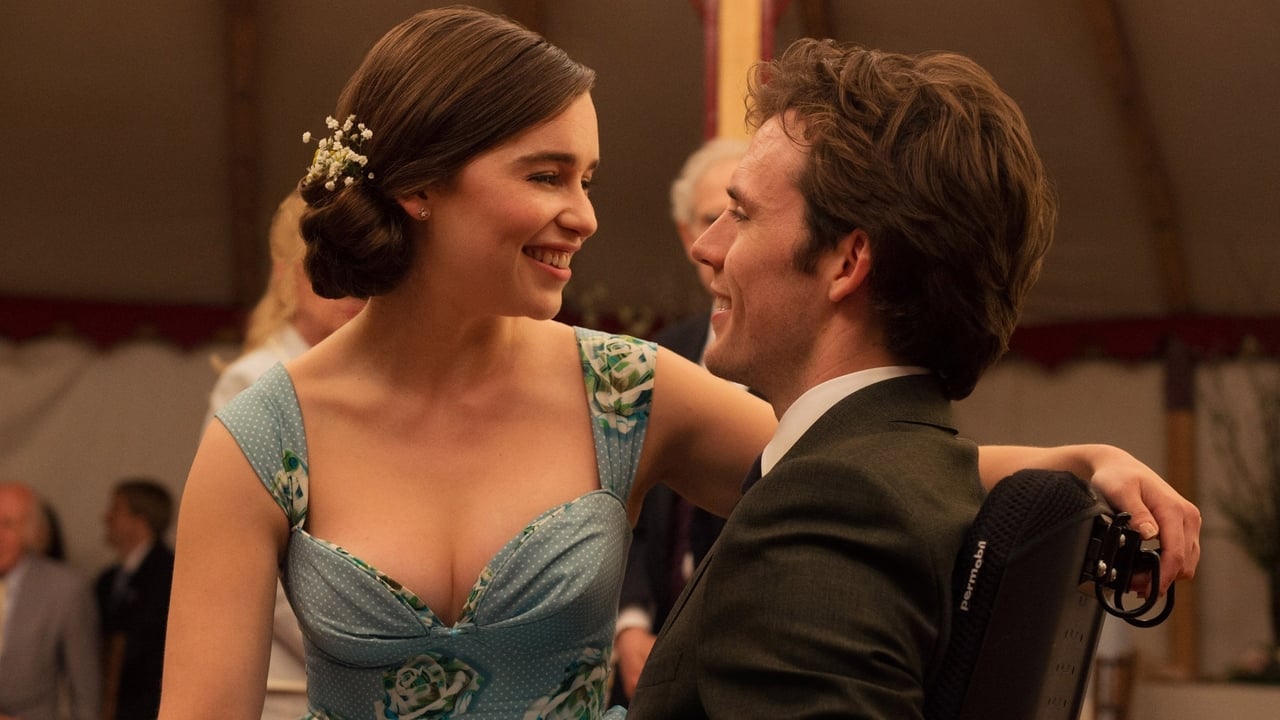
Visually, Sharrock—making her feature debut after a celebrated career in theater—constructs a world defined by stark, almost violent contrasts. The film’s aesthetic strategy is best summarized by the wardrobe of Louisa Clark (Emilia Clarke). She is a riot of primary colors, fuzzy sweaters, and those infamous bumblebee tights, a walking kaleidoscope designed to clash against the slate-gray sterility of the Annex where Will Traynor (Sam Claflin) resides. Sharrock uses the imposing architecture of the Traynor family castle not just as a setting of wealth, but as a fortress of isolation. The camera often lingers on the physical barriers—stairs, gravel paths, narrow doorways—that turn this fairytale setting into a prison for Will. The visual language constantly reinforces the distance between Lou’s world of infinite, chaotic possibility and Will’s world of managed stillness.
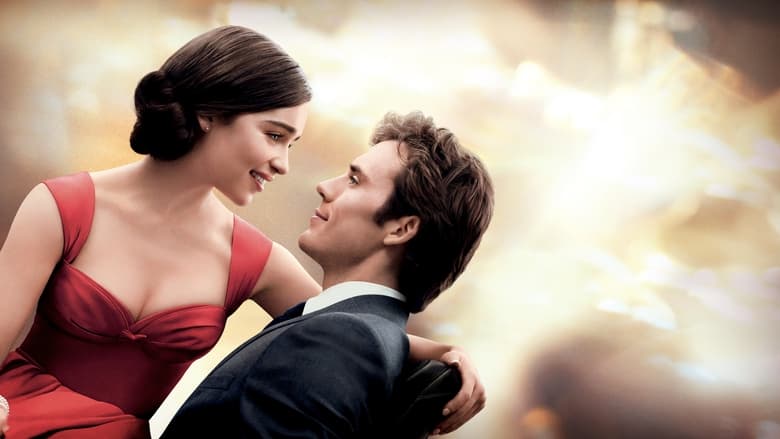
At the center of this visual tug-of-war is Emilia Clarke, who weaponizes her expressive eyebrows and effervescent charm to devastating effect. It would be easy to dismiss Lou as a caricature of the "Manic Pixie Dream Girl" trope, but Clarke imbues her with a genuine, blue-collar warmth that feels grounded in economic necessity rather than just whimsy. She is the unstoppable force meeting Sam Claflin’s immovable object. Claflin delivers a performance of remarkable restraint; robbed of physical gesture, he acts entirely with his eyes and voice, conveying a lifetime of bitterness that slowly, begrudgingly, makes room for joy. Their chemistry is the engine of the film, a palpable connection that makes the inevitable conclusion land with the intended emotional crushing weight.
However, one cannot discuss *Me Before You* without addressing the shadow that stretches across its third act. The film ignited a firestorm of debate within the disability community, and for justifiable reasons. The narrative trajectory suggests that Will’s choice to end his life is a noble sacrifice that allows Lou to "live boldly," a tagline that lands with a cruel irony. The film inadvertently romanticizes the idea that a disabled life is a tragedy to be escaped, rather than a reality to be lived. By framing Will’s death as the catalyst for Lou’s self-actualization, the script risks reducing a complex human struggle into a plot device for character development.

Despite these ethical quagmires, *Me Before You* remains a highly effective piece of emotional engineering. It is a glossy, tear-stained inquiry into the limits of love. It argues, somewhat radically for a studio romance, that love is not enough to save someone who does not wish to be saved. It leaves the viewer in a complicated space: wet-faced and moved by the tragedy of the lovers, yet troubled by the philosophy that separated them. It is a beautiful, glossy postcard from a very difficult place.