The Architecture of LongingThere is a moment early in Zeynep Günay’s adaptation of *The Museum of Innocence* (Masumiyet Müzesi) where the camera lingers not on the lovers, but on a half-smoked cigarette resting in a crystal ashtray. In most romances, this would be debris; here, it is a holy relic. This Netflix limited series, arriving with the heavy burden of being the first domestic adaptation Orhan Pamuk has blessed with his full approval, is not merely a story about a man who loves a woman. It is a forensic examination of how memory attaches itself to matter, and how a city—1970s Istanbul—can become a ghost story while its inhabitants are still alive.
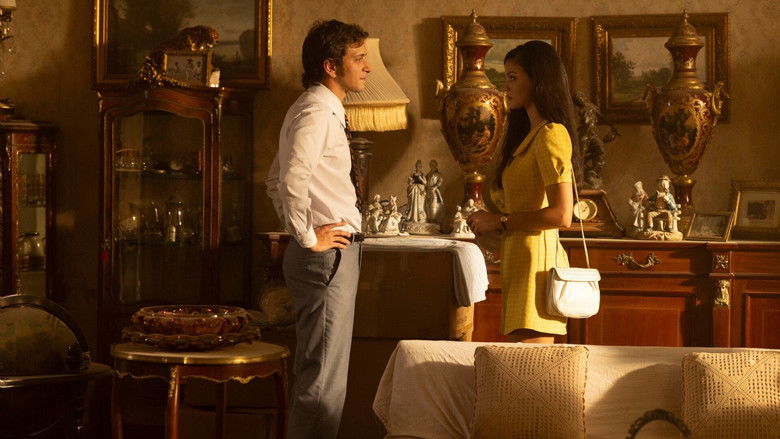
The narrative framework is deceptively simple, almost dangerously close to soap opera (Yeşilçam) tropes. Kemal (Selahattin Paşalı), a scion of Istanbul’s Westernized bourgeoisie, is engaged to the equally pedigreed Sibel. Yet, his compass spins wildly off course when he reconnects with Füsun (Eylül Lize Kandemir), a distant, shop-girl cousin. What follows is not a "love affair" in the modern, liberated sense, but a descent into an obsession so total it requires its own architecture to contain it.
Günay, a director known for her textured work in *The Club*, understands that this story cannot be told through dialogue alone. Her visual language is suffocatingly tactile. The cinematography establishes a golden, hazy filter over 1975 Istanbul—a "hüzün" (melancholy) that feels like looking through an old cognac bottle. The screen is filled with the detritus of passion: quince graters, ceramic dogs, barrettes, and the infamous 4,213 cigarette butts that Kemal eventually collects. By prioritizing these objects, the series succeeds where many literary adaptations fail: it captures the fetishistic quality of Pamuk’s prose. The objects are not props; they are anchors for a man drifting away from reality.
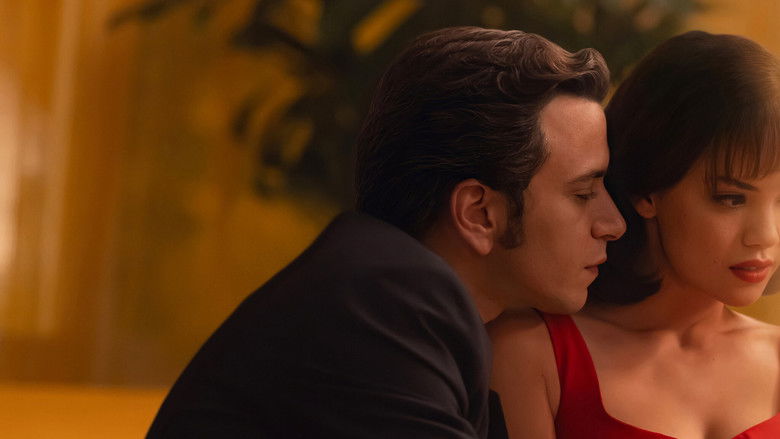
At the center of this museum is Selahattin Paşalı’s Kemal. Paşalı plays him not as a romantic hero, but as a man suffering from a fever dream. His Kemal is pitiable, selfish, and profoundly human. He navigates the rigid class stratifications of the era—the tea parties, the imported liquors, the desperate imitation of European customs—with a growing detachment, his eyes always scanning for an exit, or for Füsun. Kandemir’s Füsun is a trickier performance; she must be both the object of the gaze and a person trapped by it. In the scenes where Kemal silently pockets a trinket from her family's table, the tension is excruciating—a violation masquerading as devotion.
The series does not shy away from the controversial aspects of the source material. It interrogates the "modernity" of Turkey’s elite, exposing the deep patriarchal rot beneath the cocktail parties and Western fashions. Sibel (Oya Unustası), often the forgotten victim in this triangle, is given a tragic dignity here, representing a generation of women who played by all the rules only to lose the game.
Ultimately, *The Museum of Innocence* is a triumph of atmosphere over plot. It asks us to consider if love is a shared experience or a solitary act of curation. By the time the credits roll on the final episode, we are left with the unsettling realization that we have not just watched a romance, but toured a mausoleum of wasted time. It is a beautiful, suffocating place to visit, reminding us that while people die, the things they touched—and the feelings they held—remain stubbornly, painfully present.