Spider-Man: Into the Spider-Verse backdrop
Spider-Man: Into the Spider-Verse poster

Spider-Man: Into the Spider-Verse

“More than one wears the mask.”

8.4
2018
1h 57m
AnimationActionAdventureScience Fiction
Director: Bob Persichetti
Watch on Netflix

Overview

Struggling to find his place in the world while juggling school and family, Brooklyn teenager Miles Morales is unexpectedly bitten by a radioactive spider and develops unfathomable powers just like the one and only Spider-Man. While wrestling with the implications of his new abilities, Miles discovers a super collider created by the madman Wilson "Kingpin" Fisk, causing others from across the Spider-Verse to be inadvertently transported to his dimension.

Trailer

Official Trailer #2 Official

Cast

Reviews

AI-generated review
The Art of the Leap

By 2018, the superhero genre had settled into a comfortable, profitable rigor mortis. The formula was perfected, the universes were shared, and the visual language had homogenized into a reliable, photorealistic grey. Then came *Spider-Man: Into the Spider-Verse*, a film that didn't just break the mold; it shattered the very concept of what an animated blockbuster was allowed to be. Directors Bob Persichetti, Peter Ramsey, and Rodney Rothman didn't deliver a product; they delivered a kinetic manifesto, arguing that cinema should not merely observe a comic book world, but inhabit its ink, paper, and chaotic soul.

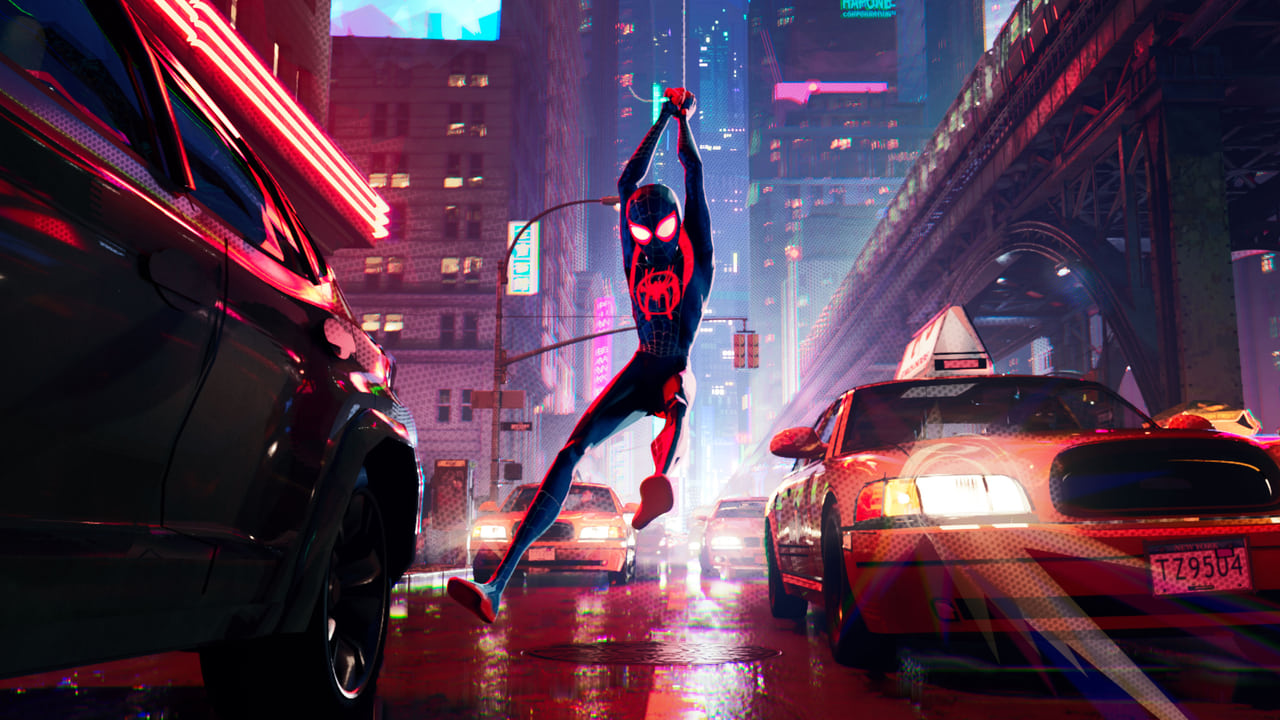
From the opening frames, the film declares war on the polished "Pixar style" that had dominated Western animation for two decades. The visual landscape here is not a window into a simulated reality, but a tactile canvas. The filmmakers utilize a technique known as "step printing"—animating characters on "twos" (every second frame) rather than ones—to create a crisp, staccato rhythm that mimics the static punch of sequential art. The screen is alive with Ben-Day dots, deliberate color misalignments, and hand-drawn line work that jitters with nervous energy. It creates a suffocating sense of style that feels rebellious, grabbing the viewer by the lapels and refusing to let go.

Yet, this aesthetic aggression never eclipses the narrative; it amplifies it. The film’s emotional anchor is Miles Morales, a protagonist who begins not as a hero, but as a terrified teenager drowning in expectations. The genius of the script (co-written by Phil Lord) lies in how it marries the visual technique to Miles's internal struggle. Early in the film, Miles moves out of sync with his environment—literally animated at a different frame rate than the accomplished Peter B. Parker. He is a glitch in his own story, an awkward scribble trying to find his form.

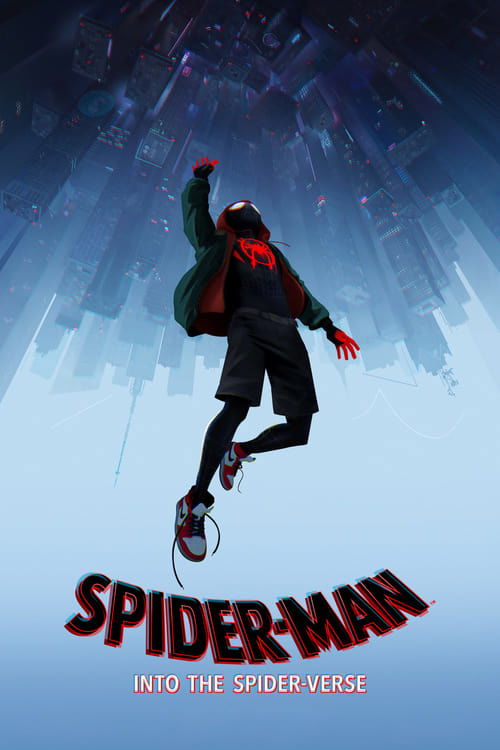
The film’s philosophy crystallizes in the widely celebrated "Leap of Faith" sequence. It is a masterclass in visual storytelling. As Miles stands atop a skyscraper, finally accepting the mantle, he dives into the void. The camera inverts, framing Miles not as falling toward the earth, but rising into the skyline. The glass of the building shatters under his fingertips—not just a physics interaction, but a metaphor for the fragile barrier of his own self-doubt breaking apart. The scene is terrifying and triumphant, stripping away the irony and cynicism often found in the genre to reveal a raw, beating heart.

The narrative creates a "found family" dynamic among the alternate Spiders—a noir-drenched detective, a Looney Tunes-esque pig, an anime tech-pilot—that serves a purpose beyond novelty. They represent the universality of the symbol. The central thesis, "anyone can wear the mask," is a radical democratization of the superhero myth. It shifts the focus from bloodlines and destiny to choice and resilience.

*Into the Spider-Verse* remains a singular achievement because it understands that animation is a medium of infinite plasticity. It proved that audiences didn't need photorealism to feel the weight of a punch or the sting of a tear. It is a vibrant, thrumming assertion that a story about a kid from Brooklyn can be as visually avant-garde as it is emotionally profound. In a sea of identical cape-and-cowl epics, this film dared to jump without looking, and in doing so, taught the entire medium how to fly.

Clips (3)

Clip - First 9 Minutes of the Movie

Fight or Flight

Clip - Another, Another Dimension

Featurettes (6)

Into The Spider-Verse's Production Designer Shares Secrets (Artists Alley)

Special Features “Spider Gwen"

Different Animation Styles

Sizzle Reel - Paris & London Comic Con

Behind The Voices of Spider-Man: Into the Spider-Verse

All Released Bonus Features

Behind the Scenes (6)

Visual FX Breakdown

Building New York City

Animating Miles

Embracing Imperfection

How Animators Created the Spider-Verse

Visual Effects Behind the Scenes

LN
Latest Netflix

Discover the latest movies and series available on Netflix. Updated daily with trending content.

About

  • AI Policy
  • This is a fan-made discovery platform.
  • Netflix is a registered trademark of Netflix, Inc.

© 2026 Latest Netflix. All rights reserved.