✦ AI-generated review
The Grammar of Grief
In the vast, noisy canon of alien invasion cinema, silence is a rarity. We are conditioned to expect the screech of lasers, the crumbling of landmarks, and the frantic barking of military orders. Yet, in Denis Villeneuve’s *Arrival* (2016), the apocalypse is not announced with a bang, but with a whisper—or rather, a smudge of ink. Standing at the threshold of modern science fiction, Villeneuve’s film is less about the terrifying "other" descending from the stars, and more about the terrifying intimacy of understanding ourselves. It is a film that weaponizes linguistics to break your heart.
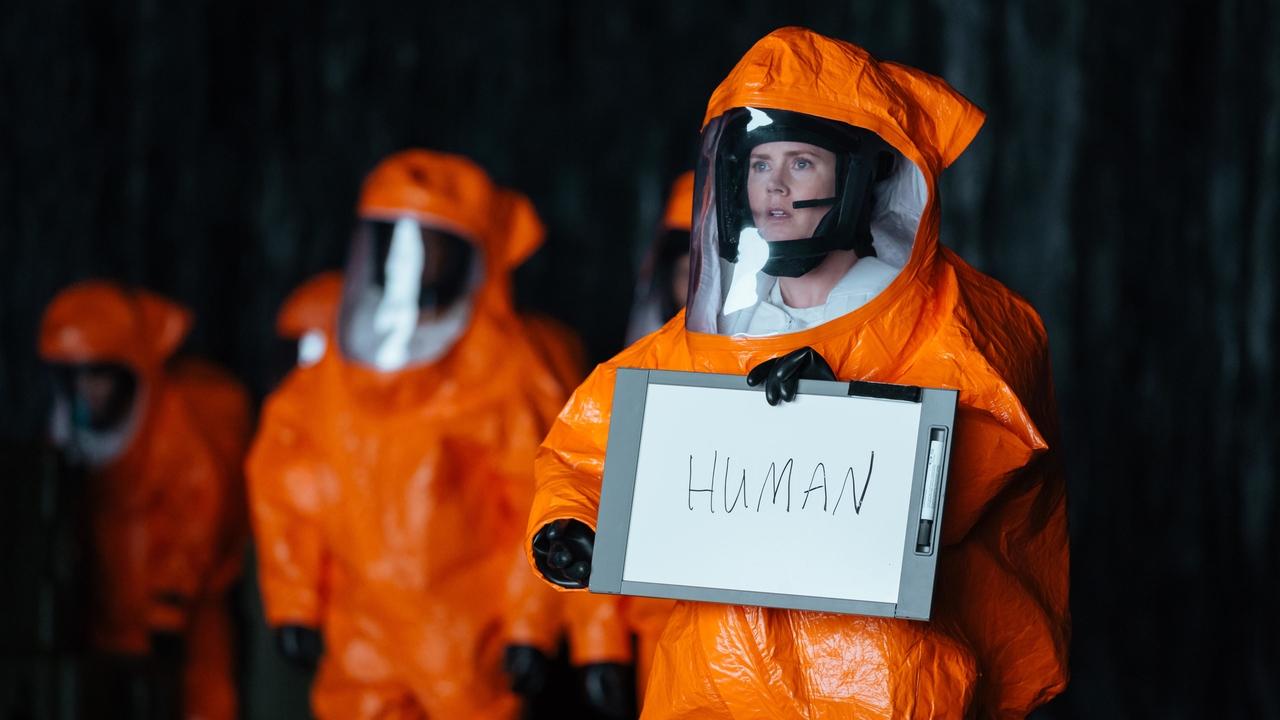
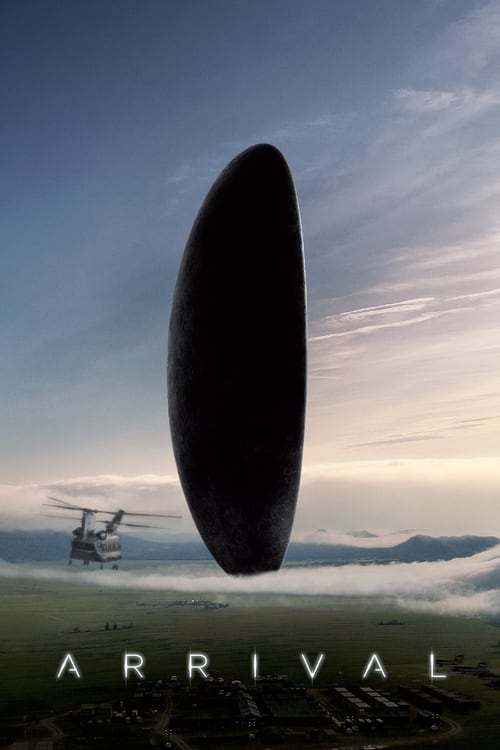
Visually, Villeneuve and cinematographer Bradford Young reject the gloss typical of the genre. The alien craft, dubbed "shells," are not chrome-plated war machines but monoliths of rough, dark stone, hanging in the air like suspended breaths. The film’s palette is damp and suffocatingly terrestrial—gray mists, muddy fields, and the sterile, hazmat-orange interiors of military tents. This grounding is essential; it forces the fantastical elements to feel tactile and heavy. When the linguist Louise Banks (an ethereal yet grounded Amy Adams) enters the shell, the manipulation of gravity and the obsidian barrier she faces suggest a cathedral more than a cockpit. The visual language mirrors the narrative’s intellectual density—ominous, obscure, yet profoundly beautiful.
At the film's center lies the Sapir-Whorf hypothesis, the linguistic theory suggesting that the structure of a language determines a native speaker's perception of experience. In lesser hands, this would be dry academic exposition. In *Arrival*, it is the key to a devastating emotional lock. As Louise decodes the Heptapods’ circular logograms—ink-blot circles that have no beginning or end—her own perception of time begins to loop. Villeneuve uses the medium of film, inherently linear, to trick us. We see flashes of a dying child and assume they are flashbacks, the tragic backstory that fuels our protagonist's melancholy.
The revelation that these are not memories of the past, but memories of the future, reframes the entire narrative from a global thriller to an intimate tragedy. The "alien invasion" is merely the delivery system for the film’s true payload: the question of determinism. If you knew the story of your life—the exact trajectory of love, loss, and the inevitable death of your child—would you still choose to write it?
Amy Adams delivers a performance of quiet, trembling fortitude that anchors this high-concept philosophy. She plays Louise not as a stoic scientist, but as a woman learning to speak a language that will burden her with the totality of time. The scene where she translates the alien concept of "weapon" as "tool" is a masterclass in tension, but the film's true climax is personal. It is the moment she chooses to embrace the future, knowing it leads to the "Chekhov’s gun" of her daughter’s illness.
*Arrival* argues that the greatest act of courage is not fighting a superior enemy, but accepting the impermanence of joy. By the time the credits roll, the film has transcended its genre to become a meditation on the human condition. It suggests that even if life is a palindrome—ending exactly where it began, in silence—the sentences we speak in between are the only things that matter.