✦ AI-generated review
The Sweat and the Slime: A Love Story
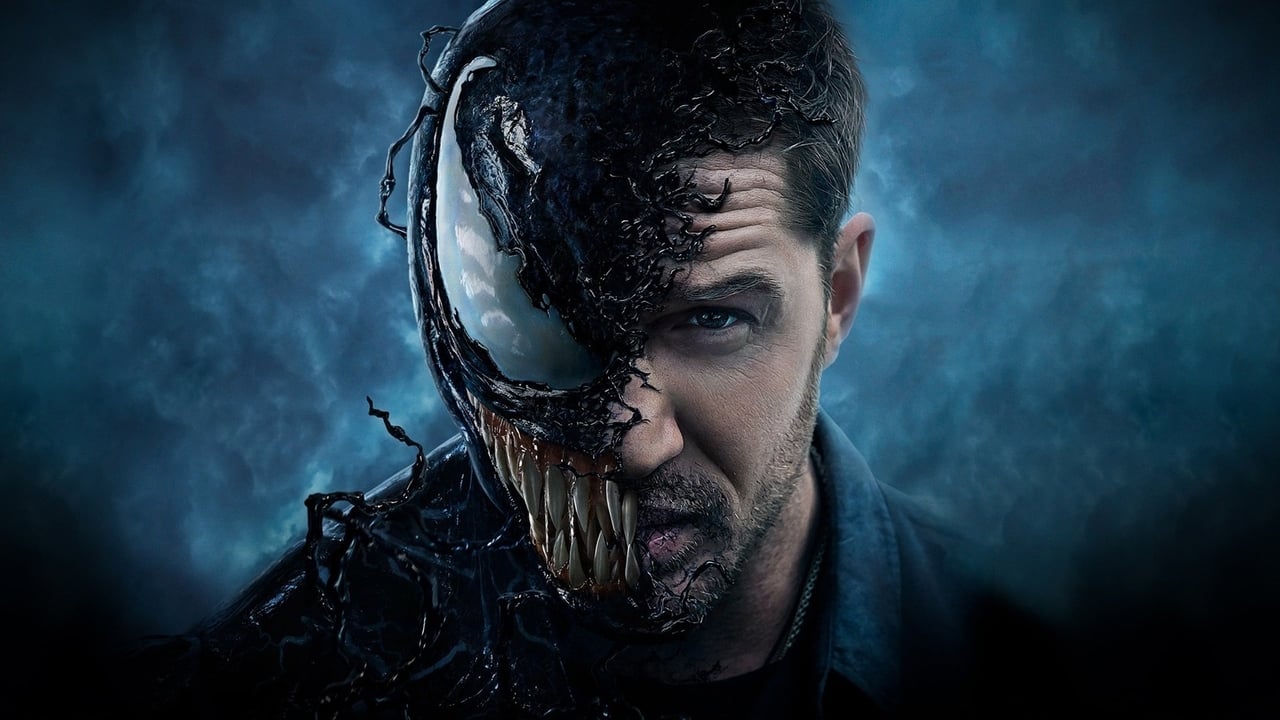
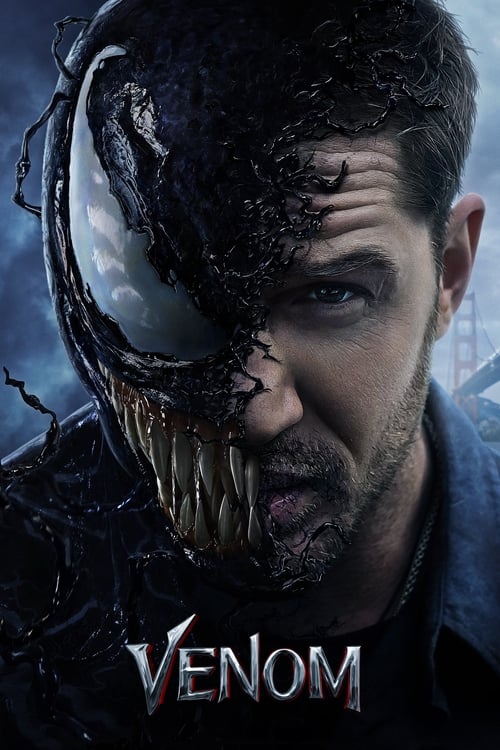
In the autumn of 2018, the landscape of blockbuster cinema was a manicured garden. The Marvel Cinematic Universe had conditioned audiences to expect polished, quippy, interlocking narratives where every beat was calibrated for maximum efficiency. Into this pristine environment crashed Ruben Fleischer’s *Venom*, a film that felt less like a carefully curated product and more like a feral animal set loose in a china shop. It was messy, tonally schizophrenic, and visually dark—a throwback to the early 2000s era of superhero cinema where leather jackets and nu-metal angst reigned supreme. Yet, to dismiss *Venom* as a mere failure of quality control is to miss the fascinating, sweaty humanity pulsing beneath its digital skin.
At a glance, the film’s visual language is admittedly muddled. Fleischer paints San Francisco not as a gleaming tech utopia, but as a grimy noirscape of rain-slicked streets and shadows. The CGI, often criticized for being "muddy," actually serves a distinct narrative purpose. The symbiote is not a clean, metallic suit of armor like Iron Man’s; it is viscous, organic, and inherently gross. The visual effects create a suffocating sense of reality, emphasizing that Eddie Brock is not being "empowered" in the traditional sense—he is being infected. The action sequences are chaotic blurs of black goo, mirroring the internal confusion of a man whose body is no longer his own.
However, the film’s salvation—and its unexpected brilliance—lies entirely in the feverish performance of Tom Hardy. While the script offers a standard "evil corporation" plot that collapses under its own ambition, Hardy refuses to play by the rules of a standard leading man. He plays Eddie Brock not as a stoic hero, but as a twitchy, sweating nervous wreck. Watch the now-infamous scene where Eddie, burning up with alien fever, invades an upscale restaurant and climbs into a live lobster tank to cool down. It is a moment of pure, improvisational madness that anchors the film’s absurdity in physical vulnerability. Hardy throws his body around like a ragdoll, conveying the terror of a man losing a wrestling match with his own nervous system.
This physical comedy belies the film’s true genre: it is not a superhero movie, but a romantic comedy. The central conflict is not between Venom and the villainous Riot, but between Eddie’s ego and the parasite’s id. They are the ultimate odd couple—one a disgraced journalist desperate for redemption, the other a "loser" on his home planet looking for a purpose. Their bickering internal monologue provides the film’s emotional heartbeat. When the symbiote admits that, on his planet, he is "kind of a loser" like Eddie, the film achieves a surprising poignancy. It suggests that heroism doesn't come from being the strongest or the most moral, but from finding a partner who understands your specific kind of brokenness.
Ultimately, *Venom* succeeds because it rejects the sanitized perfection of its peers. It is a film about two outcasts finding symbiosis in a world that wants to discard them. Where other films offer moral clarity and clean lines, *Venom* offers a sticky, complicated embrace of our own darker impulses. It is a reminder that sometimes, the most human stories are the ones about the monsters within us, and learning not to conquer them, but to live with them.