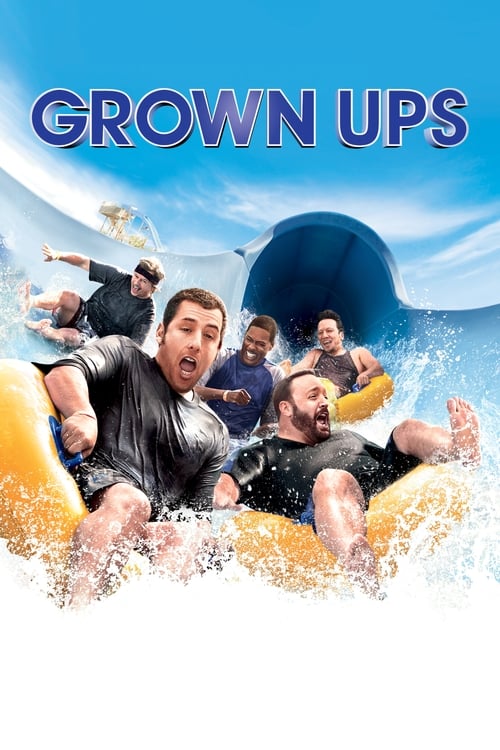
The Architecture of Arrested DevelopmentTo dismiss Dennis Dugan’s *Grown Ups* (2010) merely as a "lazy comedy" is to misunderstand its fundamental ambition. It is not trying to be a film in the traditional sense, with narrative arcs or character evolution. Rather, it is a document of sociological defiance—a cinematic manifesto for the refusal to engage with the complexities of the modern world. Adam Sandler, the auteur of the "man-child" archetype, here gathers his real-life confreres (Kevin James, Chris Rock, David Spade, Rob Schneider) not to act, but to exist in a state of suspended animation. The film operates less as a narrative and more as a simulated vacation, inviting the audience to inhabit a space where the most pressing existential threat is a mosquito bite or a bruised ego.

Visually, Dugan employs what might be called an "anti-aesthetic." The cinematography is aggressively high-key, bathing every scene in the flat, shadowless light of a sitcom or a reality television show. There is no mood, only visibility. The camera rarely moves with purpose; it sits and observes, often in wide shots that accommodate the five leads standing in a semicircle, trading barbs like a Greek chorus of the mediocre. This visual language serves a specific function: it strips away the artifice of "cinema" to create an illusion of intimacy. We are not watching a story; we are hanging out. The lack of visual sophistication is the point—it mirrors the characters’ rejection of sophistication in their own lives. They crave the simple, the analog, the unchallenging.

At the heart of the film lies a profound anxiety about relevancy and mortality, disguised as toilet humor. The plot, triggered by the death of a beloved childhood basketball coach, ostensibly sets up a reflection on grief. Yet, the characters immediately retreat into regression. Consider the "Arrow Roulette" scene, perhaps the film's most defining metaphor. The men stand in a circle, shoot an arrow straight into the sky, and wait to see where it lands, refusing to flee. It is a ritual of manufactured danger, a desperate attempt to feel the adrenaline of youth without actual consequence. They are tempting fate, but in the safe, insured environment of a movie set. It is a rebellion against the safety of their wealthy, suburban lives, yet it is performed with the idiocy of children.

Ultimately, *Grown Ups* is a tragedy of privilege. Sandler’s character, a high-powered Hollywood agent, attempts to force his spoiled, technology-addicted children to appreciate "real" fun—skipping stones, breathing fresh air. But the lesson rings hollow because the "simple life" he offers is rented, luxurious, and temporary. The film posits that the only cure for the alienation of modern success is to regress to a pre-responsibility state with your buddies. It is a seductive fantasy for a generation of men who feel the weight of the world and choose, instead of lifting it, to make a fart noise. In this light, *Grown Ups* is a fascinating, if frustrating, portrait of American male friendship: loyal, loving, and terrified of growing up.