✦ AI-generated review
The Architecture of Exhaustion
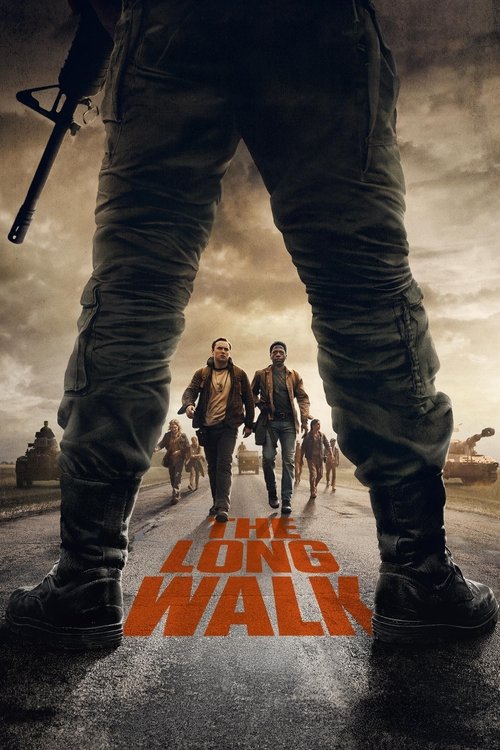
There is a specific kind of cruelty that Stephen King reserved for the novels he wrote under the pseudonym Richard Bachman. If King’s primary works are about the monsters under the bed, the Bachman books are about the monsters in the mirror—bleak, nihilistic reflections of human desperation. It is fitting, then, that director Francis Lawrence, who spent years orchestrating the polished, televised pageantry of *The Hunger Games*, has returned to the genre of dystopian youth survival only to dismantle it completely. In *The Long Walk* (2025), Lawrence strips away the capital-S Spectacle of Panem, leaving us with something far more terrifying: a road, a stopwatch, and the suffocating inevitability of gravity.
The premise is diabolically simple. In a totalitarian alternate America, fifty teenage boys are conscripted into an annual walking contest. The rules are binary: maintain a pace of four miles per hour, or die. There are no training centers, no flamboyant interviews with Caesar Flickerman, and no gamemakers twisting knobs to spawn fireballs. There is only the asphalt. Lawrence understands that the horror here is not in the violence of the execution—though the "tickets" (bullets) are distributed with jarring, percussive indifference—but in the architecture of exhaustion. The film’s visual language is claustrophobic, trapping the audience in the pack. We are not spectators watching from a comfortable distance; the camera, often handheld and low to the ground, forces us to feel the blistering heat of the tarmac and the rhythmic, hypnotizing cadence of failing boots.
The film’s emotional center of gravity rests entirely on the shoulders of Cooper Hoffman (as Ray Garraty) and David Jonsson (as Peter McVries). Hoffman, with his open, empathetic face, channels a tragic everyman quality that makes his journey devastatingly grounded. But it is Jonsson who is the revelation here, balancing a razor-wire intensity with a profound, aching vulnerability. Their chemistry transforms what could have been a repetitive slog into a kinetic study of male intimacy under duress. As the miles grind down their defenses, the competition dissolves into a desperate camaraderie. They are not fighting each other; they are fighting the biological imperative to stop.
The most discussed aspect of this adaptation will undoubtedly be the ending, a sharp deviation from the source material that reframes the story’s moral thesis. Where the novel ends in a fugue state of psychological obliteration—a victory that feels like a lobotomy—Lawrence and screenwriter JT Mollner opt for a conclusion that is more active, perhaps even controversial in its defiance. By shifting the survivor from Garraty to McVries, and turning the final act into a moment of sacrificial love rather than solitary madness, the film rejects total nihilism in favor of a searing political anger. The sight of McVries, the "winner," turning his prize (and a weapon) back upon the system—personified by Mark Hamill’s chillingly banal Major—suggests that while the body may be broken, the spirit of resistance is the only thing worth preserving.
Ultimately, *The Long Walk* is an endurance test for the audience as much as the characters. It refuses to offer the catharsis of a happy ending or the thrill of an action sequence. It is a grueling, necessary piece of cinema that asks us to stare at the fragility of life until it becomes uncomfortable. In a year crowded with glossy blockbusters, Lawrence has delivered a film that feels like a stone in your shoe—a persistent, painful reminder that the hardest part of survival isn't the dying, but the walking.