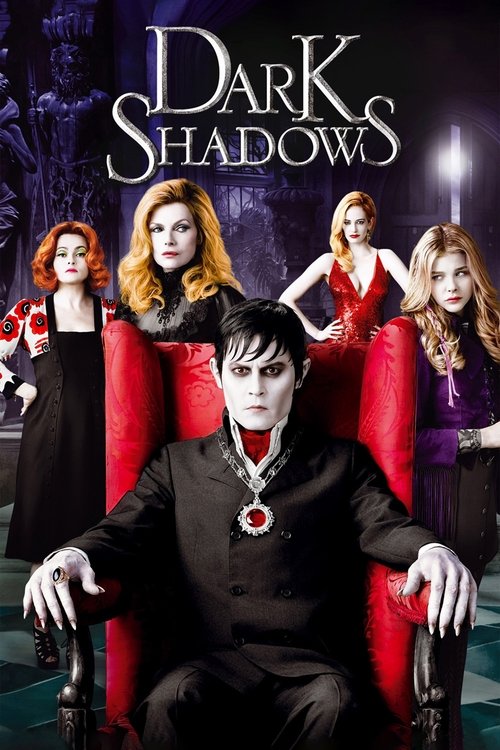
The Vampire at the Disco: A Gothic Identity CrisisThere is a precise moment in the trajectory of any auteur where a signature style risks calcifying into self-parody. For Tim Burton, a director whose career is built on the tender exploration of the misunderstood monster, *Dark Shadows* (2012) represents a curious, frustrated pivot point. It is a film that vibrates with the manic energy of a creator trying to reclaim his own sandbox, yet it often feels trapped in a feedback loop of its own eccentricities. Adaptation is always a tricky act of necromancy, but here, Burton attempts to resurrect the melodramatic spirit of Dan Curtis’s 1960s soap opera only to dress it in the garish, polyester drag of 1972.
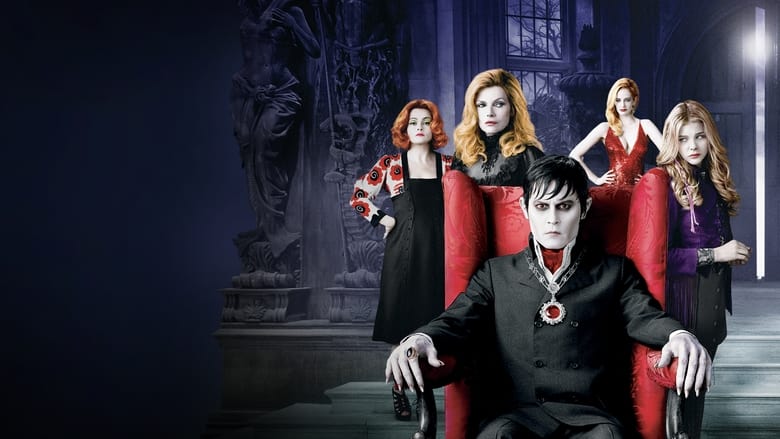
Visually, the film is a fascinating collision of two distinct maladies: the decaying aristocracy of the 18th century and the tacky commercialism of the Nixon era. Burton’s lens has always favored the expressionistic shadows of German cinema, and in the cavernous halls of Collinwood Manor, he is at home. The production design is exquisite in its gloom—a crumbling grand dame of a house that mirrors the dysfunction of the Collins family inhabiting it. However, when Barnabas Collins (Johnny Depp) steps out of his coffin and into the bright, plastic reality of 1972, the film engages in a visual argument that it never quite resolves. The gray, pallid skin of the vampire against the saturation of lava lamps and Chevrolet muscle cars creates a striking tableau, but one that highlights the film’s central narrative fracture.
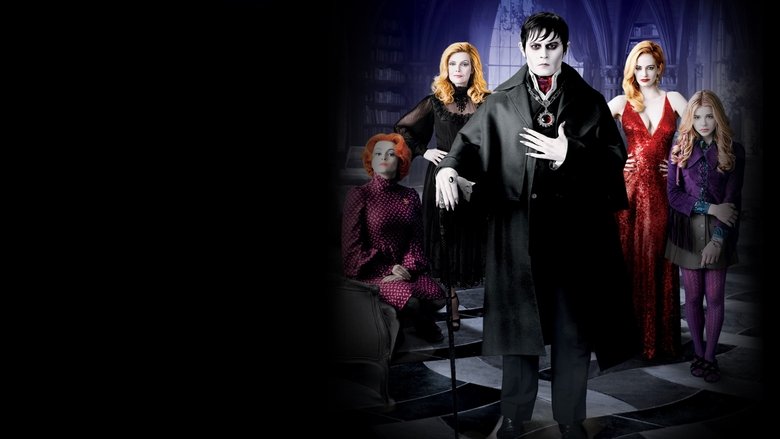
At the heart of this fracture is the performance of Johnny Depp. By this eighth collaboration with Burton, Depp’s "outcast" routine—the delicate, spider-like hand movements, the archaic diction, the wide-eyed innocence—had begun to feel like a calculated recital rather than a character study. Barnabas is less a tragic figure of eternal longing and more a collection of quirks searching for a scene. The script forces him to oscillate between a fish-out-of-water comedian (mistaking a McDonald’s sign for Mephistopheles) and a murderous gothic anti-hero. This tonal whiplash prevents the audience from truly investing in his plight. We are asked to laugh at his confusion regarding a television set in one moment, and then sympathize with his eternal bloodlust in the next. The center cannot hold.
However, where Depp retreats into mannerism, Eva Green devours the screen with ferocious, tangible intensity. As the witch Angelique, Green understands the assignment in a way the rest of the film seems to miss. She is not playing a campy villain; she is playing a woman scorned, driven by a lust and rage so potent it literally cracks the porcelain skin of her character. The dynamic between Barnabas and Angelique is the only relationship that possesses a heartbeat. Their battles—verbal, magical, and physical—carry a destructive eroticism that hints at a much darker, more compelling film that *Dark Shadows* was afraid to be.
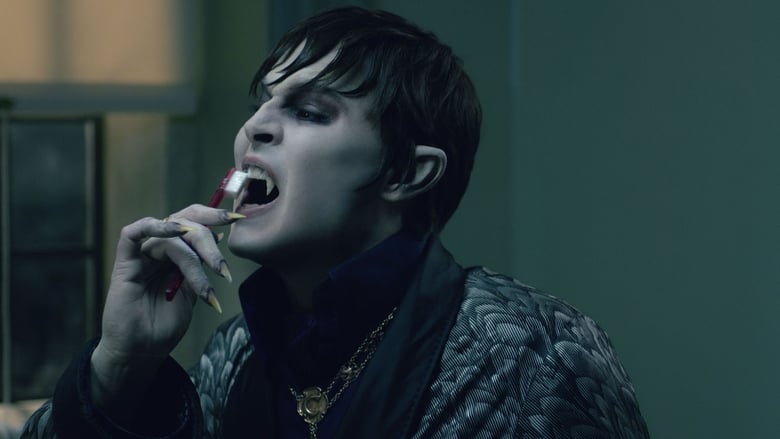
Ultimately, *Dark Shadows* suffers from an embarrassment of riches but a poverty of focus. It is a film stuffed with ideas—ghosts, werewolves, witches, and family trauma—that jostle for space in a narrative that feels simultaneously rushed and sluggish. The tragic romance, ostensibly the engine of the plot, feels anemic compared to the vibrant hatred between the hero and the villain. Burton delivers a spectacle that is undeniably beautiful to look at, a baroque painting moving at 24 frames per second, but beneath the expertly applied makeup and the meticulously distressed velvet, the film struggles to find a pulse. It stands as a testament to a specific aesthetic, preserved in amber, beautiful but lifeless.