✦ AI-generated review
The Simulation of Cinema
There is a distinct sensation one feels when watching *Madame Web*, a feeling not of excitement or even frustration, but of profound dislocation. Directed by S.J. Clarkson, this entry in the Sony Spider-Man Universe does not resemble a feature film so much as a product synthesized by a committee of algorithms that have studied human behavior but never actually experienced it. It is a movie that exists in the uncanny valley of storytelling—technically competent enough to be projected onto a screen, yet entirely devoid of the connective tissue that makes cinema breathe.
To understand *Madame Web*, one must look past its meme-generating dialogue ("He was in the Amazon with my mom...") and focus on its technical construction, which offers a fascinating, if grim, case study in modern franchise management. Clarkson, a veteran of prestige television (*Succession*, *Jessica Jones*), employs a visual language that feels frantically assembled, as if the film is terrified of its own stillness. The editing is jagged, frequently relying on "shutter" effects and rapid cuts that obscure rather than reveal. It creates a disorienting rhythm, suggesting that the footage is being salvaged in the edit bay rather than showcased.
Nowhere is this artificiality more apparent than in the treatment of the antagonist, Ezekiel Sims (Tahar Rahim). Rahim, a performer capable of immense subtlety (as seen in *A Prophet*), is here reduced to a dubbing experiment gone wrong. In one of the most jarring technical missteps in recent blockbuster history, huge swaths of his dialogue are delivered via Automated Dialogue Replacement (ADR) that barely syncs with his lip movements. We watch a man speak, but the voice sounds like it is emanating from a different room, or perhaps a different timeline entirely. It is a Brechtian alienation effect that was likely unintentional, turning the villain into a ghost within his own narrative—a man who is physically present but vocally absent.
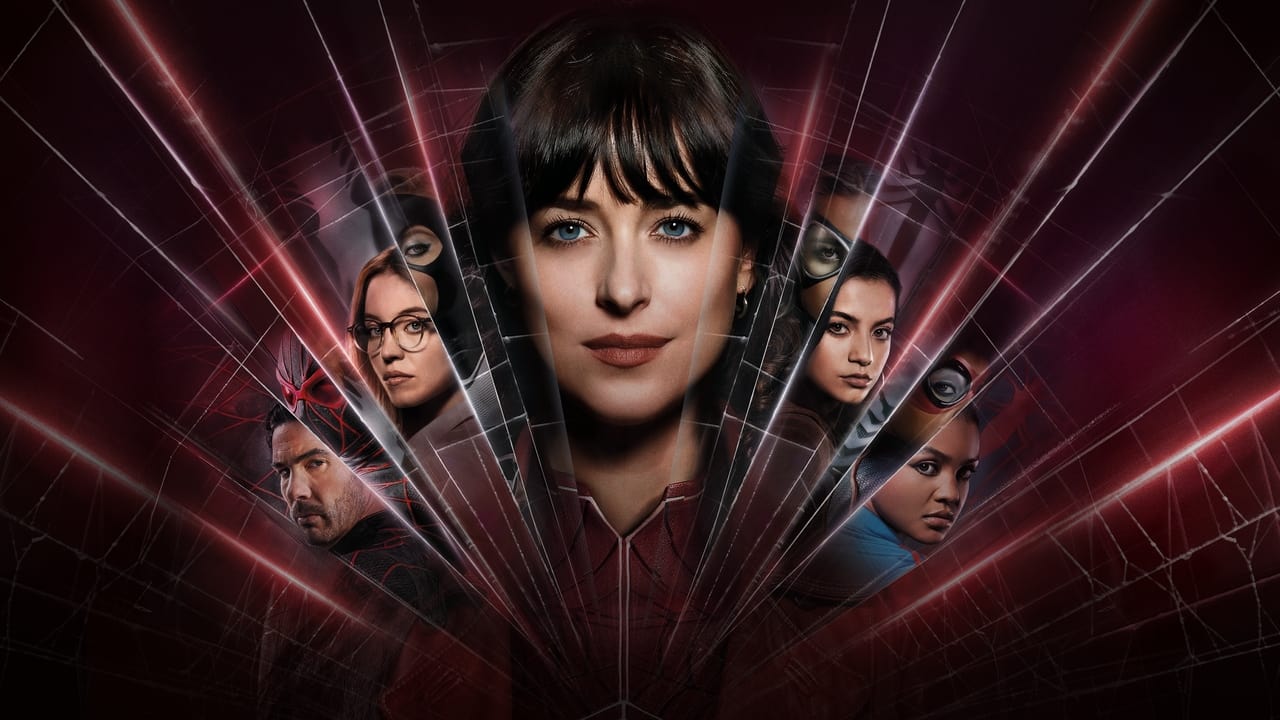
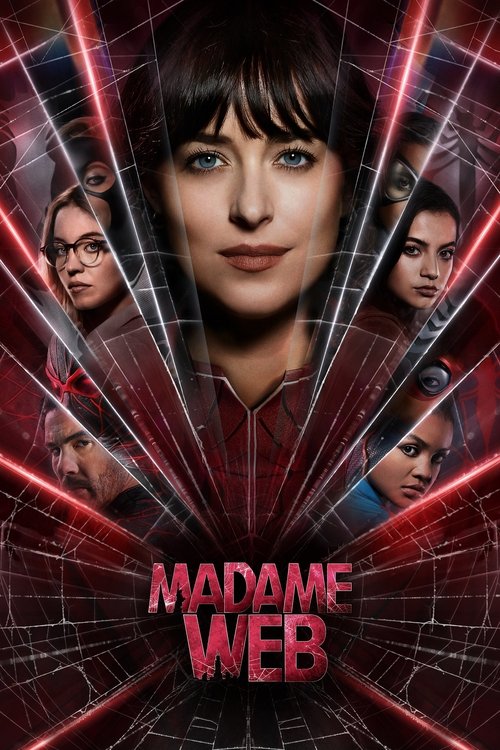
At the center of this disjointed storm is Dakota Johnson as Cassandra Webb. Johnson is a fascinating actress, capable of great emotional transparency, but here she delivers a performance of fascinating defiance. She plays Cassandra not as a superhero discovering her destiny, but as a skeptic trapped in a B-movie she didn't sign up for. Her delivery is flat, her confusion palpable. When she is surrounded by the three young women she is destined to protect—played by Sydney Sweeney, Isabela Merced, and Celeste O’Connor—there is zero maternal warmth. Instead, there is the awkward energy of a babysitter who has realized she is not getting paid enough. And yet, this detachment feels like the only honest thing in the film. Johnson becomes the audience surrogate, looking around at the absurdity of the plot and asking, implicitly, "Is this really happening?"
The film’s climax, which takes place atop a giant, luminous Pepsi sign, serves as the perfect, crushing metaphor for the entire enterprise. The characters are not fighting for an ideal, a city, or a loved one; they are literally battling on a corporate logo, illuminated by the neon glow of product placement. It is a moment of accidental honesty: the film strips away the pretense of mythology and reveals its true nature as a commercial asset.
Ultimately, *Madame Web* fails not because it is "camp"—cinema loves camp—but because it is hollow. It promises a story about clairvoyance and destiny, about the intricate web that connects all living things, but it delivers a vacuum. It is a film about the future that feels stuck in a dated, cynical past, a ghost in the machine of modern cinema waiting for a connection that never comes.