✦ AI-generated review
The Blaze of Transience
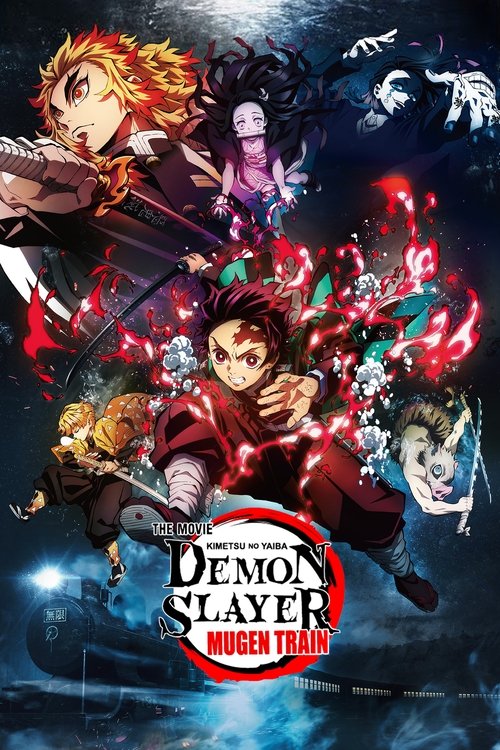
In the modern landscape of serialized animation, feature films often serve as disposable diversions—non-canonical side quests designed to keep a franchise warm between seasons. Haruo Sotozaki’s *Demon Slayer -Kimetsu no Yaiba- The Movie: Mugen Train* (2020) defied this cynical tradition with shattering force. By adapting a pivotal narrative arc directly from the manga source material, Sotozaki didn't just create a bridge between television seasons; he engineered a cultural phenomenon that became the highest-grossing film in Japanese history. Yet, beneath the staggering box office receipts lies a surprisingly tender meditation on the seduction of nostalgia and the moral weight of mortality.
Visually, the film is a testament to the studio Ufotable’s mastery of "digital maximalism." Sotozaki utilizes a distinct synthesis of traditional 2D character animation and photorealistic 3D environments. The titular train—a claustrophobic, rushing metal tube—becomes a stage for this contrast. The interiors are rendered with a suffocating darkness, making the fantastical elements, particularly the "Breathing Styles," pop with neon intensity. When the Flame Hashira, Kyojuro Rengoku, unleashes his sword techniques, the screen is not merely filled with fire; it is painted with the thick, brush-stroke aesthetics of *ukiyo-e* woodblock prints brought to kinetic life. This stylistic choice grounds the supernatural violence in a specifically Japanese artistic lineage, transforming combat into a kind of violent calligraphy.
However, the film’s spectacle is secondary to its psychological architecture. The narrative structure, centered on the demon Enmu who traps the protagonists in blissful dreams, serves as a cruel interrogation of the hero’s resolve. The protagonist Tanjiro Kamado’s sequence is particularly devastating. He is gifted a vision of a world where his family was never slaughtered—a reality so warm and tactile that leaving it feels like a second abandonment. The film’s most harrowing visual motif is not a sword strike, but the repeated image of Tanjiro committing suicide within the dream to force himself awake. It is a brutal metaphor for the trauma survivor’s burden: the necessity of killing one’s wish for a different past in order to survive the present.
The film's emotional gravity, however, orbits entirely around Kyojuro Rengoku. In a genre often crowded with brooding anti-heroes, Rengoku is a shock of unironic virtue. He represents a classic, almost extinct samurai ethos—joyful in duty, unwavering in protection. The climax, a breathtaking duel between Rengoku and the Upper Rank demon Akaza, elevates the film from an action movie to a philosophical debate. Akaza tempts Rengoku with demonhood, offering eternity and the chance to perfect his martial arts forever. Rengoku’s refusal is the film’s thesis: he argues that human life is precious *because* it is fleeting, that beauty is defined by its inevitable end.
*Mugen Train* ultimately transcends the "shonen" label to become a tragedy of victory. The heroes win the battle, but the cost is etched into the tear-streaked faces of the survivors. Sotozaki does not shy away from the gore of the fight, nor the grief of the aftermath. In an era where pop culture often promises endless sequels and resurrections, this film dares to let death be final, reminding us that the brightest flames often burn the fastest.