✦ AI-generated review
The Algorithm’s Alamo
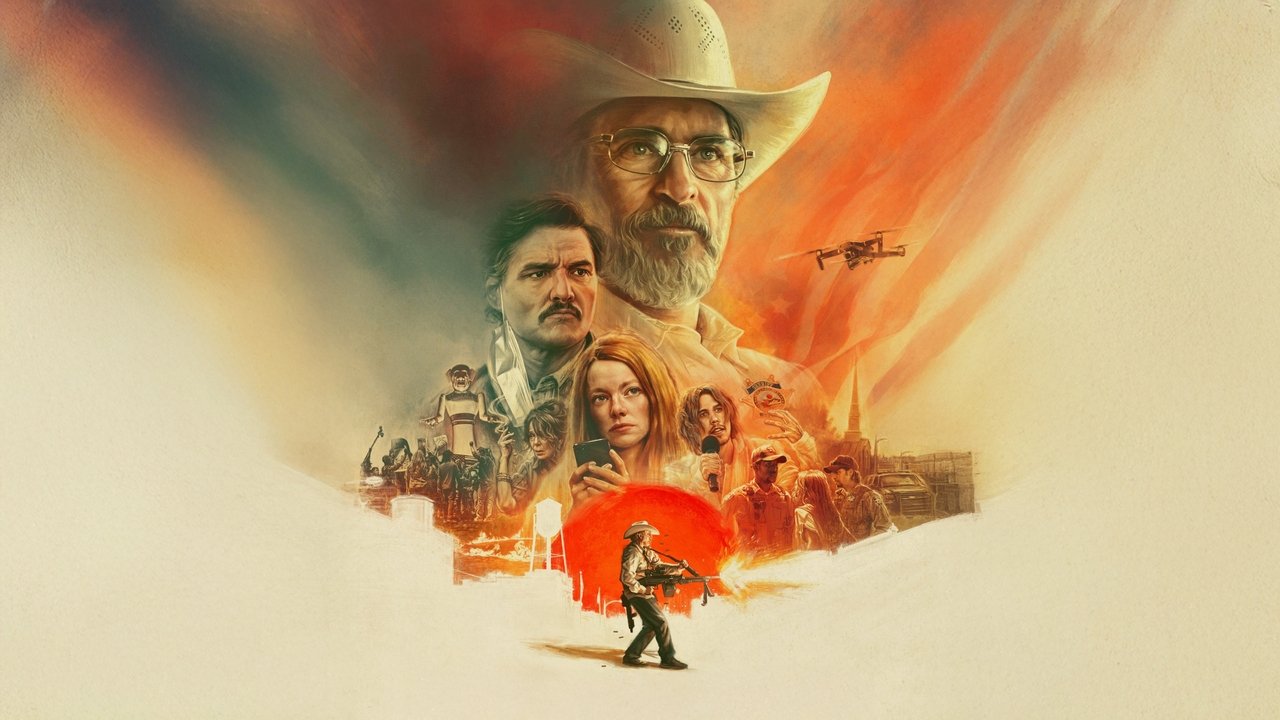
The American Western has always been a genre of moral clarity: a lawman, a bandit, a horizon line, and the restoration of order through violence. But in *Eddington*, director Ari Aster takes this foundational myth and infects it with the very modern, very messy virus of the 2020 psyche. If his previous films (*Hereditary*, *Midsommar*) were about the horror of inheritance and ritual, *Eddington* is about the horror of the present moment—a time when our collective reality fractured into a million glowing screens, leaving us isolated in a desert of our own making.
Set in the fictional New Mexico town of Eddington during the nascent, claustrophobic days of May 2020, the film operates less like a narrative and more like a fever dream we are collectively trying to repress. Joaquin Phoenix plays Sheriff Joe Cross, a man whose very name suggests a burden he is ill-equipped to carry. Cross is a lawman who yearns for the simple binary of the Old West but is trapped in a world of mask mandates, conspiracy theories, and algorithmic radicalization. Phoenix plays him not with the swagger of John Wayne, but with a wheezing, asthmatic desperation. He is a man crumbling under the weight of a world that no longer adheres to the script of masculine authority.
Visually, the film is a fascinating contradiction. Cinematographer Darius Khondji captures the New Mexico landscape with a majesty that recalls John Ford, emphasizing the vast, indifferent beauty of the American West. Yet, Aster constantly undercuts this grandeur with the visual language of the internet: vertical framings, the harsh glow of smartphones, and the frenetic, paranoia-inducing editing of a YouTube rabbit hole. The juxtaposition is jarring and intentional. The physical world is wide open, but the characters are suffocating in the digital silos they have built for themselves. The town of Eddington isn't under siege by bandits; it is under siege by information—or rather, by the weaponized lack of it.
The conflict between Sheriff Cross and the progressive, tech-friendly Mayor Ted Garcia (a slippery, charismatic Pedro Pascal) serves as the film’s central friction, but Aster is careful not to turn this into a simple red-state/blue-state parable. Instead, he satirizes the performative nature of both sides. The tragedy at the heart of the film is not political, but human: the complete breakdown of empathy. When neighbors turn on neighbors, it is not because they are evil, but because they have lost the shared language required to be a community. They are shouting at ghosts, fighting a culture war that has rendered their actual physical reality uninhabitable.
The film’s descent into violence in the third act—a chaotic shootout involving a mysterious paramilitary group—is likely to be the most divisive element. It is messy, confusing, and lacks the catharsis of a traditional Western climax. But that is precisely Aster's point. There is no "High Noon" moment in the age of misinformation. There is only confusion, noise, and the tragic realization that while we were busy fighting each other online, the real world was left to rot.
*Eddington* is an uncomfortable, prickly, and often deeply unpleasant watch. It denies the audience the comfort of a hero or a clear moral lesson. It forces us to look into the mirror of a year we would rather forget and asks if we have actually healed, or if we have simply learned to live with the sickness. In the final, haunting image of Joe Cross—paralyzed, watching a screen, a "winner" in a game that has cost him his humanity—Aster suggests that the frontier hasn't been tamed; it has just been digitized, and we are all lost in its canyons.