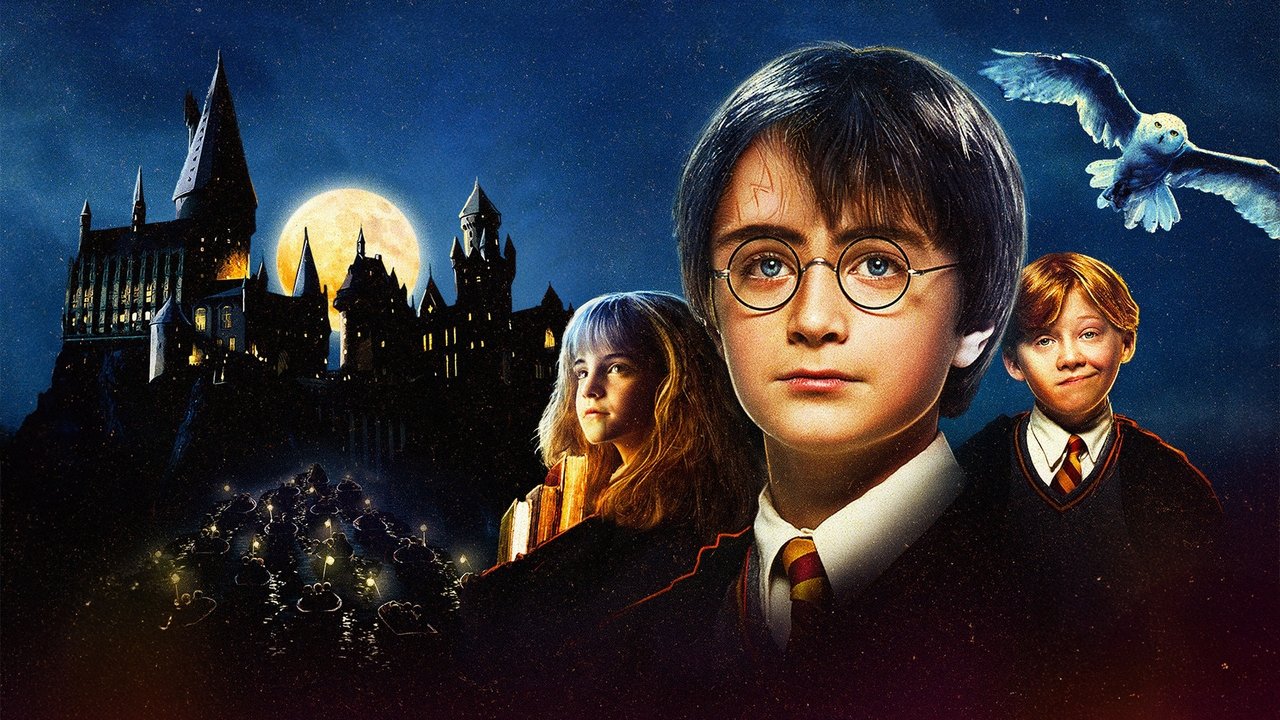
Harry Potter and the Philosopher's Stone backdrop
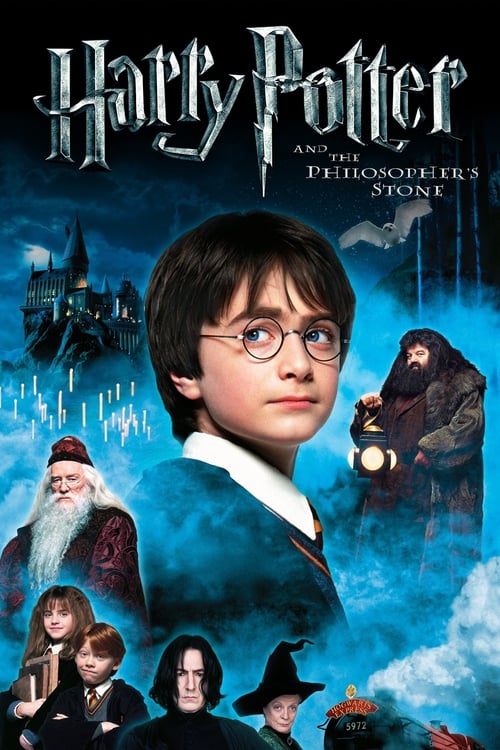
Harry Potter and the Philosopher's Stone poster

Harry Potter and the Philosopher's Stone

“Let the magic begin.”

7.9
2001
2h 32m
AdventureFantasy
Director: Chris Columbus

Overview

Harry Potter has lived under the stairs at his aunt and uncle's house his whole life. But on his 11th birthday, he learns he's a powerful wizard—with a place waiting for him at the Hogwarts School of Witchcraft and Wizardry. As he learns to harness his newfound powers with the help of the school's kindly headmaster, Harry uncovers the truth about his parents' deaths—and about the villain who's to blame.

Trailer

Official Trailer Official

Cast

Reviews

AI-generated review
The Architecture of Wonder

When Chris Columbus was handed the keys to *Harry Potter and the Philosopher’s Stone* in 2001, he wasn't just directing a movie; he was being asked to colonize the collective imagination of a generation. Looking back, it is easy to dismiss Columbus’s approach as "safe" or "workmanlike," especially when compared to the stylized, moody noir that Alfonso Cuarón would bring to the series two years later. Yet, to view this film merely as a prelude is to misunderstand the difficulty of its task. Columbus did not just adapt a book; he built a world from the ground up, constructing a visual vocabulary that would sustain a decade of cinema.

Columbus, a director previously known for the chaotic domesticity of *Home Alone* and *Mrs. Doubtfire*, brought a specific, crucial texture to the Wizarding World: a sense of tactile, cozy Britishness that bordered on the Dickensian. Modern blockbusters often suffer from the weight of weightlessness—CGI spectacles that feel as though they exist in a vacuum. By contrast, Columbus’s Hogwarts feels heavy. It is a place of stone, wood, parchment, and fire. When Harry first steps through the brick wall into Diagon Alley, the camera lingers not just on the magic, but on the clutter—the cauldrons, the quills, the dusty windows. This is the film’s greatest triumph: it treats magic not as a sleek superpower, but as a dusty, ancient trade. The visual landscape creates a welcoming, suffocating sense of reality that grounds the fantastical elements in something recognizable.

This grounding is essential because, beneath the whimsical surface of flying broomsticks and three-headed dogs, the film is fundamentally a tragedy about a lonely child. Columbus understands that the fantasy is only as strong as the human need driving it. The narrative spine of *The Philosopher’s Stone* isn’t the hunt for a magical object; it is Harry’s desperate search for a family.

Nowhere is this more evident than in the film's most haunting sequence: the Mirror of Erised. In a lesser director's hands, this scene could have been a showcase of special effects. Instead, Columbus quiets the film. He isolates Daniel Radcliffe in a vast, dark room, framing him small against the towering glass. When Harry sees his dead parents standing beside him in the reflection, the "magic" is secondary to the crushing weight of grief. It is a moment of profound stillness that anchors the entire franchise. We realize that Harry’s power comes not from his wand, but from his deprivation. He fights for the wizarding world because it is the first place that has ever fought for him.

Critics often point out that the child actors—Radcliffe, Rupert Grint, and Emma Watson—are raw and unpolished here, often reciting lines with wide-eyed stiffness. Yet, there is a documentary-like charm to their performance that fits the narrative perfectly. They are not yet soldiers in a war against dark arts; they are children overwhelmed by a world they do not understand. Their awe is genuine, mirroring the audience’s own.

In the years since its release, the *Harry Potter* series grew darker, more political, and visually desaturated. The later films would trade Columbus’s golden, amber hues for steel grays and deep blues. But *The Philosopher’s Stone* remains the hearth fire of the franchise. It is an invitation, written with sincerity and devoid of cynicism. It reminds us that before cinema can deconstruct a myth, it must first make us believe in it. Columbus didn't just make a movie for children; he crafted a sanctuary, proving that the most powerful magic in cinema is simply the feeling of coming home.

Clips (26)

Troll in the Dungeon! | Full Scene | Harry Potter and the Philosopher's Stone

Harry “Catches” the Golden Snitch

Magical Movie Mode - Hogwarts Letters

Magical Movie Mode - Wingardium Leviosa

Magical Movie Mode - Potions Class

Full Movie Preview

Harry Sneaks into the Restricted Section

Harry, Ron and Hermione Play Wizard Chess

Draco Malfoy Introduces Himself To Harry

Neville Stands Up to His Classmates

Platform 9¾

Happy Christmas, Harry and Ron

Christmas Preparations at Hogwarts

Harry and the Snake

Nearly Headless Nick

"Yer a wizard, Harry"

Harry Catches the Snitch

A First Encounter

A Lesson In Quidditch

The Sorting Ceremony

Harry's First Flying Lesson

Harry, Ron & Hermione Run Scared of Fluffy

Harry's First Quidditch Match Against Slytherin

Harry & Professor Snape's First Argument

"Oculus Reparo" Hermione Fixes Harry's Glasses

Harry's Jinxed Broom

Featurettes (1)

Archival interview with the cast of Harry Potter

LN
Latest Netflix

Discover the latest movies and series available on Netflix. Updated daily with trending content.

About

  • AI Policy
  • This is a fan-made discovery platform.
  • Netflix is a registered trademark of Netflix, Inc.

© 2026 Latest Netflix. All rights reserved.