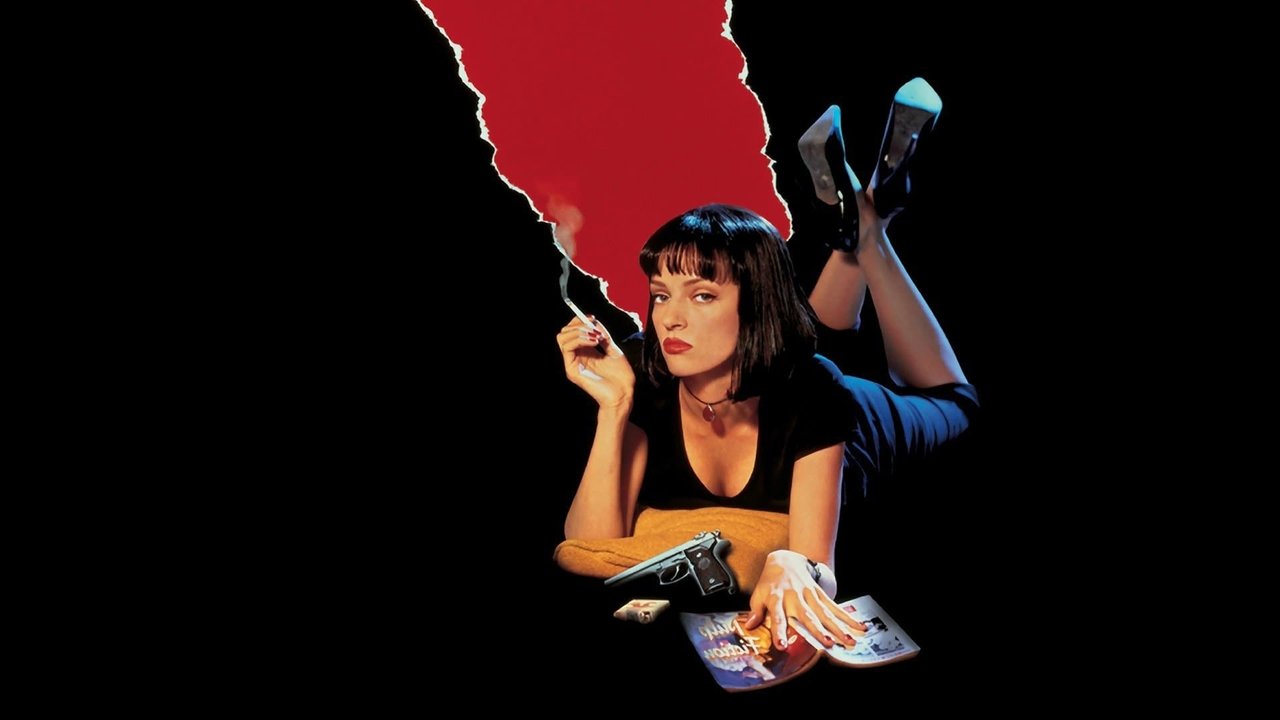
Pulp Fiction backdrop
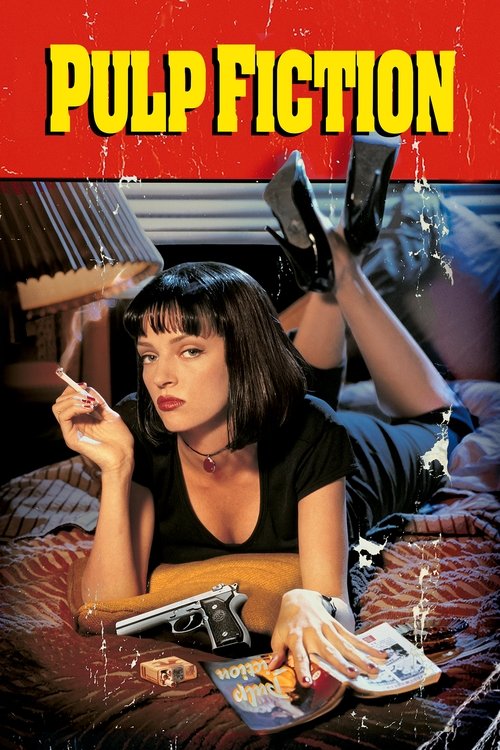
Pulp Fiction poster

Pulp Fiction

“You won’t know the facts until you’ve seen the fiction.”

8.5
1994
2h 34m
ThrillerCrimeComedy
Watch on Netflix

Overview

A burger-loving hit man, his philosophical partner, a drug-addled gangster's moll and a washed-up boxer converge in this sprawling, comedic crime caper. Their adventures unfurl in three stories that ingeniously trip back and forth in time.

Trailer

Official Trailer Official

Cast

Reviews

AI-generated review
The Architecture of Cool and Consequence

For three decades, the cultural conversation surrounding Quentin Tarantino’s *Pulp Fiction* has been dominated by its surface-level seductions: the surf-rock soundtrack, the sharp black suits, the fetishization of retro Americana, and the infinite quotability of a “Royale with Cheese.” It is easy to remember the film as a styling exercise—a postmodern collage of gangsters and gunplay that redefined "cool" for a generation. However, to view *Pulp Fiction* merely as a stylistic breakthrough is to ignore its surprisingly earnest moral heartbeat. Beneath the nonlinear structure and the splatter of violence lies a profound meditation on redemption, fate, and the terrifying weight of a second chance.

Tarantino’s visual and narrative language in *Pulp Fiction* is one of deliberate dissonance. He frames the horrific with the mundane, creating a world where hitmen discuss foot massages on their way to an execution. The director’s lens—favoring wide, stagelike tracking shots and intimate, claustrophobic close-ups—traps us in the immediate reality of his characters. We are not observing them from a safe, cinematic distance; we are in the backseat of the Chevy Nova; we are in the adrenaline-fueled panic of the overdose scene. The nonlinear timeline is not a gimmick, but a theological necessity. By shuffling the deck, Tarantino allows us to witness the resurrection of characters we have already seen die, forcing the audience to re-evaluate their choices not by their chronological outcome, but by their moral intent.

The film’s spiritual core is located not in the briefcase (the glowing MacGuffin that drives the plot), but in the divergent paths of Vincent Vega (John Travolta) and Jules Winnfield (Samuel L. Jackson). They are introduced as near-identical agents of chaos, yet their reactions to a "miracle"—a barrage of bullets that inexplicably misses them in an apartment shootout—seal their fates. Vincent, the embodiment of nihilistic cool, dismisses the event as a freak occurrence. He refuses to look inward, refuses to acknowledge the universe’s signal, and chronologically, his story ends in indignity: reading a paperback on a toilet, silenced by his own weapon.

Jules, conversely, recognizes the moment as divine intervention. He perceives the bullets that missed as a chance to lay down his sword. In the film’s climactic diner scene—which is actually the beginning of his new life—Jules evolves from a tyranny of evil men to a shepherd. His recitation of Ezekiel 25:17 transforms from a cold-blooded rhetorical flourish into a genuine plea for grace. Tarantino suggests that in a world of random violence, survival requires an awakening. Butch Coolidge (Bruce Willis) mirrors this arc; he risks everything for a gold watch (a totem of ancestral legacy) and ultimately chooses to save his enemy, Marsellus Wallace, from a dungeon of depravity. Like Jules, Butch chooses a code of honor over convenience, and like Jules, he is allowed to ride off into the sunset.

Ultimately, *Pulp Fiction* is a tragedy for those who refuse to change and a hymn for those who do. It argues that even in a Los Angeles populated by drug dealers, washed-up boxers, and thrill-seekers, there is room for grace. The film’s enduring power does not stem from how cool the characters look holding a gun, but from the trembling courage it takes for one of them to finally put it down.

Clips (21)

Uma Thurman 'Wants To Dance' in Pulp Fiction w/ John Travolta

A Miracle

Dorks

'Burnt to a Crisp’

A Needle to the Heart

Marvin

'Make Spoons’

The Bonnie Situation

'Pretty Far from Okay'

'Nobody Ever Robs Restaurants’

'Time Is a Factor'

BMF Wallet

'What Does It Feel Like to Kill a Man?'

Pop Tarts

Big Kahuna Burger

$5 Milkshake

'Zed's Dead'

'I Want To Dance'

'Royale with Cheese'

'Say What Again'

Overdose

Featurettes (13)

Pulp Fiction cast on meeting Tarantino and changing film history

20 Second Recap

Pulp Fiction: Cast and Crew Reunion

Samuel L Jackson's Pulp Fiction Speech - The Graham Norton Show

Jeff Bridges Compares PULP FICTION To The Talking Heads

Clint Eastwood On PULP FICTION and the Cannes Palme d'or

Samuel L. Jackson On PULP FICTION

Pulp Fiction Wins Original Screenplay: 1995 Oscars

Quentin Tarantino On His Character from PULP FICTION: Mia Wallace

Quentin Tarantino On The Moral Choices In PULP FICTION

Quentin Tarantino: The Inspiration For Pulp Fiction

Quentin Tarantino On His Characters From Pulp Fiction

Noel Clarke on Pulp Fiction

LN
Latest Netflix

Discover the latest movies and series available on Netflix. Updated daily with trending content.

About

  • AI Policy
  • This is a fan-made discovery platform.
  • Netflix is a registered trademark of Netflix, Inc.

© 2026 Latest Netflix. All rights reserved.