

Undiscovered Walt Disney World
10.0
2003
50m
DocumentaryAnimation
Overview
This Travel Channel special looks at some of the lesser-known things you can do at the Walt Disney World Resort.
Reviews
✦ AI-generated review
The Monster in the Mirror
In the vast, often uneven landscape of Stephen King adaptations, there exists a curious tendency to conflate "horror" with the supernatural. We expect clowns in sewers or hotels that devour the soul. But *Mr. Mercedes* (2017), developed by David E. Kelley, strips away the comfort of the paranormal to reveal a terror far more suffocating: the banality of human malice. This is not a story about what hides under the bed, but about what festers in the basement of the American psyche. It is a hard-boiled detective noir that trades jump scares for a slow-drip IV of dread, suggesting that the most dangerous monsters are the ones who fix our computers and serve us ice cream.

From its opening moments, *Mr. Mercedes* establishes a visual language that is relentlessly, uncomfortably tactile. The camera does not glide; it lurks. The opening sequence—a job fair massacre where the titular vehicle plows through a desperate crowd of unemployed workers—is filmed with a chaotic brutality that feels less like a movie set and more like a newsreel from a collapsing society. The director, Jack Bender, utilizes a palette of rusty browns and sterile fluorescent greens, creating a world that feels economically depressed and spiritually exhausted. This is Ohio as a purgatory of rust, where the American Dream has been outsourced or foreclosed upon, leaving behind a vacuum that men like Brady Hartsfield are all too eager to fill.

At the center of this wreckage is Bill Hodges, played with bearish, grumbling majesty by Brendan Gleeson. Hodges is not the sleek, super-cop of network procedurals; he is a ruin of a man, etched with the failure of the unsolved "Mercedes Killer" case. Gleeson’s performance is a masterclass in physical acting—he inhabits Hodges as a heavy, immovable object, a man slowly calcifying in his own retirement. His nemesis, Brady Hartsfield (Harry Treadaway), acts as his dark reflection. Treadaway’s performance is reptilian and twitchy, a portrait of modern incel rage masked by customer-service politeness. The series thrives on the juxtaposition of these two lives: Hodges’ analogue world of vinyl records and tortoises versus Hartsfield’s digital dungeon of monitors and remote controls. It frames the central conflict not just as cop vs. killer, but as a generational war between the tactile past and a disconnected, sociopathic future.
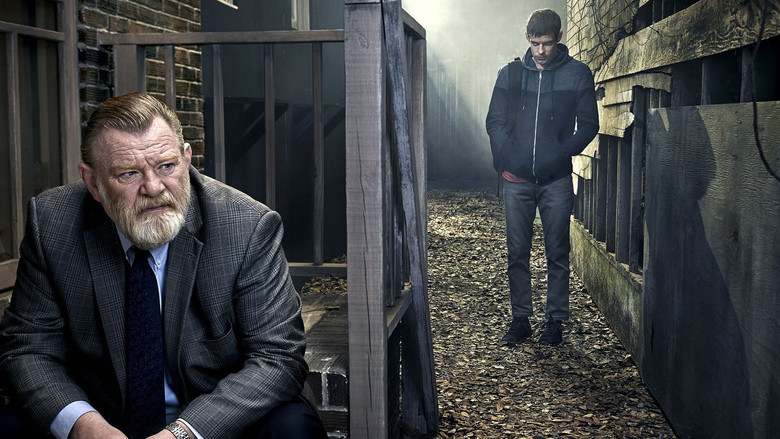
What elevates *Mr. Mercedes* above standard crime fare is its refusal to turn the investigation into a mere puzzle. The "whodunit" is solved in the first episode; the show is interested in the "whydunit." It dissects the symbiotic relationship between the hunter and the hunted, suggesting that Hodges needs the killer just as much as the killer needs him. This mutually assured destruction gives the series a tragic weight. We aren't just watching a race against time; we are watching two broken men finding their only sense of purpose in each other's annihilation.
Ultimately, *Mr. Mercedes* stands as a grim but essential entry in the King canon. It captures the author’s keen ear for the blue-collar struggle and his understanding that evil is rarely grand or operatic. It is small, petty, and resentment-fueled. In a modern era obsessed with glossy true-crime packaging, this series offers something rougher and more honest: a look at the rust on the blade, rather than just the cut.
In the vast, often uneven landscape of Stephen King adaptations, there exists a curious tendency to conflate "horror" with the supernatural. We expect clowns in sewers or hotels that devour the soul. But *Mr. Mercedes* (2017), developed by David E. Kelley, strips away the comfort of the paranormal to reveal a terror far more suffocating: the banality of human malice. This is not a story about what hides under the bed, but about what festers in the basement of the American psyche. It is a hard-boiled detective noir that trades jump scares for a slow-drip IV of dread, suggesting that the most dangerous monsters are the ones who fix our computers and serve us ice cream.
From its opening moments, *Mr. Mercedes* establishes a visual language that is relentlessly, uncomfortably tactile. The camera does not glide; it lurks. The opening sequence—a job fair massacre where the titular vehicle plows through a desperate crowd of unemployed workers—is filmed with a chaotic brutality that feels less like a movie set and more like a newsreel from a collapsing society. The director, Jack Bender, utilizes a palette of rusty browns and sterile fluorescent greens, creating a world that feels economically depressed and spiritually exhausted. This is Ohio as a purgatory of rust, where the American Dream has been outsourced or foreclosed upon, leaving behind a vacuum that men like Brady Hartsfield are all too eager to fill.
At the center of this wreckage is Bill Hodges, played with bearish, grumbling majesty by Brendan Gleeson. Hodges is not the sleek, super-cop of network procedurals; he is a ruin of a man, etched with the failure of the unsolved "Mercedes Killer" case. Gleeson’s performance is a masterclass in physical acting—he inhabits Hodges as a heavy, immovable object, a man slowly calcifying in his own retirement. His nemesis, Brady Hartsfield (Harry Treadaway), acts as his dark reflection. Treadaway’s performance is reptilian and twitchy, a portrait of modern incel rage masked by customer-service politeness. The series thrives on the juxtaposition of these two lives: Hodges’ analogue world of vinyl records and tortoises versus Hartsfield’s digital dungeon of monitors and remote controls. It frames the central conflict not just as cop vs. killer, but as a generational war between the tactile past and a disconnected, sociopathic future.
What elevates *Mr. Mercedes* above standard crime fare is its refusal to turn the investigation into a mere puzzle. The "whodunit" is solved in the first episode; the show is interested in the "whydunit." It dissects the symbiotic relationship between the hunter and the hunted, suggesting that Hodges needs the killer just as much as the killer needs him. This mutually assured destruction gives the series a tragic weight. We aren't just watching a race against time; we are watching two broken men finding their only sense of purpose in each other's annihilation.
Ultimately, *Mr. Mercedes* stands as a grim but essential entry in the King canon. It captures the author’s keen ear for the blue-collar struggle and his understanding that evil is rarely grand or operatic. It is small, petty, and resentment-fueled. In a modern era obsessed with glossy true-crime packaging, this series offers something rougher and more honest: a look at the rust on the blade, rather than just the cut.