The Weight of SilenceIt is rare for a prequel to escape the gravitational pull of its progenitor, and even rarer for a network sitcom to accidentally become a meditation on memory and grief. *Young Sheldon*, which concluded its seven-season run in 2024, began as a cynical brand extension of *The Big Bang Theory*—a way to keep the lights on at CBS by exploiting the IP of television’s most famous nerd. But somewhere along the dusty roads of East Texas, creator Chuck Lorre and his team pulled a sleight of hand. They stopped writing a sitcom about a quirky genius and started filming a tragedy about a family trying to hold itself together while living in the shadow of a future we already know.

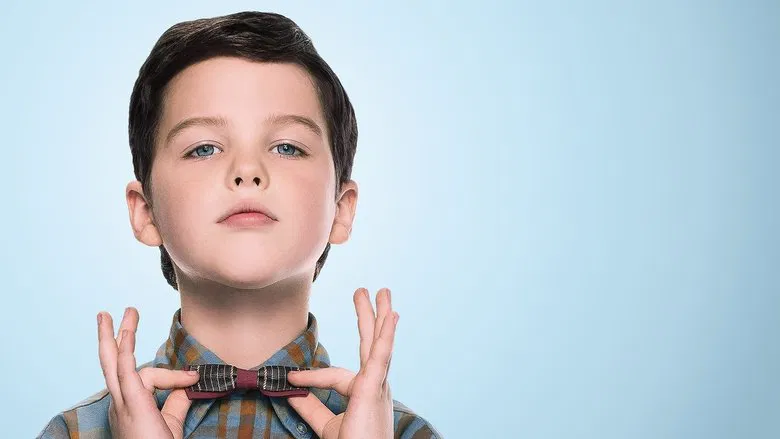
Visually, the series abandons the sterile, multi-camera stagecraft of *The Big Bang Theory* for the single-camera intimacy of a period piece. The aesthetic is warm, almost sepia-toned, evoking the late 1980s not as a neon caricature, but as a lived-in, analog world of wood paneling and Sunday bests. The direction favors quiet observation over punchlines. By removing the laugh track—that coercive instrument that dictates how we should feel—the show allows silence to do the heavy lifting. When Sheldon (Iain Armitage) delivers a stinging rebuke of his mother’s faith, it doesn’t play for a “bazinga” laugh; it lands with the uncomfortable thud of a child alienating the only person who truly protects him.
The heart of the series lies not in Sheldon, but in the slow-motion collision between his parents, George Sr. (Lance Barber) and Mary (Zoe Perry). For years, *The Big Bang Theory* lore dictated that George was a drunk, cheating philanderer. *Young Sheldon* performs a radical act of empathy by recontextualizing him as a flawed, tired, but deeply loving man crushed by the weight of mediocrity and sacrifice. The dining table scenes, often shot with a static, unblinking lens, become the arena for this drama. Here, we see the micro-aggressions of a marriage dissolving, not through explosive melodrama, but through the erosion of patience. It is a portrait of working-class fatherhood that is startlingly tender.

This narrative courage culminates in the final season, specifically regarding the death of George Sr. The show handles this inevitability with a brutal, sudden silence that defies the genre. There is no swelling orchestral score, no final speech. One moment he is there, a fixture of the home, and the next, he is simply gone. The camera lingers on the empty spaces he used to occupy—his chair, the doorway—forcing the audience to sit in the vacuum of loss alongside the characters. It transforms a comedy into a study of grief, exploring how a boy who relies on logic processes an event that defies it. Sheldon’s inability to cry is not played as a quirk, but as a profound emotional disability that isolates him even further.
Ultimately, *Young Sheldon* succeeds because it betrays its own premise. It isn't really about the making of a genius; it is an eulogy for a childhood that never quite existed the way the narrator remembers it. The voiceover by the adult Sheldon (Jim Parsons) is revealed not just as narration, but as a memoir written with the clarity of hindsight—an apology to a father he misunderstood and a family he outgrew. In bridging the gap between the caricature of the original series and the human beings of the prequel, *Young Sheldon* achieves something profound: it forgives the past for being imperfect.