✦ AI-generated review
The Candy-Coated Apocalypse
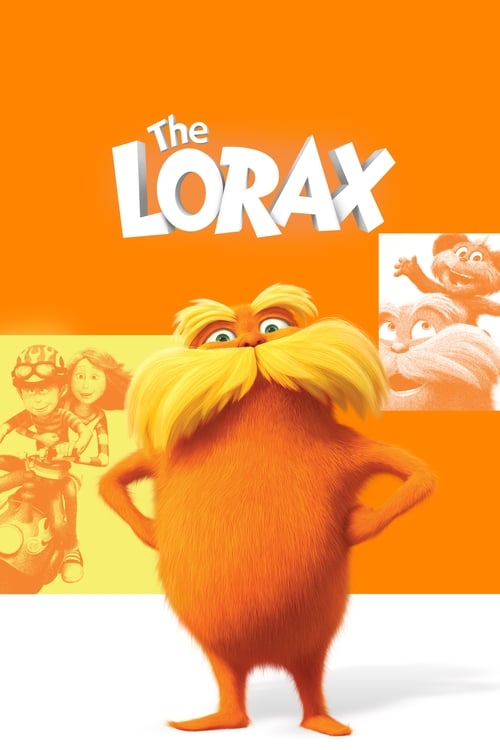
If Dr. Seuss’s 1971 fable was a somber funeral dirge for the environment—a quiet, haunting warning whispered through the pages—then Chris Renaud’s 2012 adaptation is the marching band playing loudly over the grave. Cinema often struggles to adapt allegories because it demands literalism where the source material relies on abstraction. *The Lorax* suffers from a particularly acute case of this ailment, transforming a parable about the banality of evil into a frenetic, neon-colored chase sequence that seems terrified of its own message.
Visually, the film is a paradox of intent and execution. Illumination Entertainment, known for its polished, plasticine aesthetic (best utilized in *Despicable Me*), applies that same synthetic sheen to a story that ostensibly champions the organic. The city of Thneedville is a triumph of design—a hermetically sealed bubble of inflatable shrubbery and bottled air that feels suffocatingly tangible. It serves as a sharp satire of convenience culture. However, the film fails when it steps outside the city walls. The Truffula trees, which should represent the fragile beauty of the natural world, are rendered with the texture of spun sugar and cotton candy. They do not look like nature; they look like assets in a video game. By making the natural world look just as artificial as the plastic city, the film inadvertently flattens the contrast it seeks to highlight. We are not mourning the loss of a forest; we are mourning the loss of a confectionery shop.
The film’s most egregious sin, however, lies in its treatment of the human heart, specifically that of the Once-ler. In Seuss’s original text, the Once-ler is a faceless entity—mostly a pair of green gloves and a cigar—representing the inevitable, blinding momentum of industry. He is not a villain because he is evil; he is a villain because he is indifferent. The 2012 film, perhaps fearing that ambiguity would alienate a young audience, humanizes him into a hapless, guitar-strumming hipster who is merely led astray by nagging relatives.
This softening of the narrative is most painfully evident in the musical number "How Bad Can I Be?" It is a catchy, toe-tapping defense of capitalism that frames the Once-ler’s destruction as an accidental byproduct of market forces ("the customers are buying, and the money is multiplying"). It is a song of deflection. Cultural critics and film historians have long mourned the exclusion of the original demo song intended for this sequence, titled "Biggering." That deleted track was a darker, rock-opera descent into madness that explicitly cited "pride" as the root of the destruction. By swapping the malignant narcissism of "Biggering" for the shrug-emoji capitalism of "How Bad Can I Be?", the filmmakers robbed the story of its moral weight. They turned a cautionary tale about greed into a story about a nice guy who just had a bad business plan.
Ultimately, *The Lorax* collapses under the weight of its own hypocrisy. It attempts to sell an anti-consumerist message through the most aggressive, cookie-cutter vehicle of modern animation consumption. It adds a villain (the diminutive O’Hare) to create a convenient external enemy, absolving the audience of their complicity in the environmental collapse. Seuss ended his book with a single, open-ended word: "Unless." It was a challenge to the reader. The film ends with a celebration, a pop song, and a neatly tied bow, assuring us that everything will be fine. It is a movie that speaks for the trees, but unfortunately, it has nothing of substance to say.