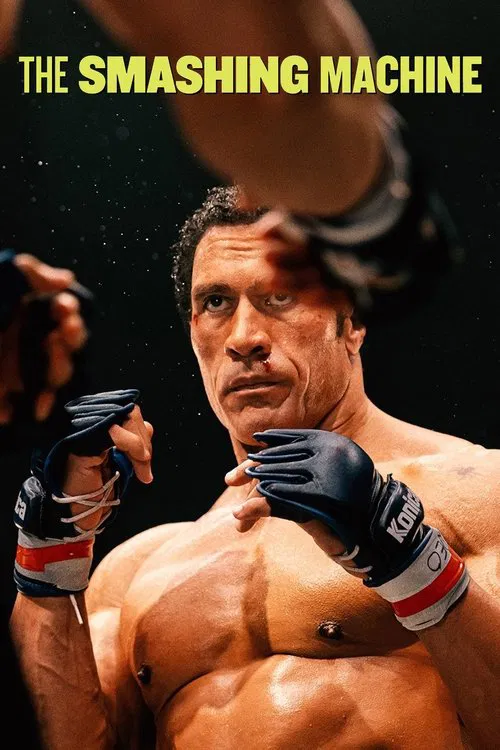
The Architecture of PainIn the modern cinematic landscape, the "sports biopic" has become a predictable machine, churning out narratives of underdog triumph or tragic fall with the regularity of a metronome. We expect the training montage, the swelling orchestral score, and the redemption arc that validates the price of admission. *The Smashing Machine*, Benny Safdie’s solo directorial debut, is not interested in these comforts. It is a film that looks at the gladiator not as a hero, but as a vessel for suffering—a meat sack absorbing impact until the soul quietly leaks out. Safdie has constructed a film that feels less like a celebration of Mixed Martial Arts and more like an autopsy of the masculine urge to destroy oneself for applause.

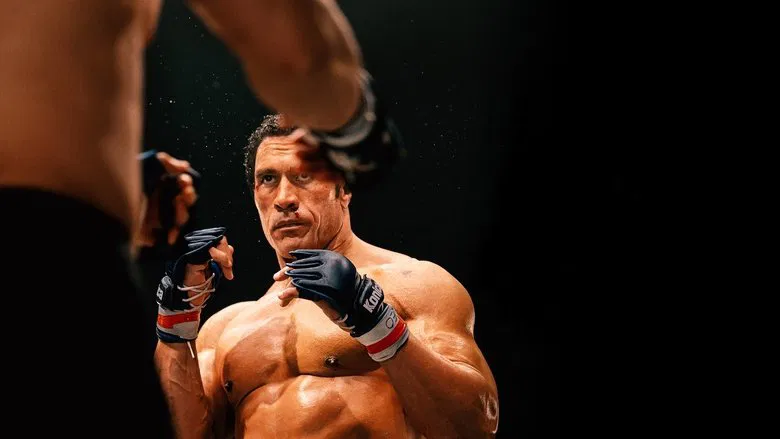
Visually, Safdie abandons the glossy, hyper-kinetic style often associated with fight films. Instead, he opts for a texture that feels excavated from a time capsule. Collaborating with cinematographer Maceo Bishop, Safdie utilizes a mix of VHS, 16mm, and 65mm formats to create a visual language that is both immediate and distancing. The grain is heavy, the colors are bruised, and the camera often lingers in the uncomfortable quiet of locker rooms rather than the roar of the arena. This aesthetic choice is crucial; it strips the violence of its glamour. When Mark Kerr (Dwayne Johnson) enters the ring, the camera doesn’t worship his power; it documents the grim mechanics of his job. The fights are brutal not because they are flashy, but because they are presented with a documentary-like detachment that forces us to witness the sheer physical toll of the sport.
At the center of this bruised world is Dwayne Johnson, delivering a performance of startling vulnerability. For decades, Johnson has cultivated an image of invincibility—a smiling, muscular brand that promises safety and strength. Here, buried under prosthetics that soften his features and a wig that roots him in the late 90s, he dismantles that persona. His Mark Kerr is a man composed of soft whispers and terrifying physical capacity. The tragedy isn't that Kerr is addicted to opioids; it’s that he is a gentle soul trapped in a body built for violence. Johnson captures the dissonance of a man who apologizes to his opponents after mauling them, a "smashing machine" who seemingly wants nothing more than to be switched off.
The film’s emotional core, however, is the volatile chemistry between Kerr and his girlfriend, Dawn Staples (Emily Blunt). This is where the narrative risks collapsing under its own weight, yet somehow finds its most jagged truths. Blunt plays Dawn not as the supportive wife on the sidelines, but as a chaotic force of nature—an addict in her own right, mirroring Kerr’s instability. Their scenes are suffocating, filled with the circular arguments and desperate codependency of two drowning people clinging to each other. One particularly harrowing sequence, where a domestic dispute spills into a hotel hallway, eschews melodrama for a terrifying realism. It is ugly, unresolved, and deeply human, illustrating that the hardest hits Kerr takes aren't in the octagon, but in the quiet desperation of his home life.

Ultimately, *The Smashing Machine* is a film about the lies we tell ourselves to survive. It challenges the audience to look past the spectacle of the "Smashing Machine" to see the broken man operating the controls. While the narrative occasionally meanders, lacking the propulsive energy of Safdie’s previous work like *Uncut Gems*, it replaces that anxiety with a profound melancholia. It is a demanding watch, one that refuses to offer easy answers or a triumphant finale. Instead, it leaves us with the haunting image of a giant, quiet and alone, trying to piece himself back together after the world has finished cheering.