✦ AI-generated review
The Neon Cathedrals of Hollow Earth
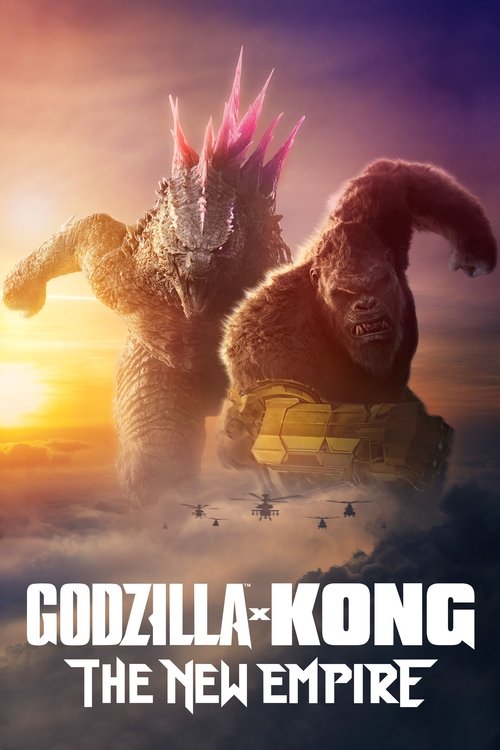
If 2023’s *Godzilla Minus One* was a somber meditation on post-war trauma and the terrifying indifference of nature, Adam Wingard’s *Godzilla x Kong: The New Empire* is its sugar-rushed, neon-soaked antithesis. To view this film through the lens of traditional dramatic structure is to miss the point entirely. Wingard is not interested in the physics of disaster, but rather in the physics of a Saturday morning cartoon rendered with the GDP of a small nation. This is cinema as a fever dream of action figures, a vibrant rejection of the "gritty realism" that has choked the life out of so many modern blockbusters.
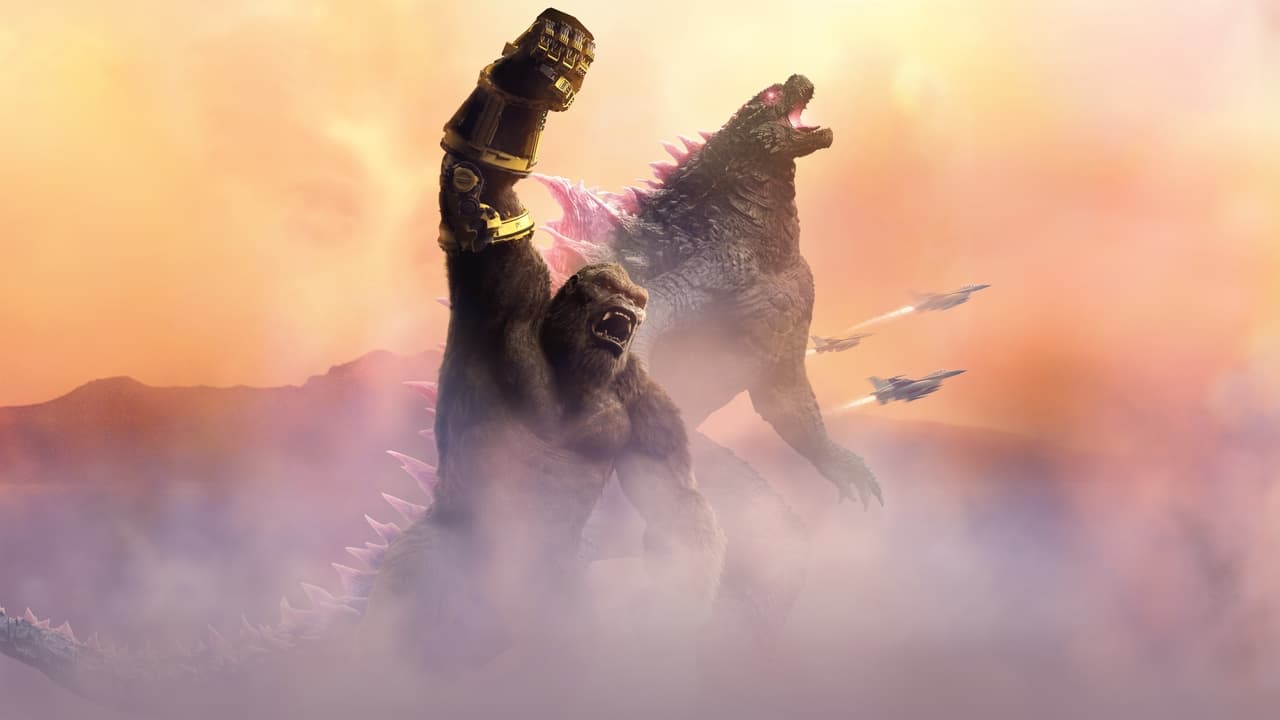
Wingard, returning after *Godzilla vs. Kong*, has fully abandoned the pretense that human beings are the protagonists of this story. The film’s visual language is a kaleidoscope of synth-wave purples, radioactive pinks, and subterranean Cyana contexts that feel less like geology and more like the cover of a prog-rock album. The "Hollow Earth"—a subterranean ecosystem that serves as the film’s primary stage—allows Wingard to divorce the monsters from the inconvenient fragility of human cities. Here, gravity is a suggestion and biology is pure fantasy.
The most striking aesthetic choice is the film's embrace of the absurd. Consider the image of Godzilla, the King of the Monsters, curling up inside the Roman Colosseum to sleep like an overgrown house cat. It is a shot that risks ridicule but achieves something oddly endearing: it grants the nuclear leviathan a personality. Similarly, Godzilla’s evolution into a sharper, pink-hued form isn’t just a toyetic upgrade; it is a visual declaration that the film has moved into a realm of pure, stylistic expressionism.
However, the film’s emotional weight—and yes, there is some—rests entirely on the shoulders of Kong. In the absence of compelling human drama (the human cast, despite the charm of Dan Stevens, mostly functions as walking exposition dumps), Kong emerges as a silent film star in the tradition of Keaton or Chaplin. There are long, dialogue-free stretches where the camera lingers on the great ape’s weary eyes. We watch him traverse the Hollow Earth not as a conqueror, but as a lonely soul seeking connection. His relationship with Suko, a juvenile ape he begrudgingly adopts, offers a surprisingly tender narrative arc about fatherhood and lineage that transcends the CGI spectacle.
The villain, the Skar King, serves as a dark mirror to Kong—a tyrant who rules through fear rather than protection. Their conflict is primal, played out in arenas that look like heavy metal album covers come to life. The action is coherent and fluid, prioritizing wrestling psychology over chaotic destruction.
Where the film stumbles is in its inability to completely jettison its human baggage. The script often collapses under the weight of explaining "bio-electric signals" and ancient prophecies, dragging the pacing down whenever the monsters leave the frame. The narrative furniture of the human subplot feels dusty compared to the vibrant insanity of the monster opera.
Ultimately, *Godzilla x Kong: The New Empire* succeeds because it is honest about what it is. It does not aspire to be high art; it aspires to be a high-octane myth. In an era where cinema often feels burdened by self-seriousness, Wingard invites us to watch gods wrestle in zero gravity, reminding us that sometimes, the most profound thing a movie can do is let a giant ape get a tooth pulled by a flying machine, and play it completely straight.