✦ AI-generated review
A Waltz at the End of the World
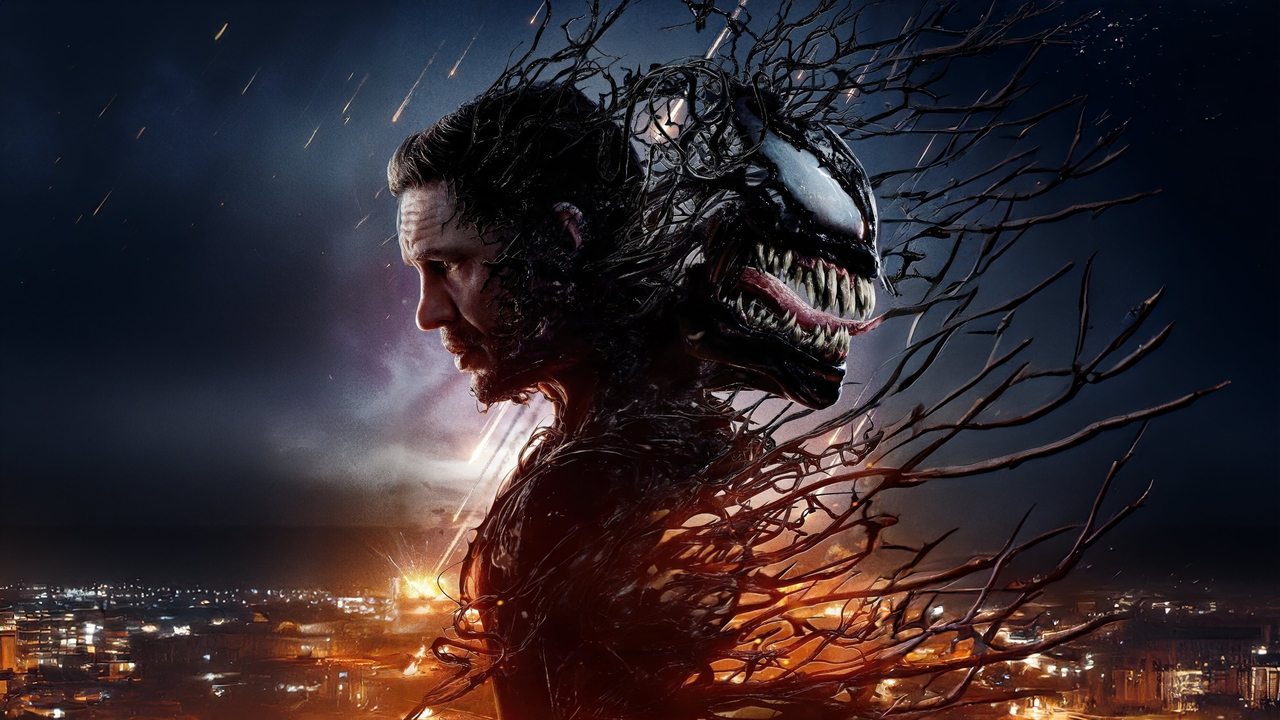
In the current cinematic landscape, where superhero films are often burdened by the crushing weight of interconnected universes and self-serious mythology, *Venom: The Last Dance* arrives like a chaotic, uninvited guest at a formal dinner party. It is loud, messy, and frequently incoherent, yet it possesses a beating heart that many of its more polished contemporaries lack. This third and final installment, directed by Kelly Marcel—the architect of the trilogy’s screenplays—abandons any pretense of prestige to embrace its true identity: a tragicomic road movie about a man and his alien parasite trying to survive a breakup with the world.
Marcel, making her directorial debut, understands that the visual language of *Venom* has never been about clean lines or coherent geography. Instead, she leans into the grotesquerie. The film is a swirl of black tendrils and neon lights, moving from the dusty roads of Mexico to the garish glitter of Las Vegas. There is a suffocating quality to the CGI action—a cacophony of shapeshifting monsters (the terrifying "Xenophages") that often threatens to drown out the actors. Yet, Marcel finds clarity in the intimate absurdity. When Venom possesses a horse, galloping through the desert with black slime streaming like a mane, the image is simultaneously ridiculous and strangely majestic, a perfect encapsulation of the franchise's anarchic spirit.
However, beneath the noise of alien hunters and secret government facilities lies the film’s true emotional core: the symbiotic marriage between Eddie Brock and Venom. Tom Hardy, performing a duet with his own prerecorded voice, delivers a performance of twitchy, exhausted vulnerability. If the genre usually demands heroes who stand for justice, Hardy gives us a hero who just wants a nap and a strong drink. The film functions less as an action blockbuster and more as a "buddy cop" romance, explicitly referencing *Thelma & Louise* as the duo hurtles toward their inevitable cliff.
The narrative urgency stems from the "Codex"—a life-force created by their bond that attracts the gaze of Knull, a god of the void. But the plot is merely a scaffold for the long goodbye. The most resonant scene is not a battle, but a dance: Venom, taking over a tuxedoed body, swaying with an old friend, Mrs. Chen, to the strains of ABBA. It is a moment of pure camp that somehow transmutes into melancholy. It acknowledges the tragedy of Venom—a creature full of joy and appetite, doomed by his own nature to bring destruction to the one person he loves.
Ultimately, *The Last Dance* succeeds not because it revolutionizes the genre, but because it honors its own weird internal logic. The climax, involving a sacrificial acid shower, feels earned not because of the spectacle, but because it resolves Eddie’s arc from a selfish reporter to a man capable of loss. In an era of calculated "products" designed for infinite expansion, there is something oddly dignified about a film that simply wants to let its monsters have one final dance before the lights go out. It is a flawed, frenetic, but deeply human farewell.