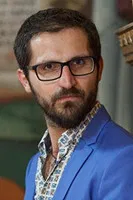
Matthias
Marin Grigore
Matthias

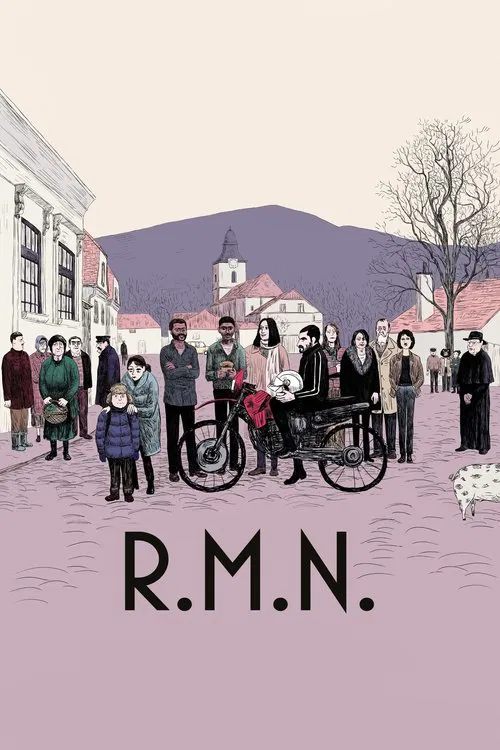
A few days before Christmas, having quit his job in Germany, Matthias returns to his Transylvanian village. He wishes to involve himself more in the education of his son, Rudi, left for too long in the care of his mother, Ana, and to rid him of the unresolved fears that have gripped him. He’s also eager to see his ex-lover Csilla and preoccupied about his old father, Otto. When a few new workers are hired at the small factory that Csilla manages, the peace of the community is disturbed, underlying fears grip the adults, and frustrations, conflicts and passions erupt through the thin sliver of apparent understanding and calm.
Trailer #2 [Subtitled] Official
Matthias
Marin Grigore
Matthias

Csilla
Judith State
Csilla

Ana
Macrina Bârlădeanu
Ana

Mrs. Dénes
Orsolya Moldovan
Mrs. Dénes

The Mayor
András Hatházi
The Mayor

Tibi
Rácz Endre
Tibi

The Catholic Priest
József Bíró
The Catholic Priest

Mr. Baciu
Ovidiu Crișan
Mr. Baciu

Zsolt
Zoltán Deák
Zsolt

Mrs. Baciu
Cerasela Iosifescu
Mrs. Baciu
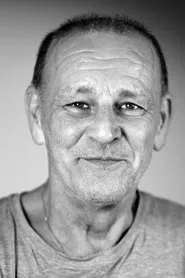
Papa Otto
Andrei Finti
Papa Otto

Doctor Szántai
Miklos Bacs
Doctor Szántai
After a bit of an altercation with a co-worker in a meat processing factory in Germany, the slightly thuggish "Matthias" (Marin Grigore) returns to his rural Romanian village where his less than delighted to see him wife "Ana" (Macrina Barladeanu) is trying to bring up their young son "Rudi" (Mark E. Blenyesi). The young lad has clearly suffered from some sort of trauma and so doesn't ever speak. "Matthias" needs to find a job, but the local employer - a bakery run by "Csilla" (Judith Slate) - is fully staffed, though largely by migrant workers including a family from Nepal. What now ensues is quite a telling drama that tries to reconcile the familial differences between the troubled trio whilst also looking at the impact of immigration on small towns where local employment - that pays sufficiently well to maintain adequate standards of living - is particularly sparse. It looks at a xenophobia but with a justifiable, almost sympathetic eye and it also takes a look at the role of the ostensibly tolerant and all-encompassing religious establishment that is perhaps not as Christian as we might expect. This community is not intrinsically racist but perhaps just a little bit nimby-ist - and often with a degree of plausible just cause. I can't say I loved the ending - it was incomplete and rather unsatisfactory for me, but the efforts from the actors and the sometimes quite potent writing offers us an intimate view on just how grand design politics can impact small, traditional, communities.
Read full reviewClip
A Conversation on R.M.N. with Ethan Hawke and Cristian Mungiu
Cristian Mungiu on R.M.N.