The Weight of Memory in the Green Hill ZoneThere is a moment in Jeff Fowler’s *Sonic the Hedgehog 3* that feels startlingly out of place for a franchise built on supersonic slapstick and chili dog jokes. It involves a young girl, a sterile laboratory, and a promise made through reinforced glass. For a brief flicker, the neon-soaked energy of the Sega cinematic universe dims, replaced by a genuine melancholia that anchors this film in something far heavier than its predecessors. If the first two films were about finding a home, this third installment is a surprisingly mature meditation on the corrosive nature of grief and the Herculean effort required to forgive.

Fowler, returning to the director’s chair, has seemingly grown alongside his CGI protagonists. Visually, the film steps away from the "road trip" aesthetic of the first movie and the "adventure romp" of the second, leaning instead into a sci-fi operatic style that recalls the turn-of-the-millennium blockbusters. The action sequences are kinetic and legible, employing a darker color palette dominated by blacks and crimson reds that mirror the new antagonist, Shadow. The "Dragon Ball Z" comparisons are inevitable during the climax, but the spectacle feels earned rather than exhausted. The visual language here isn't just about speed; it's about impact—the way bodies (and emotions) crash into one another.
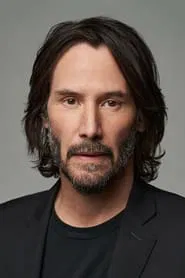
However, the film’s true engine is not its velocity, but its villain. Keanu Reeves’ vocal performance as Shadow the Hedgehog is a masterstroke of casting that transcends meme culture. Reeves brings a wounded, stoic gravity to the character, stripping away the cartoonish villainy often associated with the genre. Shadow isn't evil; he is a traumatic response given physical form. His quest for vengeance is driven by the loss of Maria (Alyla Browne), a plot thread handled with a sincerity that refuses to talk down to its young audience.

Balancing this heaviness is the inimitable Jim Carrey, who performs a high-wire act of comedic brilliance by playing both the familiar Dr. Ivo Robotnik and his grandfather, Gerald Robotnik. It is a dual performance that allows Carrey to harmonize with himself—Ivo’s manic, rubber-faced ego clashing with Gerald’s bitter, Shakespearean madness. Carrey remains the chaotic heartbeat of this franchise, finding humanity in the absurd. He serves as the bridge between the film's darker themes and its necessary levity, proving once again that he is one of the few actors who can make a mustache twirl feel like a character study.
The narrative occasionally buckles under the weight of its own lore, struggling to juggle the expanded roster of Team Sonic (Sonic, Tails, Knuckles) against the Shadow/Robotnik plot. Yet, the emotional core holds. The film juxtaposes Sonic's "found family"—a support system built on love and trust—against Shadow's isolation. It posits that the only difference between a hero and a villain is often the presence of a hand reaching out in the dark.

*Sonic the Hedgehog 3* succeeds because it dares to take its digital hedgehog seriously. It acknowledges that even in a world of gold rings and talking echidnas, pain is universal. By respecting the tragic roots of its antagonist, the film elevates itself from a mere product of intellectual property to a satisfying piece of pop art. It suggests that while we cannot outrun our past, we can, perhaps, choose a different direction in which to run.