✦ AI-generated review
The Weightlessness of Gold
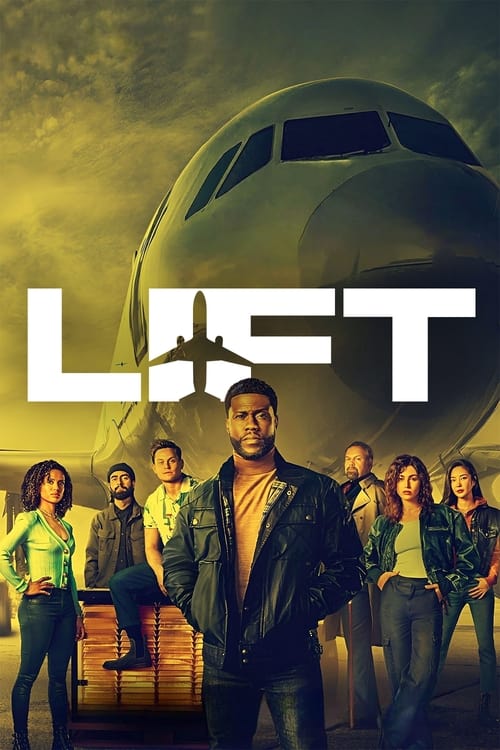
In the canon of great heist cinema, the true currency has never been the money. In Jules Dassin’s *Rififi*, it was the agonizing silence of the labor; in Michael Mann’s *Heat*, it was the existential loneliness of the professional. These films understood that the theft was merely a crucible for human behavior. *Lift*, the 2024 streaming vehicle directed by F. Gary Gray, attempts to steal the crown jewels of the genre but forgets to bring a getaway driver for its soul. It is a film that moves with the friction-less hum of a server farm—shiny, expensive, and profoundly intangible.
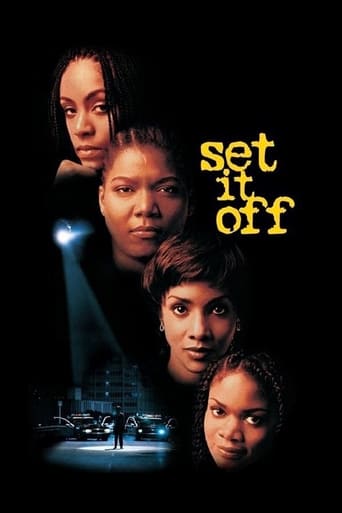
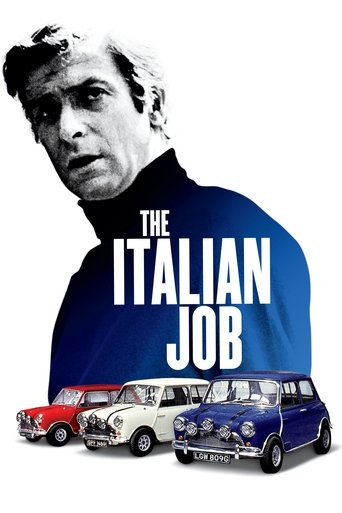
Gray is no stranger to the mechanics of the ensemble caper. His 1996 film *Set It Off* pulsed with desperate social commentary, and his 2003 remake of *The Italian Job* remains a high-water mark for popcorn entertainment, fueled by genuine charisma and tactile stunt work. *Lift*, however, feels less like a film directed by a human hand and more like a sequence of visual parameters optimized for a retention algorithm. The narrative, which concerns a crew of benevolent thieves stealing $500 million in gold from a passenger plane in mid-flight, operates in a world where physics, logic, and consequence have been smoothed over by digital gloss.
The film’s visual language is the aesthetic equivalent of an airport luxury lounge: sterile, universally palatable, and devoid of specific culture. We are whisked from Venice to London to the skies above the Alps, yet every location looks like the same green-screen composite. Early in the film, the crew executes a heist involving an NFT in Venice. It is an unintentional but perfect metaphor for the movie itself: a token of speculative value that insists it is art, yet holds no physical weight. The camera glides over these settings with a drone-like detachment, treating the actors not as characters inhabiting a space, but as assets placed within a luxury render.
At the center of this vacuum is Kevin Hart, an actor of undeniable energy who here attempts a pivot toward the suave. As Cyrus Whitaker, the mastermind thief, Hart suppresses his trademark frantic energy in favor of a cool, murmured competence. The tragedy of the performance is not that Hart cannot be dramatic—he has shown depth elsewhere—but that the film mistakes "serious" for "sedated." He wears the suits and delivers the exposition, yet there is a hollowness behind the eyes, as if he is waiting for a punchline that the genre constraints won’t allow him to deliver. His chemistry with Gugu Mbatha-Raw, playing the Interpol agent and obligatory love interest, is suffocated by a script that treats romance as a plot beat rather than an emotional reality. They are two beautiful people standing next to each other, waiting for the scene to end.
Even the central set piece—the mid-air gold transfer—lacks the sweaty-palmed tension that defines the genre. Because the film relies so heavily on impossible CGI physics, the danger never feels real. When gold bars slide across the floor of a tilting plane, they lack mass. We watch pixels collide with pixels.
*Lift* is not incompetent; it is aggressively competent in the way a fast-food burger is consistent. It hits every expected beat of the international caper: the team assembly montage, the tech wizardry, the double-cross. But it performs these rituals without belief. It is a movie designed to be watched while folding laundry, a piece of "content" that demands nothing of its audience and gives nothing in return. F. Gary Gray once made films that felt like they were fighting for their lives. *Lift* feels like it’s just fulfilling a contract.