✦ AI-generated review
The Architecture of the Abyss
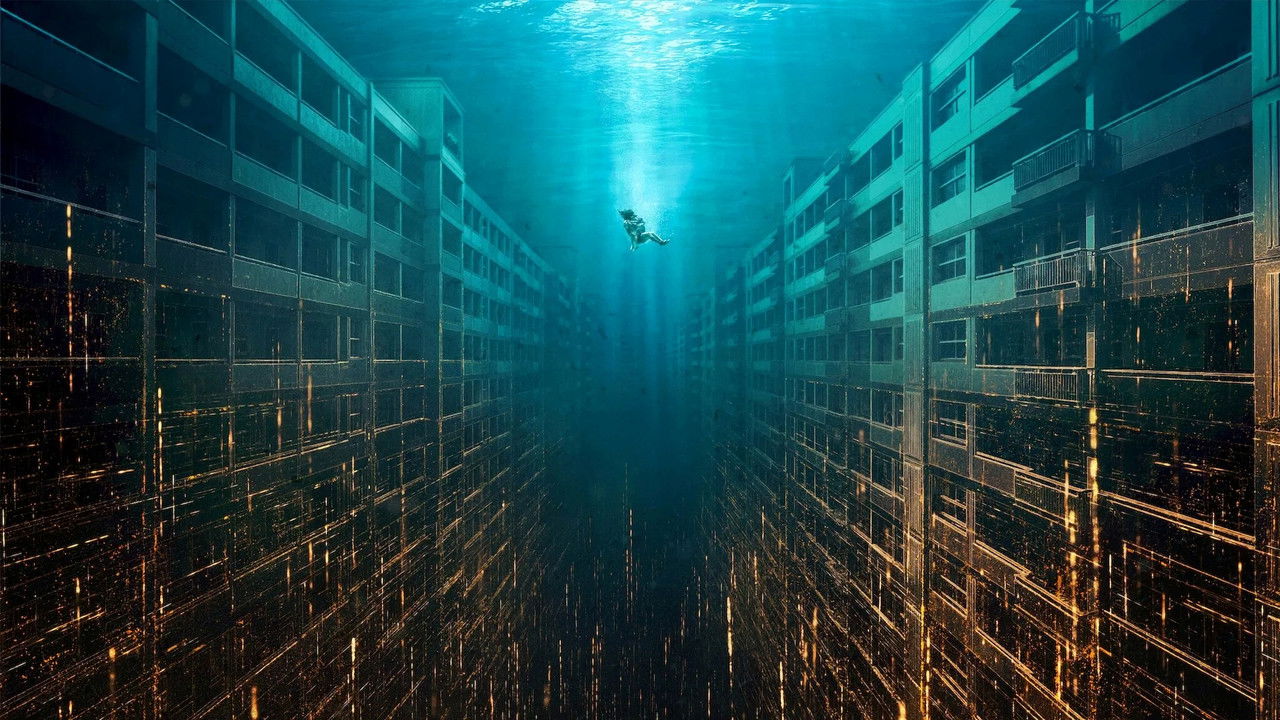
The modern disaster film often suffers from a fatal paradox: as the scale of destruction widens, the human stakes tend to shrink. We watch cities crumble and oceans rise, yet we feel nothing but the hollow thrum of spectacle. In *The Great Flood*, director Kim Byung-woo attempts to solve this equation by inverting it. He gives us the end of the world, yes, but he traps it within the suffocating concrete lungs of a single Seoul apartment complex. What begins as a survival thriller about rising water eventually reveals itself to be a meditation on a far more terrifying kind of drowning—the submersion of reality itself.
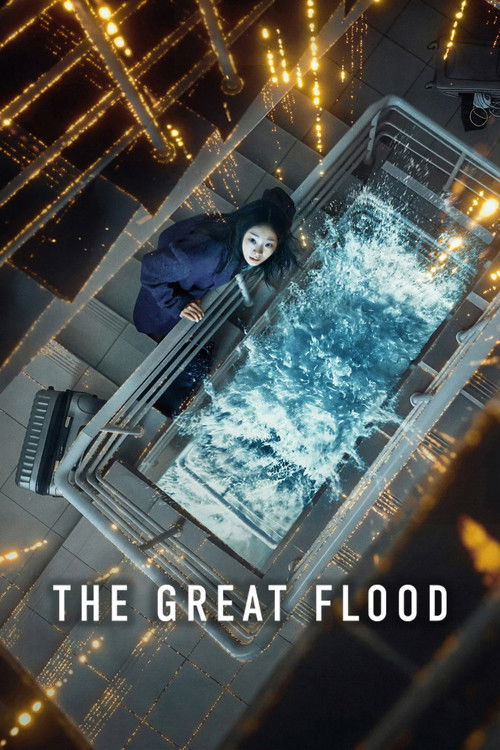
Kim, who previously demonstrated a masterclass in claustrophobia with *The Terror Live*, understands that panic is spatial. For the first hour, the film is a vertical guillotine. We watch An-na (a ferocious Kim Da-mi) and her son negotiate the brutal geometry of a flooding high-rise. The water here is not just a CGI villain; it is a rising floor, a time limit made of sludge and debris. The cinematography treats the stairwells like arteries clogging with panic, stripping away the polish of the genre to reveal something primal and wet. It is in these moments that the film breathes, ironically, by choking its characters.
However, to view *The Great Flood* merely as a wet survival run is to misunderstand its architecture. The film takes a sharp, jagged turn into science fiction—a narrative pivot that has proved divisive but is essential to its thesis. When it is revealed that An-na is not just a mother but an AI researcher pivotal to humanity’s future, the film sheds its disaster movie skin to reveal a colder, shinier underbelly. We move from the physical threat of drowning to the existential threat of simulation. The "flood" becomes a metaphor for the recursive loops of trauma and the artificial constructs we build to survive them.
This narrative pivot is risky, and admittedly, the film buckles under the weight of its own intelligence in the third act. The transition from the gritty, tactile danger of the apartment to the sterile logic of the laboratory creates a tonal whiplash. The script, seemingly desperate to outsmart its audience, occasionally abandons emotional coherence for puzzle-box mechanics. The references to recursive time and memory manipulation evoke *Edge of Tomorrow* or *Inception*, but without the surgical precision of those predecessors.
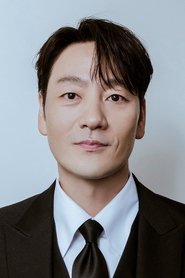
Yet, amidst this narrative crumbling, Kim Da-mi stands as an unshakeable pillar. As she did in *The Witch*, she possesses an ability to ground the fantastical in immediate, physical desperation. Her performance saves the film from becoming a sterile exercise in world-building. Even when the plot spirals into high-concept abstraction, her terrifying commitment to her child remains the only "real" thing on screen. Park Hae-soo, playing the security officer Hee-jo, offers a stoic counterweight, but he is largely a function of the plot, a piece of the puzzle rather than a person.
Ultimately, *The Great Flood* is a fascinating, if fractured, artifact of the current Korean sci-fi renaissance. It rejects the safety of a simple genre exercise, choosing instead to drown in its own ambition. It asks whether biological survival matters if the reality we inhabit is synthetic. While the execution may falter, leaving viewers battered by its sudden shifts in gravity, there is something admirable in its refusal to simply tread water. It aims for the stars, even as it drags us down into the deep.