✦ AI-generated review
The Bone of Contention: Myth and Machinery in the Digital Ether
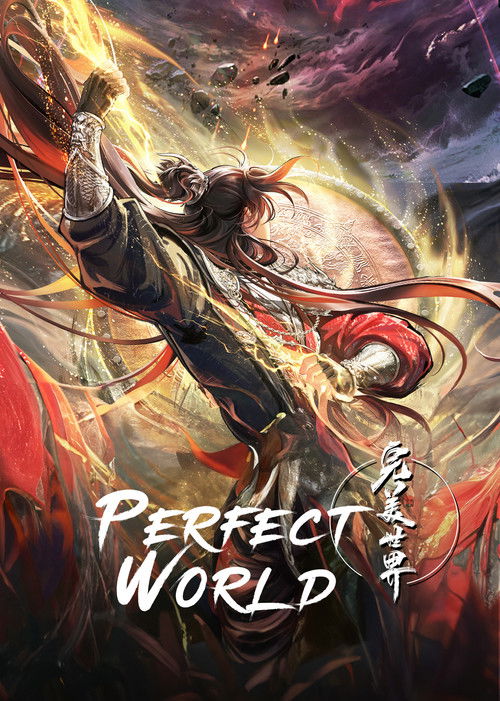
In the sprawling, often impenetrable landscape of modern Chinese animation (donghua), the *xianxia* genre occupies a space similar to the Western superhero epic, yet it operates on a fundamentally different philosophical axis. Where Western heroes often fight to preserve the status quo, the *xianxia* protagonist fights to transcend it entirely, seeking apotheosis through the grueling, metaphysical labor of "cultivation." Shuai Zhang’s *Perfect World* (Wanmei Shijie), debuting in 2021, is a particularly aggressive entry in this canon—a series that eschews the meditative quietude of traditional wuxia for a kinetic, almost suffocating density of violence and spectacle. It is a work that asks not what it means to be a hero, but what it costs to survive a universe designed to crush you.
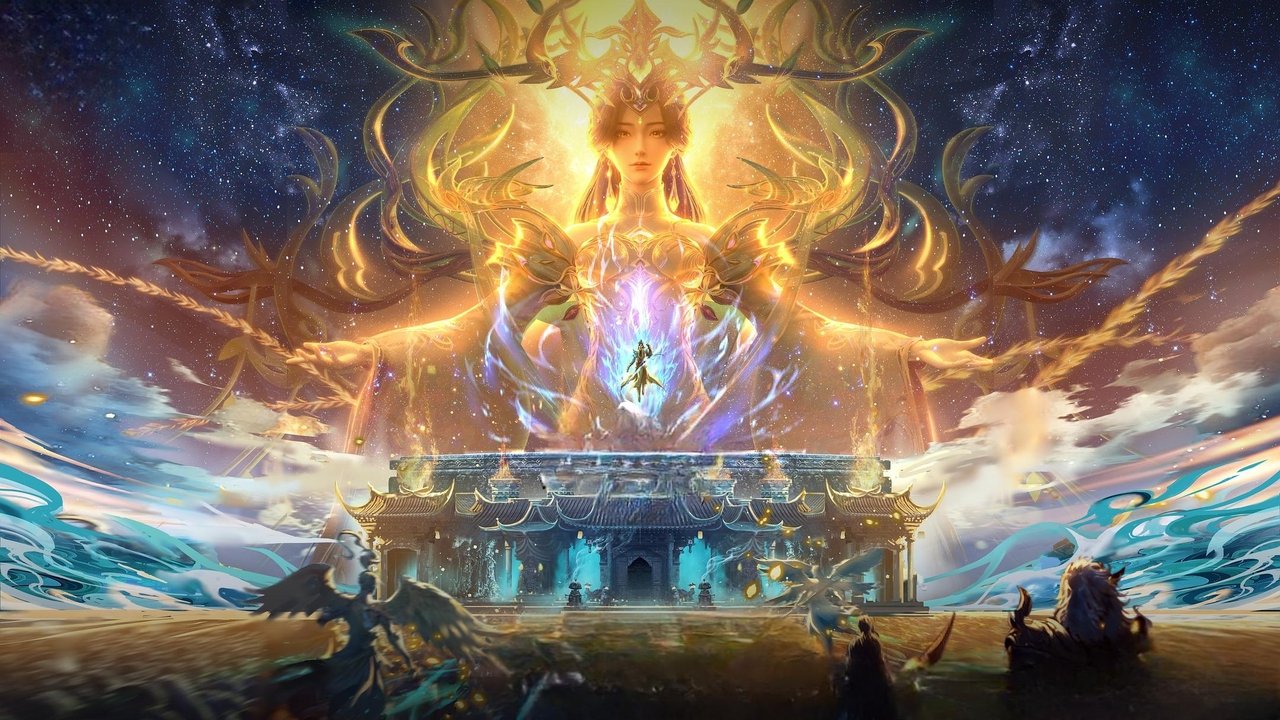
Visually, *Perfect World* is a testament to the rapid evolution of Chinese 3D animation. The series does not merely use CGI; it weaponizes it. Under Zhang’s direction, the screen is frequently overwhelmed by a digital baroque—neon qi blasts, shattering landscapes, and creatures that defy biological logic. In the early episodes, this ambition sometimes outpaced the technical execution, resulting in a textureless plasticity. However, as the narrative progresses, the visual language matures into a terrifying beauty. The aesthetic is not one of realism, but of hyper-reality—a "gamified" sublime where every impact carries the weight of a collapsing star. The widely discussed duel between the protagonist Shi Hao and his cousin Shi Yi is not just a fight scene; it is a visual dialogue on the nature of stolen potential, rendered in blinding strokes of gold and crimson that threaten to shatter the frame itself.
At the narrative’s marrow lies Shi Hao, a protagonist whose journey begins with a violation so intimate it sets the tone for the entire saga: the theft of his "Supreme Bone" by his own kin. This is not the standard "orphan rises from nothing" trope; it is a story of cannibalistic lineage. Shi Hao is a survivor of institutional betrayal. While the script occasionally falters, collapsing under the weight of its own lore and the breakneck pace of its adaptation from Chen Dong’s novel, the emotional core remains potent. Shi Hao’s trajectory is one of relentless friction. He is a character defined by what has been taken from him, and his "cultivation" is less about enlightenment and more about the reclamation of self in a world of predatory hierarchies.
Culturally, the series offers a fascinating glimpse into shifting sensibilities within the genre. The discourse surrounding the show often fixates on its treatment of romance—specifically, the gradual pivot from the source material’s polygamous "harem" tropes toward a more focused, modern monogamy with Huo Ling’er. This is not merely fan service; it represents a sanitization of the genre’s feudal roots to align with contemporary values, a tension that the show navigates with varying degrees of grace. Furthermore, Shi Hao’s "descent into darkness" in later arcs challenges the Confucian ideal of the righteous hero, suggesting that in a "perfect world" built on bones, moral purity is a luxury the weak cannot afford.
Ultimately, *Perfect World* is a jagged, imperfect colossus. It is frequently exhausting, occasionally incoherent, and visibly strained by the demands of long-form serialization. Yet, in its most lucid moments—when Shi Hao stands alone against the "fanatical monsters" of his world, guided only by the spectral willow tree—it achieves a kind of mythic resonance. It captures a distinctly modern anxiety: the feeling that to succeed, one must not only work harder than the heavens intended but must also dismantle the very systems that were built to ensure one's failure.