✦ AI-generated review
The Surrealist in the Attic
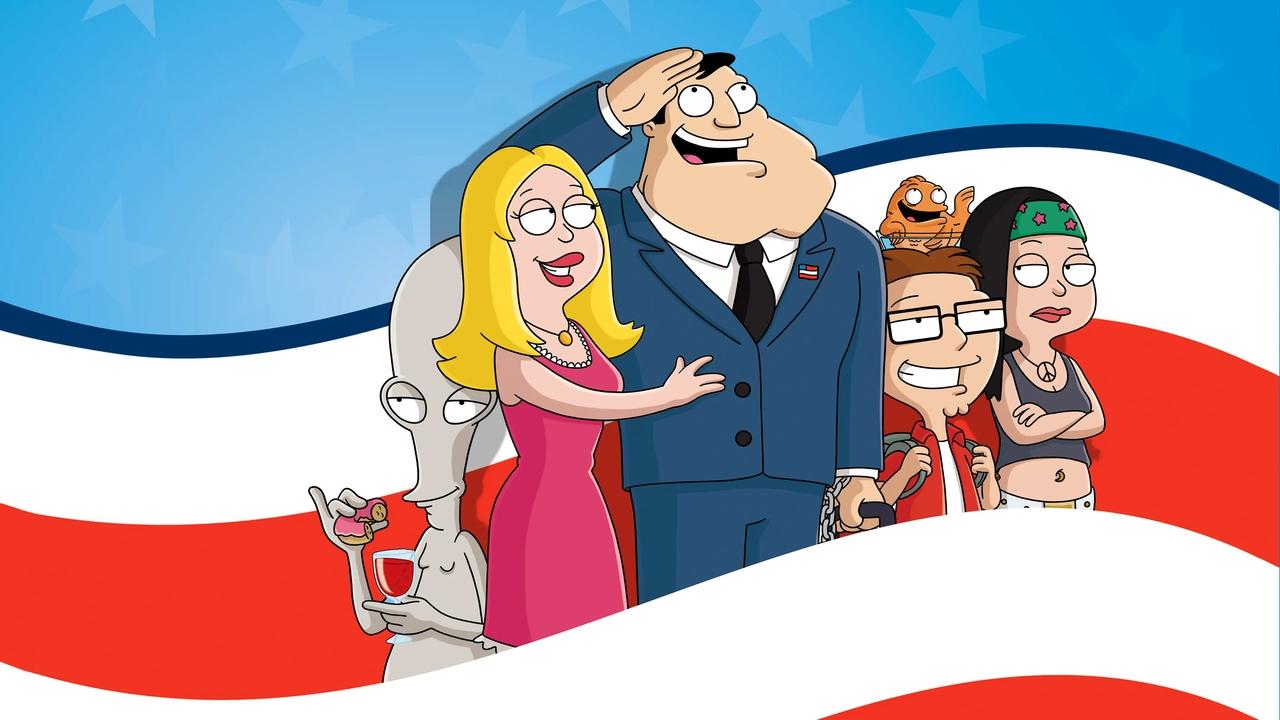
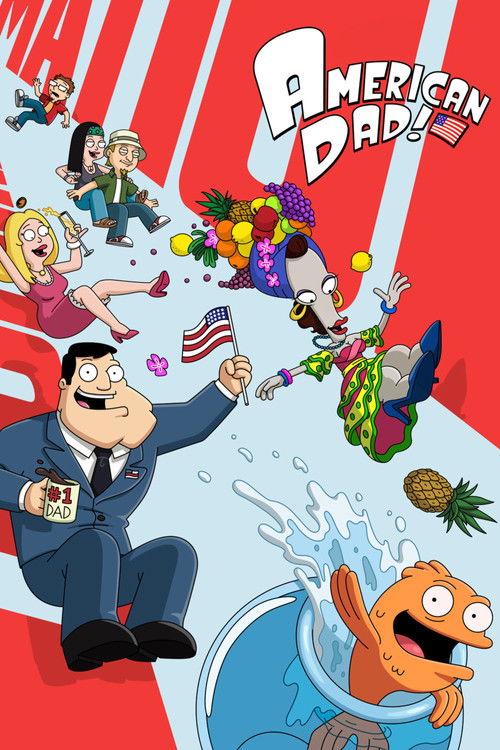
When *American Dad!* premiered in 2005, it arrived disguised as a political artifact. Created in the shadow of the Bush administration, it appeared to be little more than a topical echo of its predecessor, *Family Guy*—a vessel for Seth MacFarlane to lampoon neoconservatism through the squared jaw of CIA agent Stan Smith. Yet, to view this series today through the lens of its pilot is to misunderstand one of television’s most fascinating metamorphoses. Over two decades, *American Dad!* has shed its political skin to reveal something far stranger and more significant: it has become the avant-garde theater of the animated sitcom world.
The show’s brilliance lies in its rejection of the "cutaway" gag structure that defines MacFarlane’s other work. Instead of fragmenting its narrative for cheap pop-culture dopamine hits, *American Dad!* commits to the bit, often spiraling into high-concept sci-fi, psychological horror, or independent cinema pastiche. One needs only to look at the widely lauded episode "Rabbit Ears" to see this visual ambition. In this installment, Stan becomes trapped inside a static-filled, monochrome 1950s television broadcast. The animation shifts from bright, flat sitcom colors to a noir-soaked claustrophobia, creating a genuine sense of existential dread that rivals *The Twilight Zone*. This is not merely a cartoon making a joke about old TV; it is a sophisticated exploration of nostalgia as a trap.
At the center of this narrative elasticity sits Roger Smith, the alien in the attic. In the hands of lesser writers, Roger would remain a simple "fish out of water" trope. Instead, he has evolved into the Id of the series—a pansexual, sociopathic shapeshifter whose thousands of "personas" allow the show to seamlessly change genres. Roger does not just wear costumes; he constructs entire lives, families, and histories that exist parallel to the main plot. He represents the terrifying fluidity of identity in the modern age. Through Roger, the show argues that we are all performing, all the time. When he looks into the mirror and does not recognize himself, the show touches on a profound, melancholic disassociation that anchors the absurdity.
Crucially, unlike the cynical nihilism that pervades *Family Guy*, where the family members seem to despise one another, the Smiths are bound by a twisted but genuine affection. Stan Smith is no longer a political mouthpiece but a man terrified of his own irrelevance, clinging to his wife Francine—who is arguably the most chaotic and liberated matriarch in animation history. Their marriage is not a sitcom trope of the nagging wife and dumb husband; it is a portrait of two people enabling each other’s insanity to survive suburban boredom.
*American Dad!* succeeds because it stopped trying to comment on the world and instead decided to build its own. It is a series where a post-apocalyptic saga about a golden turd can play out in the background for years, or where a father and son can have a tragic, wordless bonding moment over a dead bird. It is a surrealist masterpiece hiding in plain sight, proving that if you stay in the attic long enough, you can invent a universe far more interesting than the one outside.