✦ AI-generated review
The Apocalypse in Candy Color
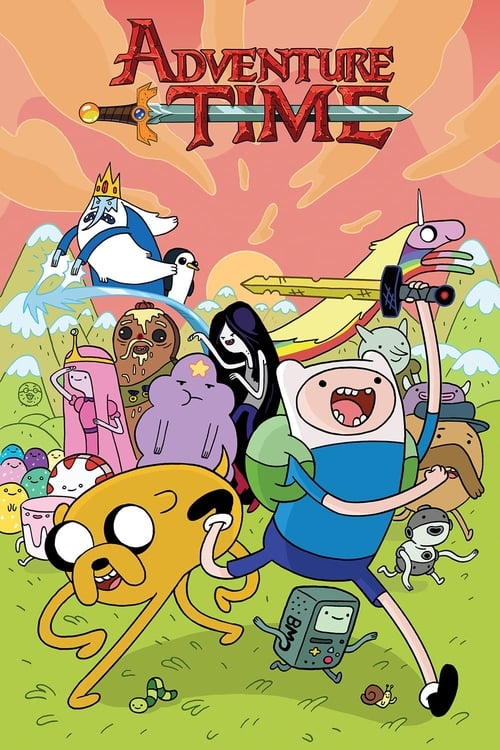
When *Adventure Time* first flickered onto screens in 2010, it masqueraded as a sugar rush. It arrived with the manic energy of a playground game, defined by "noodle-armed" animation and non-sequitur humor that seemed designed to baffle adults while delighting the short attention spans of the internet age. But to dismiss Pendleton Ward’s creation as mere psychedelic whimsy is to ignore one of the most profound narrative sleights of hand in modern television. Beneath its pastel confectionery surface, *Adventure Time* was never really a comedy about a boy and his dog; it was a melancholy, existential poem about growing up in the graveyard of human civilization.
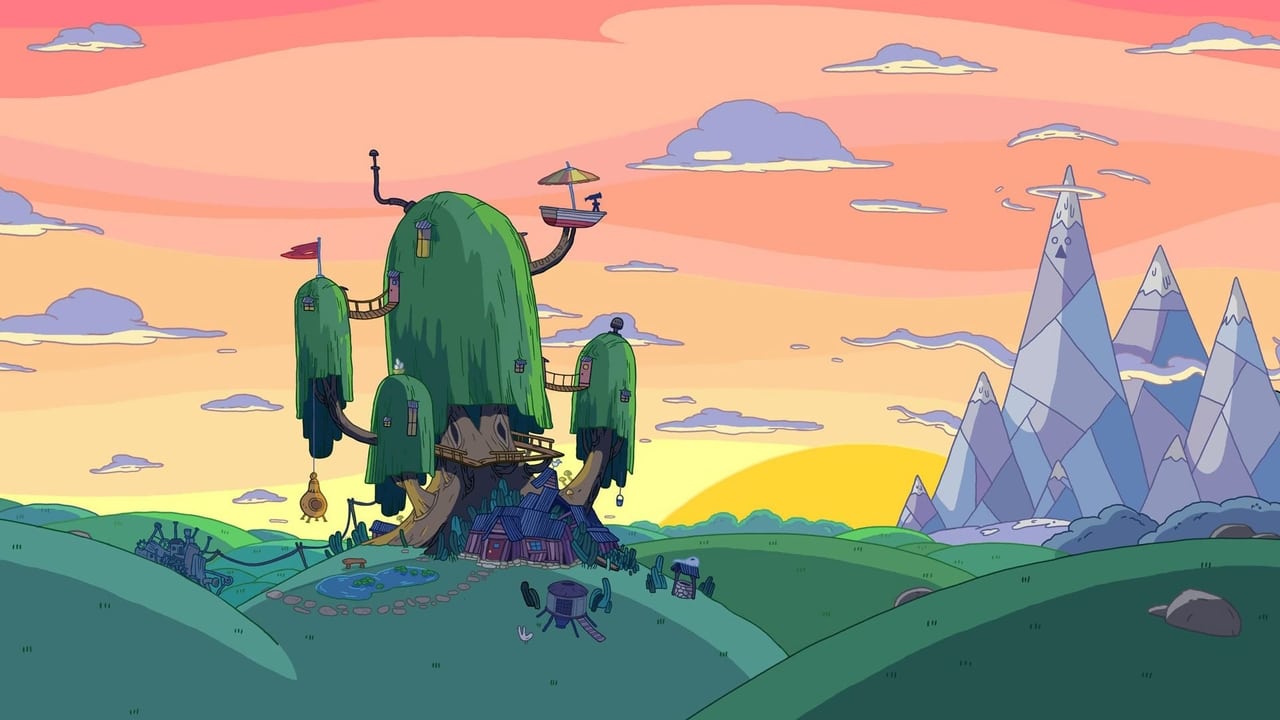
The visual language of the Land of Ooo is built on a disturbing dissonance. The foregrounds are populated by sentient gumdrops and joyous, shapeshifting dogs, rendered in a deceptive simplicity that suggests safety. Yet, the backgrounds tell a different, silent story. The landscape is littered with the rusted husks of police cars, televisions, and nuclear warheads. The planet itself, viewed from space, bears a catastrophic crater—a permanent scar of the "Mushroom War" that wiped out humanity. This is not a fantasy world; it is *our* world, long after we have failed. The brilliance of the show’s direction lies in how it treats this horror not as a plot twist, but as mundane scenery. It forces the viewer to accept that life—vibrant, strange, undeniable life—persists even after the end of the world.
This juxtaposition allows the series to tackle themes of decay and memory with startling maturity. The character of the Ice King begins as a generic, princess-kidnapping antagonist, a stock trope of Saturday morning cartoons. But as the show peels back the layers of its own lore, he is revealed to be Simon Petrikov, a tragic figure losing his mind to magic, a heartbreaking allegory for dementia. The episode "I Remember You" remains a watershed moment in animation history, shifting the genre’s potential from escapism to a raw confrontation with loss. We are not watching a hero defeat a villain; we are watching a survivor try to reach a friend who is slowly disappearing behind a fog of madness.
Where other animated protagonists are trapped in a stasis of eternal youth, Finn the Human is allowed the terrifying privilege of aging. We witness his voice crack, his idealism shatter, and his body suffer permanent injury. In the surreal, psychological bottle episode "The Hall of Egress," Finn is stripped of his friends and his sight, forced to navigate a dungeon that resets every time he opens his eyes. It is a masterclass in visual storytelling, dispensing with the show’s usual kinetic action for a quiet, suffocating journey into self-reliance. Finn does not win by fighting; he wins by letting go of his ego and his reliance on the familiar. It is a metaphor for adulthood so potent it borders on the spiritual.
Ultimately, *Adventure Time* rejects the nihilism that usually accompanies post-apocalyptic fiction. Its thesis is not that everything dies, but that everything changes. In its finale, the show posits that "time is an illusion that helps things make sense," suggesting that our connections transcend the linear march toward death. It is a series that dared to tell children that their parents were flawed, that heroes don’t always win, and that the world is broken—but it is still worth saving, and more importantly, it is still worth living in.









![Fate/stay night [Unlimited Blade Works] poster](https://image.tmdb.org/t/p/w342/jyqi5BkDoKKIA2WAoz3HBtRHld3.jpg)