✦ AI-generated review
The Brightest Star Casts the Longest Shadow
In the modern age of the parasocial, we demand two contradictory things from our celebrities: we want them to be transcendent, otherworldly figures of perfection, and simultaneously, we demand they be "real." We punish them for being distant, yet we destroy them when they bleed. *Oshi No Ko*, the 2023 anime adaptation directed by Daisuke Hiramaki, enters this discourse not merely as a critique of the Japanese idol industry, but as a devastating study of the commodification of the human soul. While technically a television series, its feature-length, ninety-minute premiere operates with the structural integrity and emotional weight of a standalone film, delivering a prologue that feels less like an introduction and more like a Greek tragedy performed in pop-idol pastels.
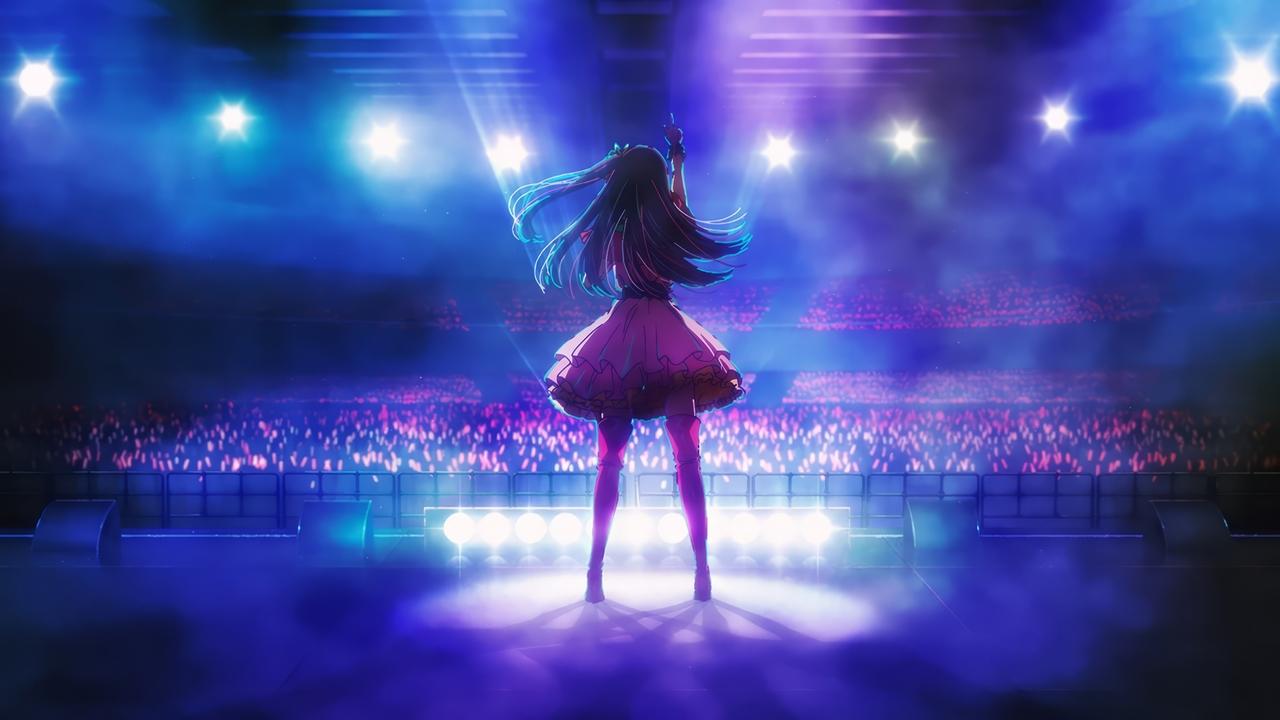
Visually, the work is a masterclass in deception. Studio Doga Kobo, known for gentler "slice of life" fare, weaponizes its own candy-colored aesthetic. The animation is impossibly bright, saturated with the violets and neon pinks of a concert stage. Yet, Hiramaki uses this radiance to create a suffocating sense of artificiality. The central visual motif—the six-pointed stars embedded in the eyes of the protagonist, Ai Hoshino—serves as a chilling metaphor. These are not merely design choices; they are brands. They suggest that even the window to the soul has been trademarked, polished, and sold. When the light in those eyes inevitably dims, the shift in the color palette from vibrant technicolor to cold, washed-out grey hits the viewer with visceral force.
At the heart of this narrative is Ai, a character who embodies the terrifying discipline of the "perfect lie." The story’s genius lies in refusing to paint her simply as a victim of a predatory system. She is an active participant in her own myth-making, a young woman who believes that if she performs love convincingly enough, it might one day become real. The script navigates the uncomfortable reality that for an idol, lying is an act of love—a shield protecting the fans from the banality of the performer's true self. When violence inevitably intrudes on her curated world, it feels like a violation of a sacred contract. The transition from the sanitized world of showbiz to the gritty, blood-soaked reality of a stalker’s knife is handled not for shock value, but to underscore the fragility of the glass house these idols inhabit.
The reincarnation element—often a tired trope in anime—is utilized here to lend a unique, albeit disturbing, perspective. By placing an adult consciousness into the infants witnessing the industry’s machinery, the narrative strips away the innocence of childhood. We are forced to watch the machinery of fame through eyes that understand exactly how cruel it is. This is not a story about rising to the top; it is a story about the debris left at the bottom.
Ultimately, *Oshi No Ko* succeeds because it refuses to look away. It acknowledges that the entertainment industry is a vampire that feeds on youth and purity, but it also admits that we, the audience, are the ones inviting the vampire in. It is a haunting, luminous work that asks whether a lie, told beautifully enough, is worth more than a painful truth. In the end, the film suggests that the brightest stars are often the ones burning themselves alive for our amusement.