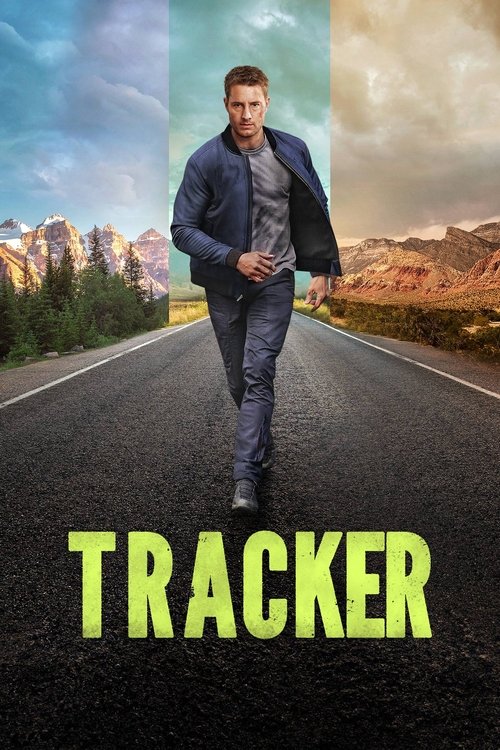
✦ AI-generated review
The Solace of the Algorithm
In an era of television defined by anxiety-inducing anti-heroes and sprawling, tangled mythologies, the CBS procedural *Tracker* arrives not as a challenger to the status quo, but as a soothing balm. It is a series that fundamentally understands the modern viewer's exhaustion. We are tired of uncertainty; *Tracker*, in response, offers us a man who deals exclusively in probabilities.
Based on Jeffery Deaver’s novel *The Never Game*, the series introduces us to Colter Shaw (Justin Hartley), a "rewardist" who crisscrosses the American interior in a pristine Airstream trailer, solving missing persons cases for cash. But to view Shaw merely as a mercenary is to miss the philosophical architecture of the show. He is a secular monk of the highway, a man who has replaced the messiness of human connection with the cleanliness of calculation. When Shaw stands on a cliff edge or assesses a kidnapping site, he doesn't just look for clues; he speaks in percentages, calming panicked victims by quantifying their odds of survival. In a chaotic world, his competence is the ultimate fantasy.
Visually, the series operates within the glossy, reassuring vernacular of network television, yet it manages to capture a specific, lonely beauty. The cinematography favors wide, sweeping drone shots of forests and deserts—a "mythic America" that feels vast and indifferent. These landscapes serve as the perfect foil for Shaw’s contained existence. His Airstream is not just a vehicle; it is a capsule of control moving through an uncontrollable world. The show’s aesthetic is clean, perhaps too clean for a story about the gritty underbelly of crime, but this polish serves a purpose: it reinforces the idea that order can be imposed on chaos.
At the heart of this machine is Justin Hartley, an actor who has successfully shed the emotional histrionics of *This Is Us* for a stoicism that borders on the robotic. This is a compliment. Hartley plays Shaw with a stillness that suggests a man actively repressing a scream. The show hints at a dark, survivalist upbringing—a father who taught him to track but also instilled a deep paranoia—yet Shaw wears this trauma like a well-tailored suit. He is accessible but emotionally unavailable, a contradiction that becomes the show's most compelling engine.
The series falters only when it attempts to be a standard ensemble drama. The remote support team—handlers Velma and Teddi, and tech-whiz Bobby—often feel like functional narrative devices rather than people. However, the show finds its true emotional pulse in the scenes between Shaw and Reenie Greene (Fiona Rene), a lawyer with whom he shares a prickly past. Rene brings a kinetic, unpredictable energy that cracks Shaw’s veneer. In their interactions, we see the cost of Shaw’s lifestyle: he can find anyone on a map, but he cannot allow himself to be "found" by another person.
Ultimately, *Tracker* is a study in the comfort of competence. It doesn't aim to deconstruct the crime genre; it aims to purify it. In Colter Shaw, we find a hero who promises that if we just calculate the variables correctly, we can find what is lost. It is a fiction, of course, but in 2024, it is a necessary and seductive one.