
Overview
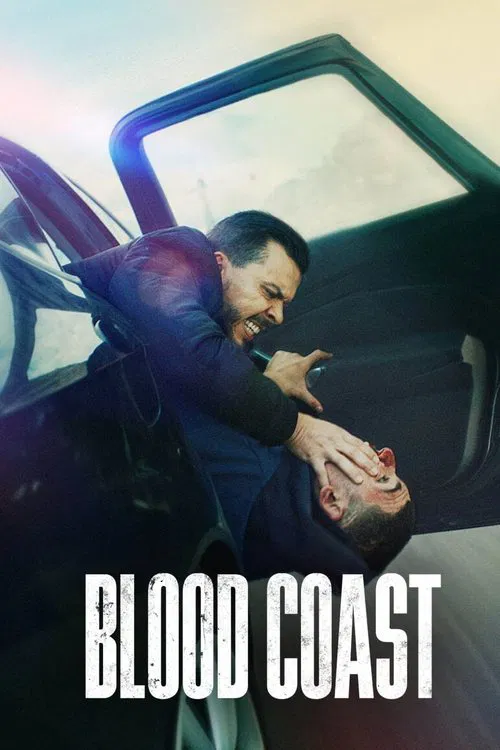
As a vicious drug dealer tries to overtake Marseille, a rogue police captain and his daredevil team welcome a new recruit with an agenda of her own.
Reviews
✦ AI-generated review
Pax Massilia: The Sun-Bleached Noir of the Mediterranean
To understand *Blood Coast* (originally titled *Pax Massilia*), one must first understand that in the lexicon of French crime cinema, Olivier Marchal is less a director and more a distinct genre unto himself. A former police officer turned filmmaker, Marchal has spent decades deconstructing the myth of the noble detective, replacing it with a nihilistic, sweat-drenched reality where the badge is just a piece of metal and the law is a suggestion. In *Blood Coast*, he turns his gaze to Marseille, a city that serves not merely as a backdrop, but as the pulsating, chaotic protagonist of this brutal opera.
The series arrives at a time when the "rogue cop" narrative feels increasingly antiquated, if not outright uncomfortable. Yet, Marchal and co-creator Kamel Guemra lean into the discomfort with almost reckless abandon. This is not a revisionist take on policing; it is a primal scream. The narrative follows Captain Lyès Benamar (Tewfik Jallab) and his squad of "Crazies"—a team so morally flexible they make Vic Mackey look like a crossing guard. They are locked in a violent dance with a rising drug lord, Franck Murillo (Nicolas Duvauchelle), in a city that seems to be perpetually on the verge of spontaneous combustion.

Visually, *Blood Coast* is an assault on the senses. The cinematography eschews the cool, blue-grey palette typical of Nordic noir or the rainy slickness of Parisian thrillers. Instead, it embraces the blinding, oppressive sun of the Mediterranean. The camera dwells on the contrast between the azure sea and the brutalist concrete of the northern housing projects. There is a tactile quality to the filmmaking; you can practically feel the heat radiating off the pavement and smell the exhaust fumes mixed with sea salt.
One scene early in the series encapsulates this aesthetic perfectly: a high-speed chase that feels less like a choreographed stunt and more like a documentary of a disaster. The camera shakes, the editing is jagged, and the violence is sudden and unglamorous. It is a messy, loud, and terrifying sequence that establishes the show’s visual manifesto: elegance is for Paris; Marseille is for survival.

However, the show’s reliance on adrenaline often threatens to overshadow its humanity. The characters, particularly the enigma of Alice Vidal (Jeanne Goursaud), the Interpol transfer with a hidden agenda, often feel like archetypes trapped in a video game logic. We watch them bleed, scream, and fight, but we are rarely given the quiet moments necessary to understand *why* they continue to do so. The script moves with such breathless velocity that emotional beats are often sacrificed for the next shootout.
Yet, there is a tragic grandeur to the performance of Tewfik Jallab. He plays Benamar not as a hero, but as a man who knows he is already dead, just waiting for the bullet to catch up. His weariness anchors the show, providing a gravitational pull that keeps the chaotic narrative from spinning off into absurdity. He represents the "old world" of policing—tribal, violent, and doomed—clashing with a modern world that demands accountability he cannot provide.

Ultimately, *Blood Coast* is a flawed but fascinating artifact of modern French television. It lacks the cerebral depth of *Spiral* (*Engrenages*) or the sociopolitical nuance of *Les Misérables* (Ladj Ly), but it possesses a raw, kinetic energy that is undeniable. It is a show about a city at war with itself, told by a director who seems to believe that in the end, the only thing that separates the cops from the criminals is the direction they are running. It is not polite television, but in the heat of Marseille, politeness is the first casualty.
To understand *Blood Coast* (originally titled *Pax Massilia*), one must first understand that in the lexicon of French crime cinema, Olivier Marchal is less a director and more a distinct genre unto himself. A former police officer turned filmmaker, Marchal has spent decades deconstructing the myth of the noble detective, replacing it with a nihilistic, sweat-drenched reality where the badge is just a piece of metal and the law is a suggestion. In *Blood Coast*, he turns his gaze to Marseille, a city that serves not merely as a backdrop, but as the pulsating, chaotic protagonist of this brutal opera.
The series arrives at a time when the "rogue cop" narrative feels increasingly antiquated, if not outright uncomfortable. Yet, Marchal and co-creator Kamel Guemra lean into the discomfort with almost reckless abandon. This is not a revisionist take on policing; it is a primal scream. The narrative follows Captain Lyès Benamar (Tewfik Jallab) and his squad of "Crazies"—a team so morally flexible they make Vic Mackey look like a crossing guard. They are locked in a violent dance with a rising drug lord, Franck Murillo (Nicolas Duvauchelle), in a city that seems to be perpetually on the verge of spontaneous combustion.
Visually, *Blood Coast* is an assault on the senses. The cinematography eschews the cool, blue-grey palette typical of Nordic noir or the rainy slickness of Parisian thrillers. Instead, it embraces the blinding, oppressive sun of the Mediterranean. The camera dwells on the contrast between the azure sea and the brutalist concrete of the northern housing projects. There is a tactile quality to the filmmaking; you can practically feel the heat radiating off the pavement and smell the exhaust fumes mixed with sea salt.
One scene early in the series encapsulates this aesthetic perfectly: a high-speed chase that feels less like a choreographed stunt and more like a documentary of a disaster. The camera shakes, the editing is jagged, and the violence is sudden and unglamorous. It is a messy, loud, and terrifying sequence that establishes the show’s visual manifesto: elegance is for Paris; Marseille is for survival.
However, the show’s reliance on adrenaline often threatens to overshadow its humanity. The characters, particularly the enigma of Alice Vidal (Jeanne Goursaud), the Interpol transfer with a hidden agenda, often feel like archetypes trapped in a video game logic. We watch them bleed, scream, and fight, but we are rarely given the quiet moments necessary to understand *why* they continue to do so. The script moves with such breathless velocity that emotional beats are often sacrificed for the next shootout.
Yet, there is a tragic grandeur to the performance of Tewfik Jallab. He plays Benamar not as a hero, but as a man who knows he is already dead, just waiting for the bullet to catch up. His weariness anchors the show, providing a gravitational pull that keeps the chaotic narrative from spinning off into absurdity. He represents the "old world" of policing—tribal, violent, and doomed—clashing with a modern world that demands accountability he cannot provide.
Ultimately, *Blood Coast* is a flawed but fascinating artifact of modern French television. It lacks the cerebral depth of *Spiral* (*Engrenages*) or the sociopolitical nuance of *Les Misérables* (Ladj Ly), but it possesses a raw, kinetic energy that is undeniable. It is a show about a city at war with itself, told by a director who seems to believe that in the end, the only thing that separates the cops from the criminals is the direction they are running. It is not polite television, but in the heat of Marseille, politeness is the first casualty.