A War of Distorted ReflectionsThe *Fate* universe has long been a labyrinthine architecture of alternate timelines and philosophical inquiries into heroism, but *Fate/strange Fake* arrives less as an extension of that structure and more as a joyful demolition of it. Adapted from the light novels by Ryohgo Narita—the chaotic mind behind *Baccano!* and *Durarara!!*—this 2024 release (encompassing the *Whispers of Dawn* special and the subsequent series launch) transports the solemn, ritualistic Holy Grail War from the shadowed mysticism of Japan to the neon-soaked, artificial expanse of Snowfield, Nevada. The result is a work that feels electrically charged, rejecting the somber brooding of its predecessors in favor of a kinetic, high-stakes collision of anomalies.
Visually, the project is a triumph of kinetic energy over static exposition. Directors Shun Enokido and Takahito Sakazume, alumni of the franchise’s most high-octane commercial work, have crafted an aesthetic that feels less like a television series and more like a breathless cinematic event. The animation does not merely depict movement; it captures the sheer weight of legendary figures colliding. The environments—vast American deserts and sprawling casinos—are rendered with a sense of suffocating scale, emphasizing that this "False" Grail War is too large to be contained by shadows.
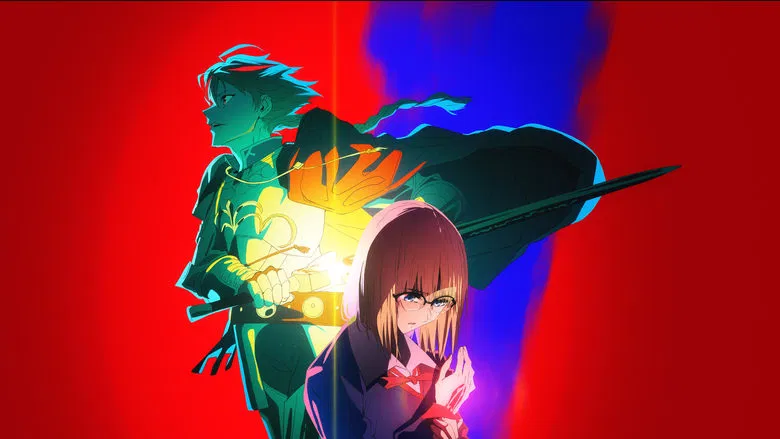
The auditory and visual language peaks early with the reunion of Gilgamesh and Enkidu. In previous iterations, Gilgamesh often plays the role of the arrogant tyrant, bored by the inferiority of the modern world. Here, faced with his one equal—a being of clay who mirrors his power—he is ecstatic. Their clash is not a fight for survival but a joyous expression of existence, a storm of gold and green that rips apart the sky. The sound design matches this ferocity; the air crackles and screams, creating a sensory overload that perfectly suits Narita’s signature storytelling style: a cacophony of disparately moving parts crashing together.
However, beneath the spectacle lies a fascinating thematic interrogation of "authenticity." The central conceit is that this American Grail War is a sham—a "fake" ritual cobbled together from stolen data, resulting in glitchy, irregular summons. We are presented with a Jack the Ripper who is not a person but a shapeshifting concept, and a pantheon of "heroes" who do not fit the traditional classes. This broken system forces the characters to grapple with their own validity. In a franchise obsessed with "True Names" and historical accuracy, *strange Fake* asks if a counterfeit desire can burn brighter than a genuine one. The emotional core resonates through characters like Tine Chelc, a young indigenous mage seeking to reclaim her land, grounding the magical absurdity in a very real, very human history of displacement and anger.

Ultimately, *Fate/strange Fake* succeeds because it understands that to honor a myth, one must occasionally shatter it. It treats the dense lore of the Type-Moon universe not as a scripture to be recited, but as a jazz standard to be improvised upon. By moving the setting to an American city built on imitation and spectacle, the series mirrors its own meta-textual nature. It is a loud, brash, and dazzlingly confident entry that proves even a "fake" war can yield genuine emotional truths. For those weary of the franchise's often impenetrable solemnity, this chaotic detour is a revitalizing shock to the system.