✦ AI-generated review
The Phantom Limb of Baker Street
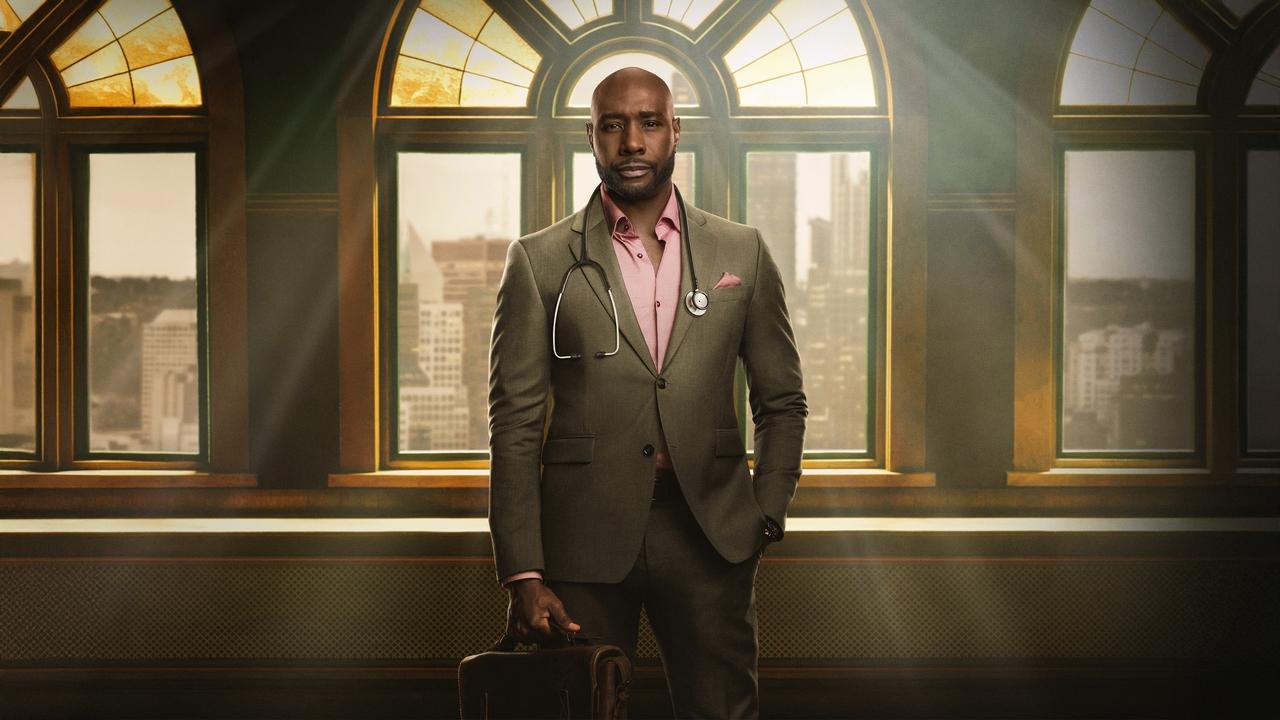
There is a distinct irony in the existence of *Watson*, CBS’s 2025 medical drama starring Morris Chestnut. For decades, television has been obsessed with reimagining Sherlock Holmes, often by turning him into a doctor—most famously in *House M.D.*, where Hugh Laurie played the Great Detective in all but name. Now, showrunner Craig Sweeny (an alumnus of the excellent *Elementary*) has inverted the formula: he has given us the actual Dr. John Watson, stripped of his consulting detective, and placed him inside a high-tech clinic that feels suspiciously like the House of Gregory. The result is a series that functions as a fascinating, if uneven, study in grief—a show about a moon trying to learn how to generate its own light after the sun has gone out.
The premise is bold in its subtractive nature. We meet Dr. Watson a year after the Reichenbach Falls tragedy, where his partner, Sherlock Holmes, purportedly died at the hands of Moriarty. Relocating from the gaslit romance of London to the sterile, glass-walled reality of a Pittsburgh clinic for rare disorders, Watson attempts to bury his past under the weight of medical bureaucracy. Visually, the series struggles to reconcile these two worlds. The direction often falls into the flat, shadowless gloss typical of network procedurals, which undercuts the supposed noir atmosphere of Watson’s trauma. However, when the show leans into its "Sherlockian" roots—visualizing Watson’s deductive process as he diagnoses a genetic anomaly—it briefly flickers with a kinetic energy that distinguishes it from the *Chicago Meds* of the world.
The series’ greatest asset, and its saving grace, is Morris Chestnut. Adapting a character who has been played by everyone from Jude Law to Martin Freeman is no small feat, but Chestnut wisely avoids the bumbling sidekick trope entirely. His Watson is capable, sharp, and physically imposing, yet haunted by a profound quietness. Chestnut plays the doctor not as a man trying to *be* Holmes, but as a man terrified that he might have to become him. In scenes where he uses cold deduction to solve a medical mystery, Chestnut lets us see the discomfort in his eyes—he knows that every time he prioritizes the puzzle over the person, he is drifting further from the empathetic healer he swore to be. This internal war—between the cold efficiency of the detective and the warm bedside manner of the physician—is the show’s most compelling conflict.
However, *Watson* frequently buckles under the weight of its own format. The "medical mystery of the week" structure often feels at odds with the serialized thriller elements involving the return of Moriarty. The show wants to be a character study of a man mourning his best friend, but it is forced to pause that mourning every twelve minutes to explain complex genetic disorders to the audience. This narrative friction makes the series feel disjointed; it is a high-stakes thriller trapped inside a daytime soap opera’s body.
Ultimately, *Watson* is a show about a phantom limb. The presence of Sherlock Holmes is felt in every frame, defined entirely by his absence. While the scripts sometimes settle for procedural safety, the series succeeds as a meta-commentary on the sidekick’s journey. It argues that John Watson was never just a chronicler of another man’s genius, but a genius of a different sort—one whose superpower is not logic, but survival. It is not a perfect adaptation, but thanks to Chestnut’s gravitationally strong performance, it manages to step out of the shadow of 221B Baker Street, even if it hasn't quite found its own address yet.