✦ AI-generated review
The Ghost in the Triage
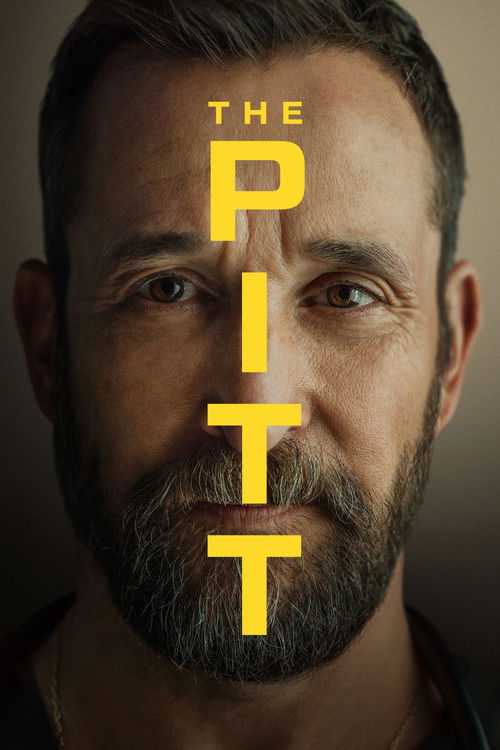
The medical drama, as a genre, has historically functioned as a comfort engine. We watch the chaos of the emergency room because we trust that, by minute forty-two, order will be restored: the heart will restart, the diagnosis will be found, or the death will be sanctified by a lesson learned. *The Pitt* (2025) offers no such sanctuary. Instead, this reunion of the *ER* triumvirate—Noah Wyle, John Wells, and R. Scott Gemmill—strips the veneer off the "hero doctor" archetype to reveal the raw, unhealed scar tissue beneath. While legal battles regarding its provenance and similarity to its predecessor have dominated the industry chatter, the show itself transcends the "reboot" discourse by offering something far darker: a real-time eulogy for the American healthcare system.
The structural audacity of *The Pitt* is its first and most effective weapon. By confining the fifteen-episode season to a single, relentless fifteen-hour shift, the series denies the audience the ability to look away. There are no convenient time jumps where emotional wounds heal off-screen. The camera, much like the staff of the fictional Pittsburgh Trauma Medical Center, is trapped in the fluorescent purgatory of the present tense. The visual language here is one of suffocation; the hallways are too narrow, the waiting rooms too loud, and the lighting unflatteringly clinical. Director John Wells utilizes this claustrophobia to mirror the internal state of the characters. We are not observing a workplace; we are embedded in a collapsing infrastructure where the primary antagonist is not disease, but the friction of an underfunded system grinding against human need.
At the center of this attrition is Noah Wyle’s Dr. Michael "Robby" Robinavitch. To watch Wyle here is to witness a fascinating deconstruction of his own legacy. If Dr. John Carter was the wide-eyed optimist of the 90s, Dr. Robby is the ghost that remains after the world has moved on. Wyle delivers a performance of profound, weary stillness. He plays Robby not as a savior, but as a man holding his breath. The narrative spine of the series is Robby’s silent communion with the memorial photo of his mentor, Dr. Adamson, who died during the pandemic. This isn't merely a plot point; it is the show’s thematic anchor. The COVID-19 pandemic is treated here not as a historical event, but as a phantom limb—an invisible weight that drags on every interaction.
The show’s emotional crescendo arrives in the finale, "9:00 P.M.," specifically in Robby's failure to save Leah, a shooting victim. In a lesser show, this failure would be a motivating tragedy. In *The Pitt*, it is simply the math of the universe finally winning. The subsequent sequence, where Robby retreats to the roof—the same precipice where the season began—is a masterclass in visual storytelling. There is no melodramatic speech, only the crushing realization that competence is no longer enough. The "compartmentalization" that doctors rely on to survive is shown to be a dam made of paper, dissolving under the floodwaters of cumulative grief.
*The Pitt* is difficult television. It refuses to glamorize the adrenaline of trauma medicine, opting instead to highlight the repetitive, spirit-eroding reality of modern care work. It argues that the "heroism" we demand from medical professionals is actually a form of violence we inflict upon them. By the time the shift ends, we are left with the unsettling realization that the system isn't broken—it was built to run on the sacrificial burnout of people like Dr. Robby. This is not a show to be "binged" for pleasure; it is a piece of art that demands we witness the cost of our own survival.