✦ AI-generated review
The Art of the Unpolite
If *Slow Horses*—that other, grimier export from the mind of author Mick Herron—taught us that the British intelligence community is run by failures in stained trench coats, *Down Cemetery Road* proposes something perhaps more unsettling: that the rot extends all the way to the manicured lawns of Oxford. The series, which premiered in late 2025, arrives with the burden of expectation, tasked with proving that Herron’s lightning can strike twice. But where *Slow Horses* revels in the stagnation of Purgatory, *Down Cemetery Road* is about the violence of waking up.
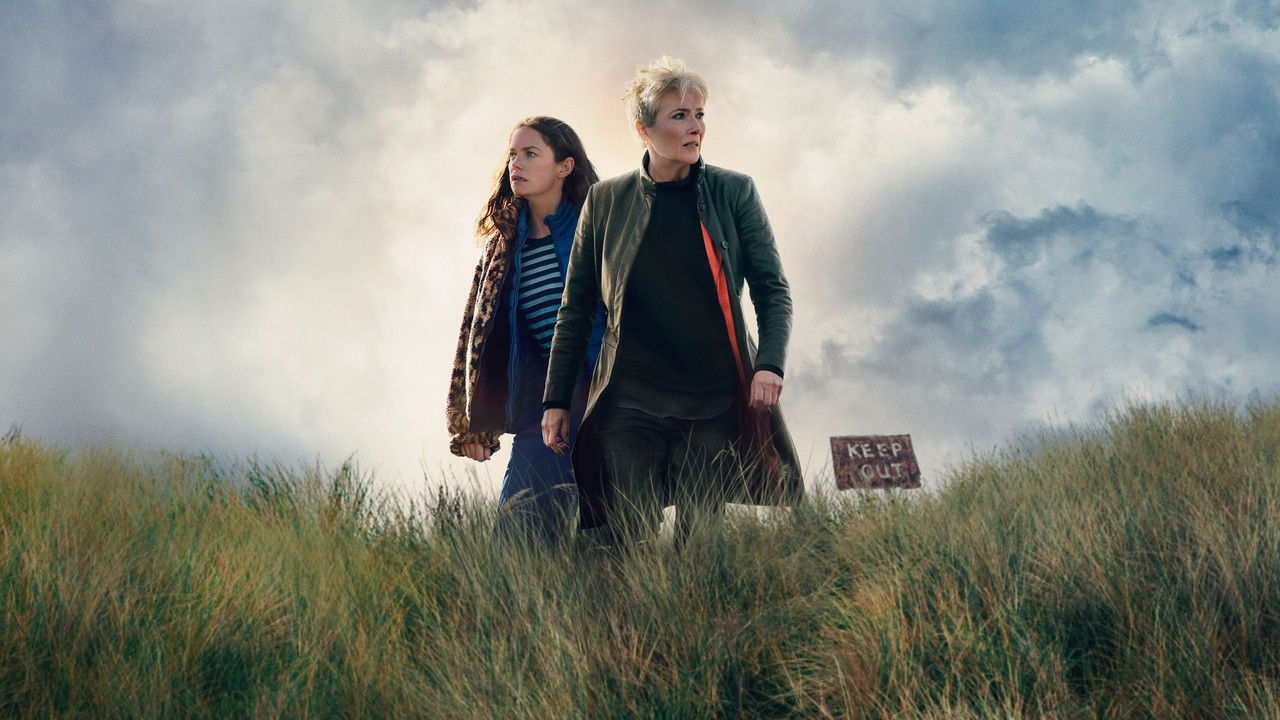
The series is ostensibly a mystery about a missing child and a house explosion, but its true subject is the shattering of the suburban facade. We begin in a world of suffocating politeness—dinner parties where the lasagna is singed and the conversation is stiff—only to have that reality literally blown apart. Showrunner Morwenna Banks and director Natalie Bailey understand that the explosion is not just an inciting incident; it is a permission structure. It allows Sarah Tucker (Ruth Wilson) to stop pretending.
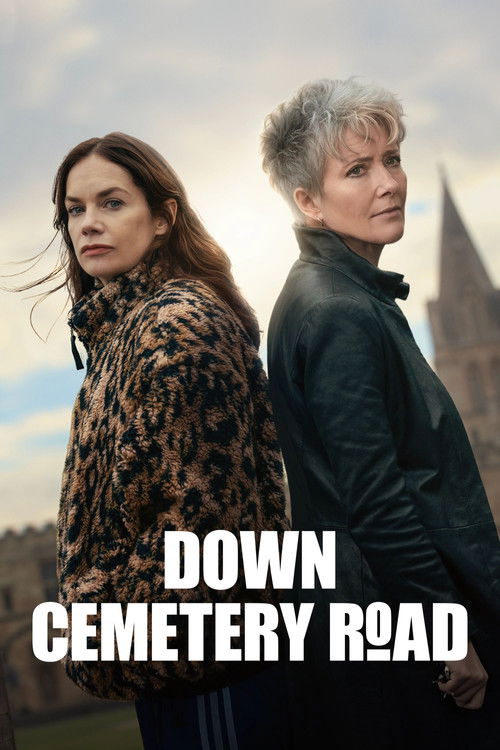
Wilson, an actor who has always excelled at playing women vibrating with repressed energy, finds a perfect vessel in Sarah. She is a woman whose domestic life is a cage of beige neutrality. When the explosion happens, her obsession with the missing neighbor girl, Dinah, feels less like altruism and more like a desperate grasp for a lifeline—a way to matter. The visual language of the show emphasizes this claustrophobia; the camera traps Sarah in hallways and kitchens until she forces her way out, pulling fire alarms in hospitals and trespassing on military land.
Then there is the chaotic counterweight: Zoë Boehm. Emma Thompson, stepping into the role of the abrasive private investigator, offers a performance that is aggressively, delightfully physical. Comparisons to Gary Oldman’s Jackson Lamb are inevitable but reductive. While Lamb is defined by his inertia, Zoë is defined by her friction. She is a woman who has opted out of the social contract entirely. The scene where she takes a "whore bath" in her office sink isn’t just a gross-out gag; it’s a manifesto. In a show filled with people desperately trying to maintain appearances while covering up state crimes, Zoë’s refusal to perform "civility" makes her the most honest person in the room.
The series falters occasionally when it leans too heavily into the mechanics of the conspiracy—the shadowy "men in suits" tropes are well-worn territory. However, it recovers whenever it focuses on the interplay between its two leads. This is a buddy comedy where the "buddies" seem to genuinely dislike each other, bonded only by a shared realization that the authorities are not coming to save them.
Ultimately, *Down Cemetery Road* is a critique of the British stiff upper lip. It suggests that politeness is the ultimate camouflage for corruption. By pairing a woman who has forgotten how to be rude with a woman who knows nothing else, the series argues that sometimes, to find the truth, you have to be willing to make a scene. It may not have the accumulated grime of Slough House just yet, but in its portrait of women refusing to go quietly, it finds a jagged, compelling voice of its own.