Star Trek backdrop
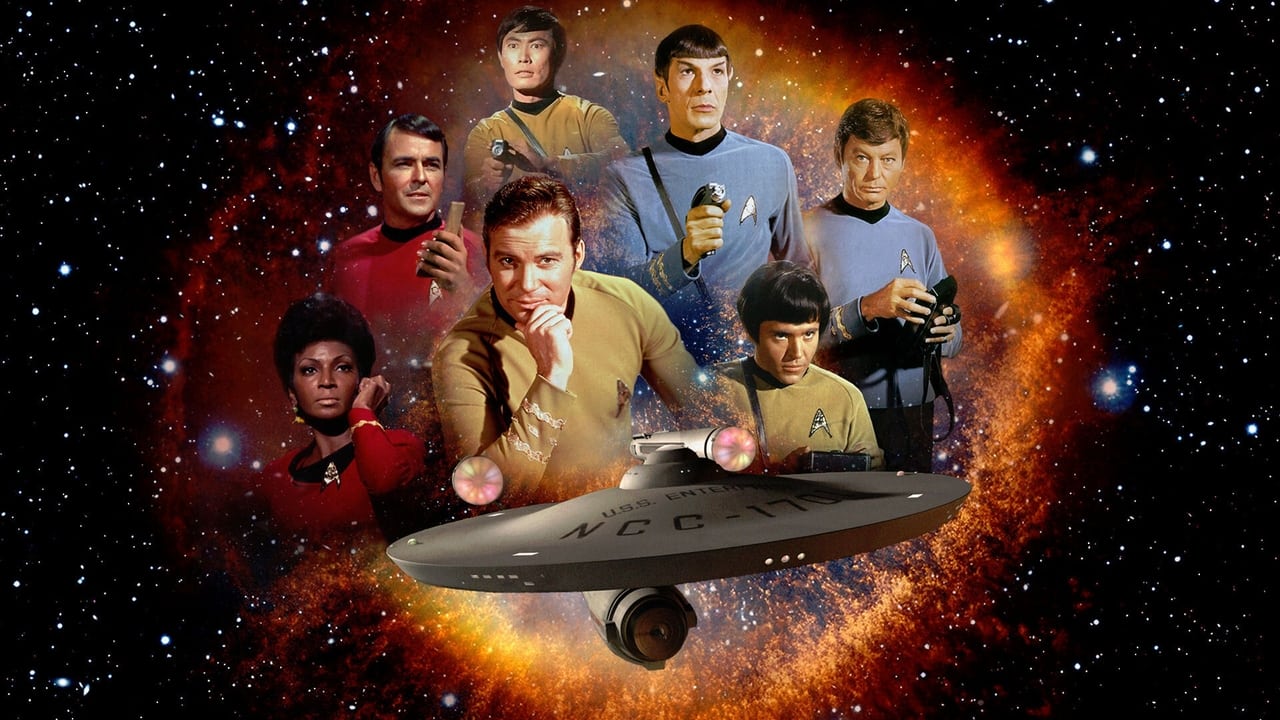
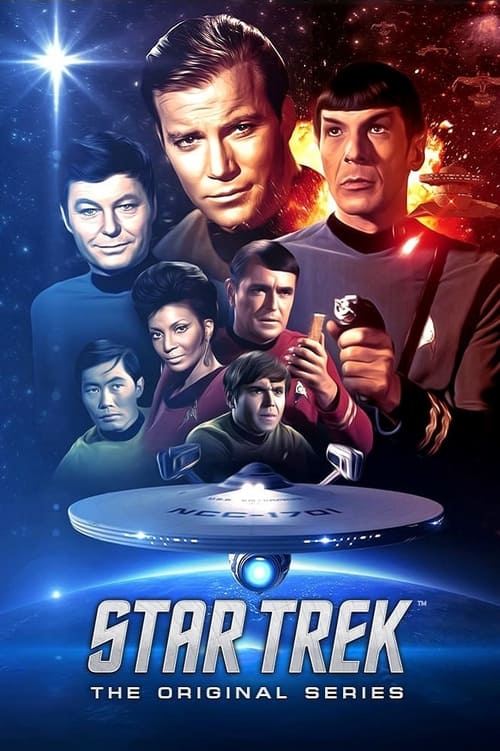
Star Trek poster

Star Trek

“To boldly go where no man has gone before”

8.0
1966
3 Seasons • 79 Episodes
Sci-Fi & FantasyDrama

Overview

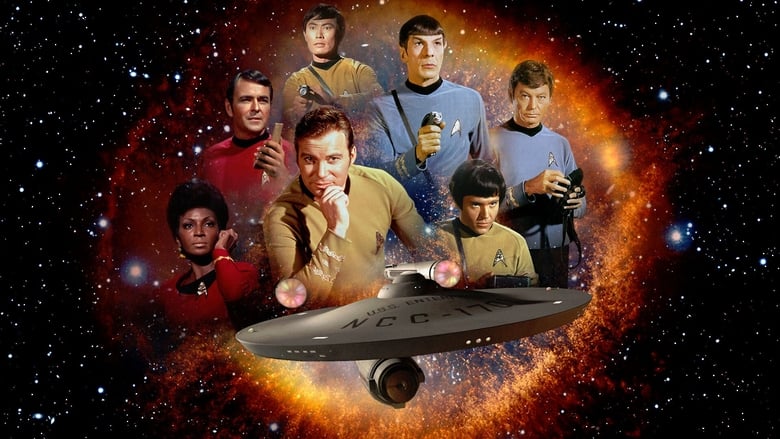
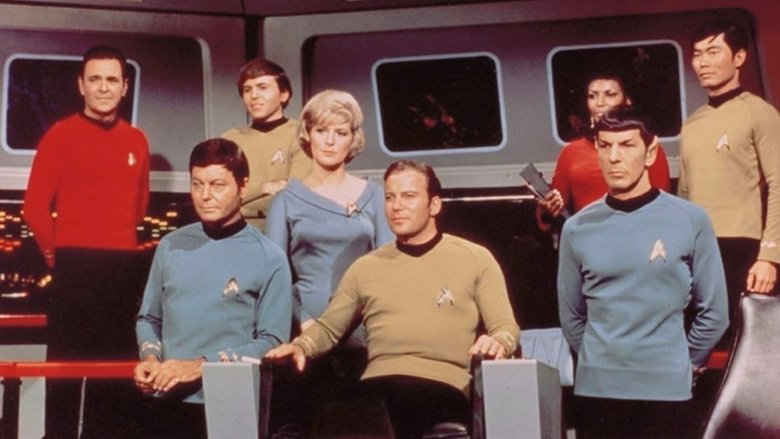
Space. The Final Frontier. The U.S.S. Enterprise embarks on a five year mission to explore the galaxy. The Enterprise is under the command of Captain James T. Kirk with First Officer Mr. Spock, from the planet Vulcan. With a determined crew, the Enterprise encounters Klingons, Romulans, time paradoxes, tribbles and genetic supermen led by Khan Noonian Singh. Their mission is to explore strange new worlds, to seek new life and new civilizations, and to boldly go where no man has gone before.
Cast

Reviews

AI-generated review
The Architecture of Hope

In 1966, the real world was holding its breath. The Cold War had frozen geopolitics into a terrifying stalemate, racial tensions in America were reaching a boiling point, and the threat of nuclear annihilation was a daily weather report. Into this atmosphere of suffocating dread arrived *Star Trek*, a television series that didn't just offer escapism; it offered a counter-argument to the 20th century. While Gene Roddenberry famously pitched his creation as "Wagon Train to the stars" to appease studio executives hungry for a space-western, the resulting work was something far more subversive: a moral sandbox where humanity had not only survived its self-destructive infancy but had matured into a species capable of infinite curiosity.

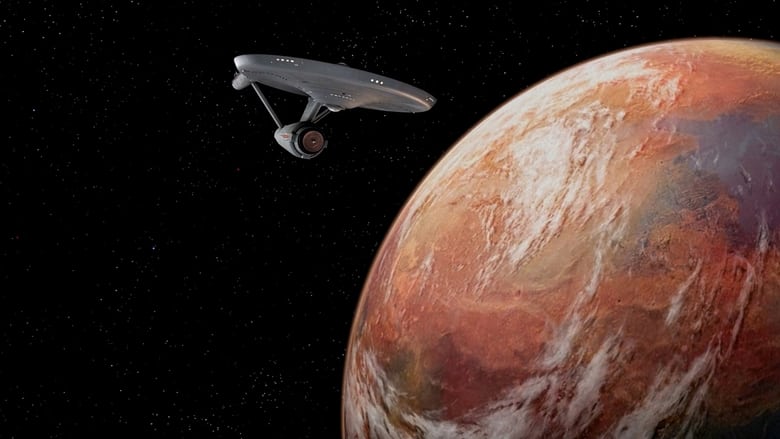
The USS Enterprise orbiting a planet, representing the show's scope

To watch the original series today requires an adjustment of one’s visual palate. We must look past the styrofoam boulders and the velour uniforms that shrink in the wash. Yet, there is a distinct, theatrical beauty to the show’s limitations. Because the budget could not afford the sprawling CGI vistas of modern cinema, *Star Trek* functioned like a stage play. The bridge of the U.S.S. Enterprise is not just a command center; it is a forum. The blocking of the actors, the primary-colored lighting (designed to sell the new technology of color television), and the tight close-ups force the audience to focus on the dialogue and the philosophical conflict at hand. The "cheapness" of the sets paradoxically elevates the material, stripping away the distraction of spectacle and leaving only the naked strength of the ideas.

Captain Kirk and Spock, illustrating the central dynamic of the show

At the heart of this interstellar stage play is a trinity of archetypes that remains unrivaled in genre fiction: the Logic (Spock), the Emotion (Dr. McCoy), and the Will (Captain Kirk). The show’s brilliance lies in how it refuses to let any single viewpoint win. In episodes like the tragic masterpiece "The City on the Edge of Forever," we see this engine at full throttle. Spock argues the cold utilitarian necessity of letting a good woman die to save the timeline; McCoy screams for the immediate, human imperative to save a life. Kirk, the synthesis of the two, must bear the crushing weight of the final decision. This is not a show about shooting aliens; it is a show about the agony of leadership and the cost of doing the right thing.

The crew facing a threat, highlighting the ensemble nature of the series

The cultural footprint of *Star Trek* is often measured in its predictions of technology—automatic doors, communicators, tablets—but its true prescience was sociological. By placing a Russian, a Japanese man, an African woman, and an alien on the same bridge during the height of the Cold War and the Civil Rights movement, Roddenberry was engaging in visual activism. He posited that our differences would not be erased by the future, but rather integrated into our strength.

Ultimately, *Star Trek* endures not because of its warp drives or phasers, but because of its radical, defiant optimism. In an era where modern prestige TV often equates darkness with depth, there is something profoundly moving about a series that dares to suggest that we are going to make it. It demands that we look at the unknown not with fear, but with an open hand.

Featurettes (1)

A Farewell - DeForest Kelley - A Tribute

Behind the Scenes (22)

Walter Koenig on his "Star Trek" co-stars - TelevisionAcademy.com/Interviews

Walter Koenig on his "Star Trek" character Pavel Chekov - TelevisionAcademy.com/Interviews

Walter Koenig on getting cast on "Star Trek" - TelevisionAcademy.com/Interviews

An Interracial Kiss Nearly Sank Star Trek. Then George Takei Brought Up Homosexuality.

James Doohan interview on British TV in 1989

Nichelle Nichols on how Dr. MLK, Jr. dissuaded her from quitting Star Trek - EMMYTVLEGENDS.ORG

George Takei discusses his "Star Trek" co-star Walter Koenig - EMMYTVLEGENDS.ORG

George Takei discusses his favorite Star Trek episode Naked Time - EMMYTVLEGENDS.ORG

George Takei discusses getting cast on Star Trek - EMMYTVLEGENDS.ORG

George Takei discusses Gene Roddenberry- EMMYTVLEGENDS.ORG

Ricardo Montalban on the inspiration for "Khan", a role he reprised on Star Trek

Nichelle Nichols on how Star Trek's "Uhura" got her name - EMMYTVLEGENDS.ORG

Nichelle Nichols discusses "Uhura" from Star Trek- EMMYTVLEGENDS.ORG

Nichelle Nichols on auditioning for Star Trek- EMMYTVLEGENDS.ORG

Nichelle Nichols on filming the first interracial kiss on American television

Nichelle Nichols on the beginning of Star Trek - EMMYTVLEGENDS.ORG

Leonard Nimoy discusses the Star Trek pilot - EMMYTVLEGENDS.ORG

Leonard Nimoy discusses Star Trek's Mr. Spock - EMMYTVLEGENDS.ORG

Leonard Nimoy on Spock's make-up on Star Trek - EMMYTVLEGENDS.ORG

Leonard Nimoy on developing "Star Trek's" Spock character - EMMYTVLEGENDS.ORG

Leonard Nimoy discusses Mr. Spock's "Star Trek" signature moves - EMMYTVLEGENDS.ORG

Leonard Nimoy discusses the Star Trek feature films - EMMYTVLEGENDS.ORG

LN
Latest Netflix

Discover the latest movies and series available on Netflix. Updated daily with trending content.

About

  • AI Policy
  • This is a fan-made discovery platform.
  • Netflix is a registered trademark of Netflix, Inc.

© 2026 Latest Netflix. All rights reserved.