✦ AI-generated review
The Inversion of Folklore
In the vast, crowded library of shonen anime, the "chosen one" narrative is a spine so well-worn it threatens to snap. We know the rhythm: the orphan, the dormant power, the tragic catalyst. To stand out in 2025, a series cannot simply play the tune; it must break the instrument. *Tougen Anki*, adapted from Yura Urushibara’s manga, attempts this demolition by taking Japan’s most sanitized fairy tale—the legend of Momotaro—and inverting its moral compass with a punk-rock snarl.
For generations, the story of Momotaro (the Peach Boy) slaying the Oni (demons) has been a fable of righteous conquest. *Tougen Anki* asks a sharper question: What if the "heroes" were actually militarized oppressors, and the "monsters" were simply a marginalized bloodline fighting for survival? This is the show's most compelling hook. By casting the Momotaro agency as a sterile, suit-wearing corporate authoritarian force, the series taps into a distinctly modern anxiety about institutional power. The Oni, conversely, are chaotic, emotional, and messy—traits the show celebrates rather than condemns.
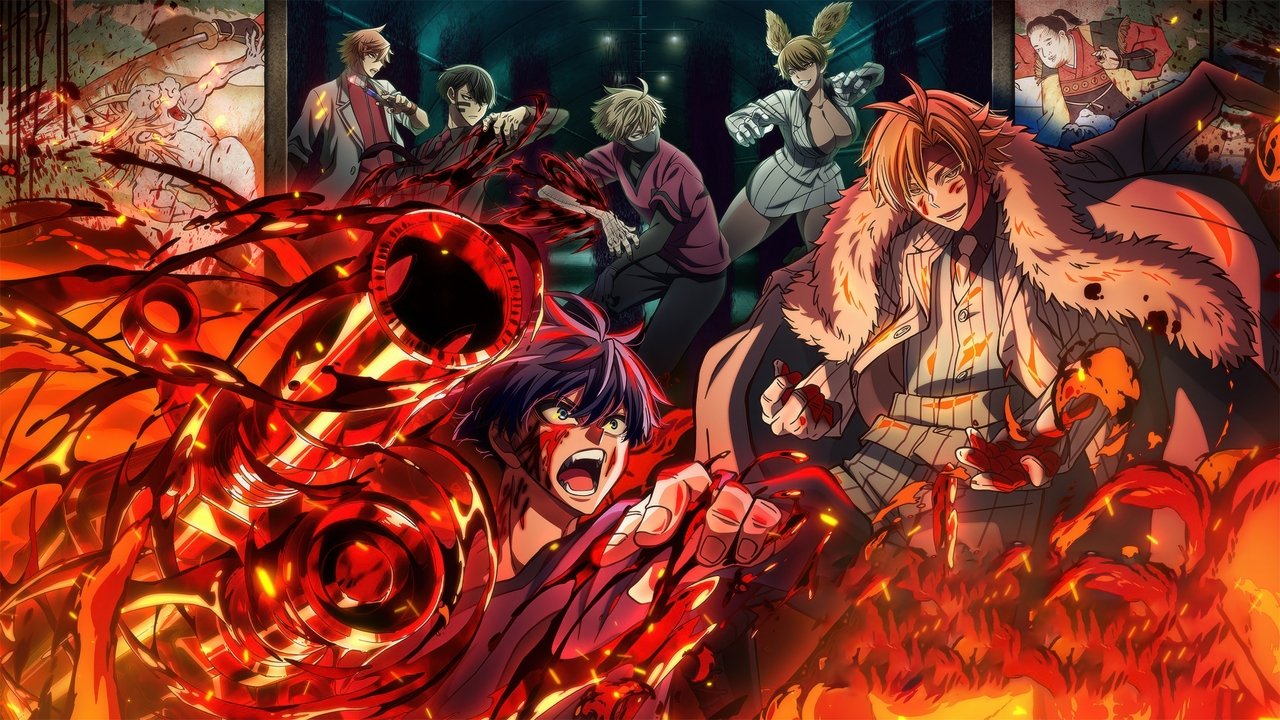
Visually, Studio Hibari has crafted a world that feels suffocatingly slick. The aesthetic is "blood-neon," a high-contrast palette where the deep crimson of the Oni’s power cuts violently through the teal and grey of the urban landscape. The "Blood Eclipse" phenomenon isn't just a power-up; it is a visual scar on the screen. When protagonist Shiki Ichinose manifests his powers, forming firearms from his own blood, the animation leans into the grotesque. It is a reminder that his strength comes from his own vitality, his own pain. The choice to have Shiki conjure guns—modern, impersonal weapons—out of something as primal as blood is a stroke of design genius that separates him from the swords-and-sorcery protagonists of his peers.
However, a strong aesthetic cannot entirely mask a fragile narrative skeleton. Shiki himself is a cocktail of familiar tropes: the hot-headed delinquent with a heart of gold and a tragic backstory involving an adoptive father. The early episodes, particularly the catalyst of his father’s death, move with a mechanical predictability. We have seen this grief before; we have seen this scream to the heavens before.
Yet, where *Tougen Anki* finds its true pulse is not in Shiki’s rage, but in his confusion. The revelation that his beloved father was a former Momotaro—a hunter of his own kind—injects a layer of nuance into the revenge plot. Shiki fights not just because he hates the enemy, but because he is trying to reconcile the love he received with the history he inherited. This internal war is mirrored beautifully in the character of Naito Mudano, the instructor whose lethargic demeanor belies a terrifying competence. Naito’s weapon—a blood-formed umbrella—is a perfect metaphor for the show itself: seemingly absurd, stylishly gothic, and surprisingly lethal.
Ultimately, *Tougen Anki* is a series wrestling with its own identity, much like its protagonist. At times, it feels like a "greatest hits" compilation of early 2000s edginess, content to coast on style and attitude. But when it commits to its central subversion—stripping the nobility from the hero and finding humanity in the monster—it achieves a resonance that is hard to ignore. It may not rewrite the rules of the genre, but it certainly knows how to paint them red.