The Law of Diminishing ReturnsIf cinema is a mirror held up to nature, then *All’s Fair*—the latest glossy, high-camp legal procedural from the Ryan Murphy factory—is a ring light held up to a selfie. Released in late 2025 with the subtlety of a glitter cannon, this series arrives not as a story begging to be told, but as a brand activation begging to be meme’d. It is a show that seemingly misunderstands the very medium it occupies, trading narrative cohesion for viral moments and emotional logic for impeccable lighting. It is fascinating, certainly, but in the way a car crash is fascinating when the cars are made of diamonds and the drivers are all wearing vintage Mugler.
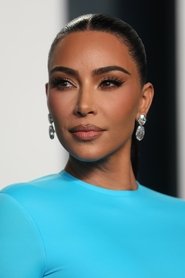
From the opening minutes, the visual language of *All’s Fair* declares its allegiance to the artificial. We are introduced to the central trio—Allura Grant (Kim Kardashian), Liberty Ronson (Naomi Watts), and Emerald Greene (Niecy Nash-Betts)—not through character-defining actions, but through a montage of slow-motion struts that feel less like a legal drama and more like the opening credits of a *Real Housewives* reunion.

The cinematography is suffocatingly pristine. The law firm, ostensibly a place of grueling litigation, resembles a sterile mausoleum of beige and chrome where no paper is ever shuffled and no coffee is ever spilled. Murphy’s aesthetic has always favored the heightened, but here it tips into the necrotic. There is a specific scene in the pilot where Allura receives devastating news about her own marriage. Instead of the camera lingering on the fracture in her composure, it obsesses over the reflection of her crying face in a Baccarat tumbler. It’s a directorial choice that prioritizes the aesthetic of sadness over the feeling of it, rendering the characters as mannequins positioned in a diorama of wealth.
The heart of the show—or the void where one should be—lies in its confusing relationship with its own genre. It posits itself as a story of female empowerment, with our heroes breaking away from a patriarchal firm to start their own practice. Yet, the script undermines this at every turn. The conflicts are not legal or moral but purely transactional.

This is most evident in the performance of Kim Kardashian. While she possesses a undeniable screen presence, the role of Allura requires a gravity that she struggles to locate. When sharing the screen with a titan like Glenn Close (who plays their mentor, Dina Standish, with a bewildered sort of dignity), the disparity is jarring. Close is acting in a tragedy about legacy; Kardashian is acting in a soap opera about outfits. The show’s "conversation"—dominated by its polarized reception—misses the point. The problem isn't that it's camp; the problem is that it's cynical camp. It lacks the earnestness that makes Murphy's best work (*Pose*, *American Crime Story*) resonate.
However, the series is not without its accidental brilliance. Sarah Paulson, playing the jilted rival Carrington Lane, understands exactly what show she is in. She chews the scenery with a delightful, unhinged fervor that provides the only pulse in this flatlined universe.

Ultimately, *All’s Fair* is a testament to the current era of "algorithm-core" television. It is a series designed to be watched while scrolling on a second screen, a collection of assets rather than a narrative. It succeeds as a spectacle of excess but fails as a human story. It leaves the viewer with the distinct aftertaste of expensive champagne that has gone flat—still looking golden in the glass, but entirely devoid of the bubbles that make it rise.